


The aggregate size of exchange-traded funds (ETFs) listed in Taiwan has grown to more than NT$3 trillion (US$94.34 billion) in the 20 years since the first ETF was traded on the local stock market in 2003, the Taiwan Stock Exchange (TWSE) said on Friday.
Speaking at the opening ceremony of a two-day exhibition to mark the 20th anniversary of ETF trading in the country, TWSE chairman Sherman Lin (林修銘) said the local ETF market has grown rapidly over the past two decades, rising from NT$3.5 billion in the first year to more than NT$3 trillion, the second-highest in Asia after Japan.
In addition, the number of investors favoring ETFs has almost quadrupled from 1.64 million to 6.54 million over the past few years, Lin said, adding one in four people in Taiwan have invested in an ETF.

Photo: CNA
An ETF, which operates like a mutual fund, serves as a type of pooled investment security and typically tracks a particular index, sector, commodity or other asset. However, an ETF can also be bought or sold on a stock exchange as regular stock.
ETFs demonstrate innovation and diversification in financial instruments and universal financing, as the funds cover a wide range of product categories, such as a fund tracking market capitalization and industries, Lin said.
The underlying targets of ETFs include stocks, bonds and futures to meet demand from various investors, including small ones, he said.
To help investors choose ETF products that suit their needs, the TWSE launched a new one-stop ETF information platform on Friday, he said.
Financial Supervisory Commission chairman Thomas Huang (黃天牧) said at the opening ceremony that ETFs have become a popular investment instrument in Taiwan due to their relatively low cost, risk diversification and the convenience of investing.
In 2019 in particular, a big year for Taiwan’s ETF market, the size of ETFs tracking the bond market rose by about NT$950 billion from the end of 2018, a major milestone for the domestic asset management business, Huang said.
The International Organization of Securities Commissions (IOSCO), an association of organizations that regulates the world’s securities and futures, unveiled “Good Practices Relating to the Implementation of the IOSCO Principles for ETFs” in May in a bid to establish a volatility control mechanism to manage ETF trading in an effort to build a healthier market and protect investors, he said.
In June, the Yuanta/P-shares Taiwan Top 50 ETF, the first ETF launched in Taiwan, celebrated its 20th anniversary.
It was listed on the local main board on June 30, 2003, to track the performance of the Taiwan 50 Index, which consists of the largest 50 companies in terms of market cap, including contract chipmaker Taiwan Semiconductor Manufacturing Co (台積電) and iPhone assembler Hon Hai Precision Industry Co (鴻海精密).
From its debut to the end of May, the Yuanta/P-shares Taiwan Top 50 ETF has yielded a return of more than 550 percent, including cash dividend payments, and its fund size had topped NT$300 billion as of May 30, up from NT$200 billion in March last year, Yuanta Securities Investment Trust Co (元大投信) said.
Currently, the ETF has about 677,900 investors, it said.
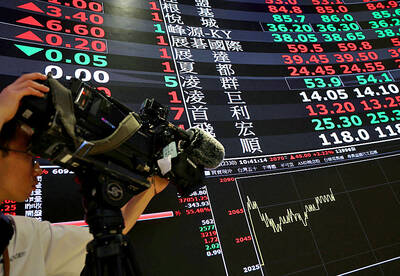
After several years flying high as Asia’s best Nvidia Corp proxy, Taiwan Semiconductor Manufacturing Co (TSMC, 台積電) is increasingly vying with other artificial intelligence (AI) stocks for investor attention. Stock traders are chasing a wider array of beneficiaries as mainstream usage of AI creates demand for hardware beyond the most-advanced chips TSMC makes for Nvidia. Subthemes from the deepening memory crunch to advances in robotics are also luring bids. At the same time, investment caps on single stocks are pushing funds to diversify, while retail investors long familiar with TSMC through its US depositary receipts are being offered a broader set of
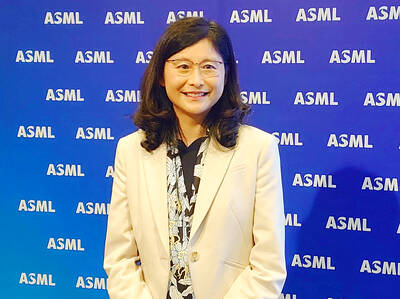
Netherlands-based semiconductor equipment supplier ASML Holding NV yesterday said that it is planning to hire an additional 1,000 people in Taiwan this year in response to growing demand from clients. ASML had previously planned to recruit 600 people this year, but that the plan has been adjusted upward, ASML vice president and ASML Taiwan general manager Grace Wang (汪佳慧) told reporters. ASML has a workforce of more than 4,500 in Taiwan, accounting for about 10 percent of its global total, Wang said. This year’s recruitment campaign would focus on adding people in the customer support, manufacturing and supply chain domains to assist ASML

UNDER MICROSCOPE: Taiwan detained three people who allegedly conspired to buy servers in Taiwan and export them using fraudulent documentation, prosecutors said Nvidia Corp chief executive officer Jensen Huang (黃仁勳) on Saturday urged Super Micro Computer Inc to tighten up on compliance after Taiwan detained three people this week for allegedly making fraudulent declarations about artificial intelligence (AI) servers made by its US partner. The development marked the nation’s first crackdown on semiconductor smuggling, which grew after the US slapped restrictions on exports of high-end chips such as Nvidia AI accelerators to China. Nvidia is “rigorous” in explaining regulations to all of its partners, Huang told reporters after arriving in Taipei. “Ultimately Super Micro has to run their own company,” he said in response to

Nvidia Corp yesterday announced that CEO Jensen Huang (黃仁勳) would attend an employee meeting in Taipei tomorrow to celebrate the launch of the company’s Taiwan headquarters project. Huang would attend a gathering at the site of Nvidia’s planned headquarters in Beitou Shilin Technology Park (北投士林科技園區), the company said in a statement. After arriving in Taiwan on Saturday last week, Huang told reporters that he plans to meet with Quanta Computer Inc (廣達) chairman Barry Lam (林百里) and Taiwan Semiconductor Manufacturing Co (TSMC, 台積電) chairman C.C. Wei (魏哲家), and would attend the groundbreaking ceremony for Nvidia’s Taiwan headquarters tomorrow. Nvidia has not yet applied


 RSS
RSS