


Sales by the domestic retail, and food and beverage sectors last month continued to grow by a double-digit percentage on an annual basis, while sales in the wholesale sector fell for an eighth straight month due to weak demand and inventory adjustments, the Ministry of Economic Affairs said yesterday.
Retail sales last month totaled NT$371.9 billion (US$11.86 billion), an annual increase of 13.9 percent, while food and beverage sales reached NT$83.4 billion, up 34.7 percent year-on-year, the ministry said in a report.
Last month’s retail, and food and beverage sales increases were slower than the previous month, when sales grew 17.1 percent and 45.2 percent respectively, ministry data showed.
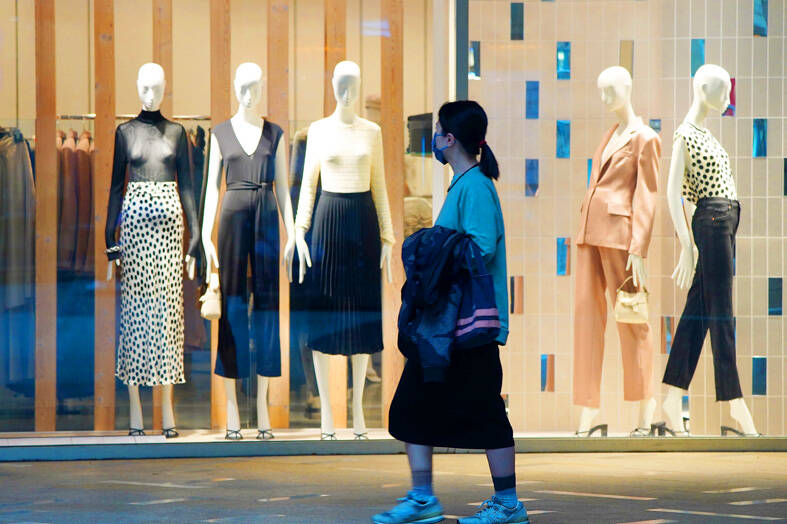
Photo: CNA
Last month’s retail sales increase was mainly driven by department store sales, which rose 30.4 percent from a year earlier, as well as sales of automobiles, motorbikes and related components, which soared 45 percent, while sales of clothing and accessories increased 22.2 percent, the report said.
However, sales of information and communications technology products as well as home appliances and household equipment dropped 5.5 percent annually, while sales from supermarkets and hypermarkets declined 5 percent and 7.2 percent respectively, the report said.
As for the food and beverage sector, the ministry attributed the increase to catering service providers, which reported a 71.8 percent annual rise in sales, as airlines added passenger flights, supporting demand for in-flight meals, as well as the effect of a relatively lower comparison base last year.
In addition, restaurant sales rose 36.1 percent year-on-year, because of the holiday effect of the Dragon Boat Festival and a boost from teacher appreciation banquets during the graduation season, while beverage sales increased 16 percent thanks to increased demand for cold drinks amid hot weather, the report said.
In the second quarter of the year, retail sales rose 12.7 percent from a year earlier to NT$1.12 trillion, boosting sales in the first six months 9 percent to NT$2.23 trillion, a record high, the ministry said.
Food and beverage sales last quarter increased 36.9 percent to NT$248.6 billion, while sales in the first six months rose 26.3 percent to NT$503.8 billion, also a record high, ministry data showed.
However, the wholesale sector remained under pressure last month, affected by central banks’ monetary tightening policies, a global slump in end-market demand, ongoing inventory destocking throughout supply chains and a decline in international raw material prices, which continued to dent demand for machinery equipment, building materials and chemicals, the report said.
Overall sales by wholesalers last month dropped 11.4 percent from a year earlier to NT$965.5 billion, and fell 13.1 percent to NT$2.82 trillion in the second quarter. Sales for the first six months were down 12.3 percent to NT$5.61 trillion, it said.
The ministry forecast that this month’s retail and food and beverage sales would continue to rise as more people are willing to spend during the summer vacation and auto dealers plan larger promotional campaigns ahead of Ghost Month, the seventh month of the lunar calendar and generally considered an inauspicious time to purchase new vehicles.
However, the wholesale sector is predicted to report another decline, as the global economy’s growth momentum remains sluggish and end-market demand continues to be weak, the ministry said.
Shares of contract chipmaker Taiwan Semiconductor Manufacturing Co (TSMC, 台積電) came under pressure yesterday after a report that Apple Inc is looking to shift some orders from the Taiwanese company to Intel Corp. TSMC shares fell NT$55, or 2.4 percent, to close at NT$2,235 on the local main board, Taiwan Stock Exchange data showed. Despite the losses, TSMC is expected to continue to benefit from sound fundamentals, as it maintains a lead over its peers in high-end process development, analysts said. “The selling was a knee-jerk reaction to an Intel-Apple report over the weekend,” Mega International Investment Services Corp (兆豐國際投顧) analyst Alex Huang
Taiwan Semiconductor Manufacturing Co (TSMC, 台積電) is expected to remain Apple Inc’s primary chip manufacturing partner despite reports that Apple could shift some orders to Intel Corp, industry experts said yesterday. The comments came after The Wall Street Journal reported on Friday that Apple and Intel had reached a preliminary agreement following more than a year of negotiations for Intel to manufacture some chips for Apple devices. Taiwan Institute of Economic Research (台灣經濟研究院) economist Arisa Liu (劉佩真) said TSMC’s advanced packaging technologies, including integrated fan-out and chip-on-wafer-on-substrate, remain critical to the performance of Apple’s A-series and M-series chips. She said Intel and Samsung
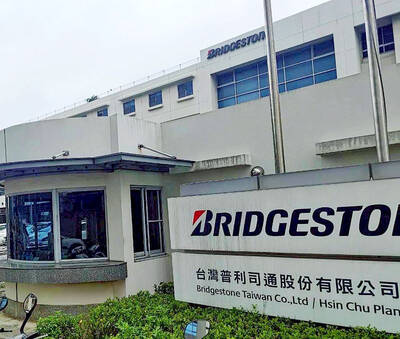
TRANSITION: With the closure, the company would reorganize its Taiwanese unit to a sales and service-focused model, Bridgestone said Bridgestone Corp yesterday announced it would cease manufacturing operations at its tire plant in Hsinchu County’s Hukou Township (湖口), affecting more than 500 workers. Bridgestone Taiwan Co (台灣普利司通) said in a statement that the decision was based on the Tokyo-based tire maker’s adjustments to its global operational strategy and long-term market development considerations. The Taiwanese unit would be reorganized as part of the closure, effective yesterday, and all related production activities would be concluded, the statement said. Under the plan, Bridgestone would continue to deepen its presence in the Taiwanese market, while transitioning to a sales and service-focused business model, it added. The Hsinchu
Taiwan Semiconductor Manufacturing Co (TSMC, 台積電) has approved a capital budget of US$31.28 billion for production expansion to meet long-term development needs during the artificial intelligence (AI) boom. The company’s board meeting yesterday approved the capital appropriation plan for purposes such as the installation of advanced technology capacity and fab construction, the world’s largest contract chipmaker said in a statement. At an earnings conference last month, TSMC forecast that its capital expenditure for this year would be at the higher end of the US$52 billion to US$56 billion range it forecast in January in response to robust demand for 5G, AI and


 RSS
RSS