


TUI AG said summer bookings are approaching pre-COVID-19 pandemic levels, the latest sign that the travel sector is recovering, despite high inflation squeezing household budgets.
The world’s biggest tour operator said booking volumes were at 96 percent of 2019 levels, led by demand for travel to Spain, Greece and Turkey.
Prices are 26 percent higher than pre-pandemic levels, the company said.
Photo: Reuters
“Strong booking development and significantly improved quarterly figures underline our expectations: It will be a strong summer and a good financial year 2023, with a significantly higher operating result,” TUI chief executive officer Sebastian Ebel said in an earnings statement.
TUI, based in Hannover, Germany, received 4.2 billion euros (US$4.6 billion) in state bailouts in 2020 after the COVID-19 crisis punctured a decades-long boom in travel.
The company last month made its final repayment of its assistance package after a capital increase of 1.8 billion euros.
Europeans’ thirst for travel is driving TUI’s recovery. While household energy and food bills have surged in the wake of Russia’s invasion of Ukraine, consumers are still willing to spend on vacations, despite the higher cost of accommodation and flights.
In the fiscal second quarter ending March 31, TUI’s loss narrowed to 242.2 million euros from 329.9 million euros a year earlier.
Analysts had estimated a loss of 228 million euros.
TUI confirmed its full-year guidance for a significant increase in underlying earnings.
Revenue rose to 3.2 billion euros from 2.1 billion euros.
The company said it had secured 8.3 million bookings to date for the summer, and that 55 percent of the program for the season had been sold, which TUI called “broadly in line” with the same season in 2019.
“Outlook commentary is encouraging, with summer ’23 booking close to pre-pandemic levels and pricing strong,” Jefferies International analyst James Wheatcroft wrote in a note.
Like low-cost airlines, TUI is seeking to increase its market share as higher household bills weigh on consumer spending, pushing people toward package holidays that include flights, accommodation, bus transfers and food, and helping them to control the cost of their trip.

Nvidia Corp chief executive officer Jensen Huang (黃仁勳) on Monday introduced the company’s latest supercomputer platform, featuring six new chips made by Taiwan Semiconductor Manufacturing Co (TSMC, 台積電), saying that it is now “in full production.” “If Vera Rubin is going to be in time for this year, it must be in production by now, and so, today I can tell you that Vera Rubin is in full production,” Huang said during his keynote speech at CES in Las Vegas. The rollout of six concurrent chips for Vera Rubin — the company’s next-generation artificial intelligence (AI) computing platform — marks a strategic
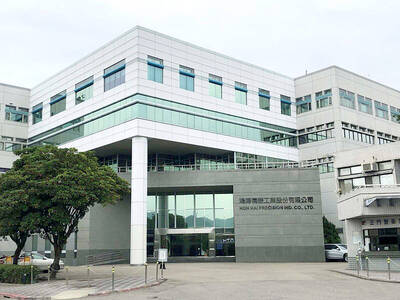
REVENUE PERFORMANCE: Cloud and network products, and electronic components saw strong increases, while smart consumer electronics and computing products fell Hon Hai Precision Industry Co (鴻海精密) yesterday posted 26.51 percent quarterly growth in revenue for last quarter to NT$2.6 trillion (US$82.44 billion), the strongest on record for the period and above expectations, but the company forecast a slight revenue dip this quarter due to seasonal factors. On an annual basis, revenue last quarter grew 22.07 percent, the company said. Analysts on average estimated about NT$2.4 trillion increase. Hon Hai, which assembles servers for Nvidia Corp and iPhones for Apple Inc, is expanding its capacity in the US, adding artificial intelligence (AI) server production in Wisconsin and Texas, where it operates established campuses. This
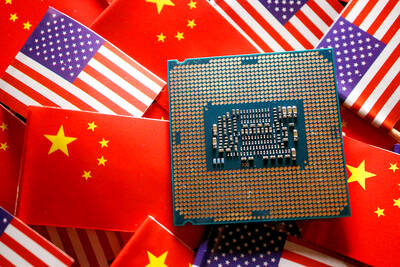
US President Donald Trump on Friday blocked US photonics firm HieFo Corp’s US$3 million acquisition of assets in New Jersey-based aerospace and defense specialist Emcore Corp, citing national security and China-related concerns. In an order released by the White House, Trump said HieFo was “controlled by a citizen of the People’s Republic of China” and that its 2024 acquisition of Emcore’s businesses led the US president to believe that it might “take action that threatens to impair the national security of the United States.” The order did not name the person or detail Trump’s concerns. “The Transaction is hereby prohibited,”
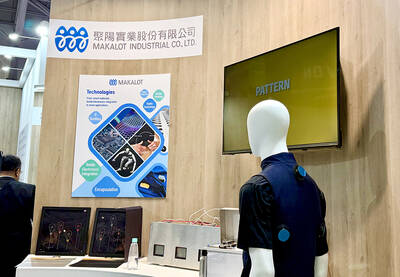
Garment maker Makalot Industrial Co (聚陽) yesterday reported lower-than-expected fourth-quarter revenue of NT$7.93 billion (US$251.44 million), down 9.48 percent from NT$8.76 billion a year earlier. On a quarterly basis, revenue fell 10.83 percent from NT$8.89 billion, company data showed. The figure was also lower than market expectations of NT$8.05 billion, according to data compiled by Yuanta Securities Investment and Consulting Co (元大投顧), which had projected NT$8.22 billion. Makalot’s revenue this quarter would likely increase by a mid-teens percentage as the industry is entering its high season, Yuanta said. Overall, Makalot’s revenue last year totaled NT$34.43 billion, down 3.08 percent from its record NT$35.52


 RSS
RSS