


The Financial Supervisory Commission (FSC) yesterday said it would monitor how Taisun Enterprise Co’s (泰山企業) purchase of a 40.4 percent stake in Jko Fintech Co (街口金融科技) would affect the latter’s electronic payment business and its users.
As the food and beverage maker did not invest in Jkopay Co (街口電子支付) directly, the share purchase is not subject to the FSC’s approval, but Taisun must soon submit a report to the Taiwan Stock Exchange (TWSE) regarding its board’s decisionmaking process, the commission said.
Taisun could face a fine of up to NT$4.8 million (US$156,342) if it fails to submit a report to the exchange, Securities and Futures Bureau Deputy Director Kao Ching-ping (高晶萍) told a news conference.
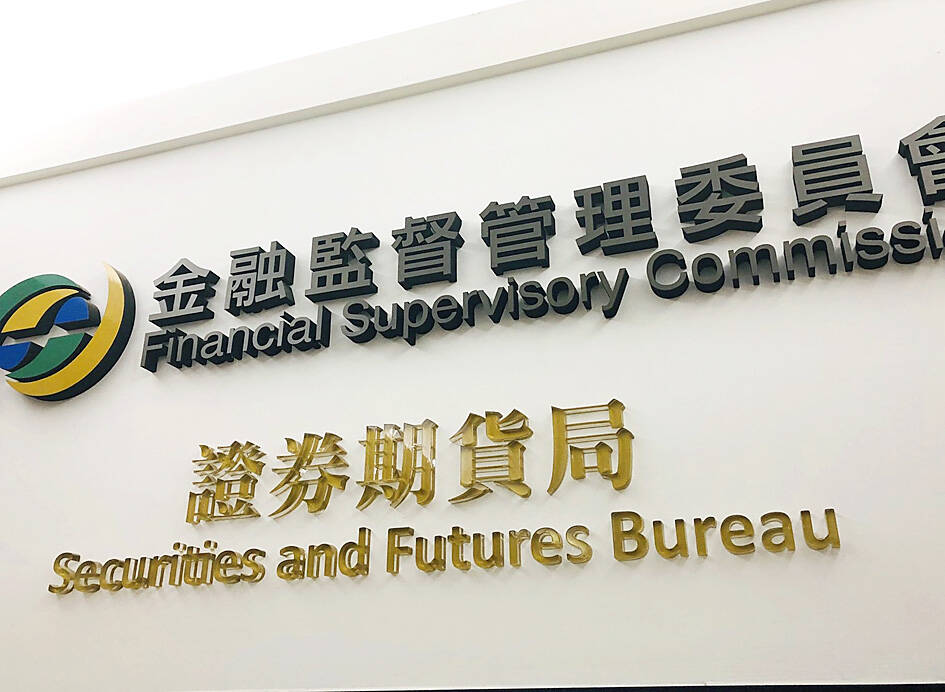
Photo: Kelson Wang, Taipei Times
Taisun on Saturday offered to acquire 146 million shares of Jko Fintech for NT$3.6 billion, a move opposed by its majority shareholder Long Bon International Co (龍邦).
The exchange has questioned the deal, which some said did not go through Taisun’s audit committee and lacked transparency.
Publicly listed firms have an obligation to clarify investors’ concerns about the potential financial impacts of major investments, the exchange said.
Taisun failed to take Jko Fintech’s book value into account and did not consider its scale of operations, growth potential and future cash flow, given that Jkopay has the biggest market share in Taiwan, the exchange said.
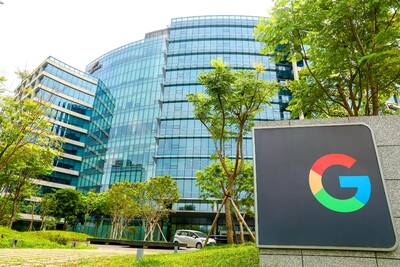
The government yesterday approved applications by Alphabet Inc’s Google to invest NT$27.08 billion (US$859.98 million) in Taiwan, the Ministry of Economic Affairs said in a statement. The Department of Investment Review approved two investments proposed by Google, with much of the funds to be used for data processing and electronic information supply services, as well as inventory procurement businesses in the semiconductor field, the ministry said. It marks the second consecutive year that Google has applied to increase its investment in Taiwan. Google plans to infuse NT$25.34 billion into Charter Investments Ltd (特許投資顧問) through its Singapore-based subsidiary Fructan Holdings Singapore Pte Ltd, and

Micron Technology Inc is a driving force pushing the US Congress to pass legislation that would put new export restrictions on equipment its Chinese competitors use to make their chips, according to people familiar with the matter. A US House of Representatives panel yesterday was to vote on the “MATCH Act,” a bill designed to close gaps in restrictions on chipmaking equipment. It would also pressure foreign companies that sell equipment to Chinese chipmaking facilities to align with export curbs on US companies like Lam Research Corp and Applied Materials Inc. The bill targets facilities operated by China’s ChangXin Memory Technologies Inc

SECOND-RATE: Models distilled from US products do not perform the same as the original and undo measures that ensure the systems are neutral, the US’ cable said The US Department of State has ordered a global push to bring attention to what it said are widespread efforts by Chinese companies, including artificial intelligence (AI) start-up DeepSeek (深度求索), to steal intellectual property from US AI labs, according to a diplomatic cable. The cable, dated Friday and sent to diplomatic and consular posts around the world, instructs diplomatic staff to speak to their foreign counterparts about “concerns over adversaries’ extraction and distillation of US AI models.” Distillation is the process of training smaller AI models using output from larger, more expensive ones to lower the costs of training a powerful new

Singapore-based ride-hailing and delivery giant Grab Holdings’ planned acquisition of Foodpanda’s Taiwan operations has yet to enter the formal review stage, as regulators await supplementary documents, the Fair Trade Commission (FTC) said yesterday. Acting FTC Chairman Chen Chih-min (陳志民) told the legislature’s Economics Committee that although Grab submitted its application on March 27, the case has not been officially accepted because required materials remain incomplete. Once the filing is finalized, the FTC would launch a formal probe into the deal, focusing on issues such as cross-shareholding and potential restrictions on market competition, Chen told lawmakers. Grab last month announced that it would acquire


 RSS
RSS