


The European Parliament and EU member states on Tuesday reached an agreement on a plan to boost the supply of semiconductors in Europe as the bloc races to reduce its dependence on Asian suppliers.
The EU has prioritized local chip production after the COVID-19 pandemic triggered supply chain shocks that led to significant shortages.
Asian industry, especially firms in Taiwan and China, dominate semiconductor manufacturing and exports.

Photo: AFP
European Commission President Ursula von der Leyen said that the deal “will allow for a competitive chips industry and build the foundation for a global market share.”
“It will power a clean tech industry made in Europe and strengthen our digital resilience and sovereignty,” Von der Leyen added.
Under the provisional political agreement, the EU aims to double its current global market share to 20 percent by 2030 and mobilize more than 43 billion euros (US$47.2 billion) in public and private investments to feed Europe’s growing appetite for chips.
Europe would need to quadruple its production to meet the target.
Funding would be from the EU’s budget and the deal would also loosen state aid rules to spend money on developing centers to produce the components.
The EU would also mobilize 3.3 billion euros for research and development, and the deal includes a system to monitor supply shortages in times of crisis.
The legislative text also forms part of the bloc’s bid to produce more in Europe to reduce its vulnerability to geopolitical shocks such as the war in Ukraine.
“This will allow us to rebalance and secure our supply chains, reducing our collective dependence on Asia,” European Commissioner for Internal Market Thierry Breton said in a statement after the parliament and the European Council reached an agreement.
French-Italian chipmaker STMicroelectronics NV, US-based GlobalFoundries Inc and US tech giant Intel Corp last year said that they would pour billions into new plants in France and Germany.
With the plan, they would be able to seek state subsidies for their projects.
Brussels is racing to protect the bloc’s competitive edge in the face of threats from China and the US, which have plowed billions into green technology.
Last month, the EU’s executive arm published two proposals to push Europe to produce more clean technology including raw materials needed to manufacture batteries for electric vehicles.
“Europe aims to become an industrial powerhouse in the markets of the future — the digital and clean technologies that will allow us to remain a competitive export force, generate quality jobs and ensure our security of supply,” Breton said. “Because there will be no green or digital transition without a strong manufacturing base.”
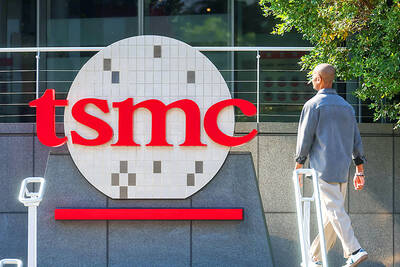
Shares of contract chipmaker Taiwan Semiconductor Manufacturing Co (TSMC, 台積電) came under pressure yesterday after a report that Apple Inc is looking to shift some orders from the Taiwanese company to Intel Corp. TSMC shares fell NT$55, or 2.4 percent, to close at NT$2,235 on the local main board, Taiwan Stock Exchange data showed. Despite the losses, TSMC is expected to continue to benefit from sound fundamentals, as it maintains a lead over its peers in high-end process development, analysts said. “The selling was a knee-jerk reaction to an Intel-Apple report over the weekend,” Mega International Investment Services Corp (兆豐國際投顧) analyst Alex Huang
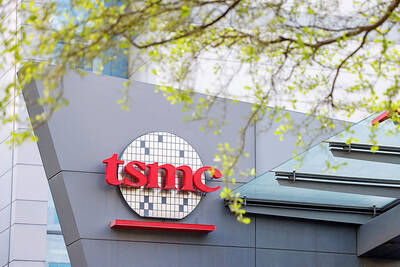
Taiwan Semiconductor Manufacturing Co (TSMC, 台積電) is expected to remain Apple Inc’s primary chip manufacturing partner despite reports that Apple could shift some orders to Intel Corp, industry experts said yesterday. The comments came after The Wall Street Journal reported on Friday that Apple and Intel had reached a preliminary agreement following more than a year of negotiations for Intel to manufacture some chips for Apple devices. Taiwan Institute of Economic Research (台灣經濟研究院) economist Arisa Liu (劉佩真) said TSMC’s advanced packaging technologies, including integrated fan-out and chip-on-wafer-on-substrate, remain critical to the performance of Apple’s A-series and M-series chips. She said Intel and Samsung
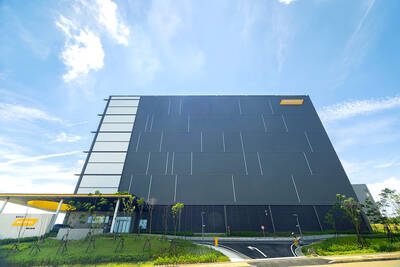
POWER BUILDUP: Powered by Nvidia’s B200 Blackwell chips, the data center would support MediaTek’s computing power demand and business growth, the company said Smartphone chip designer MediaTek Inc (聯發科) yesterday launched a new artificial intelligence (AI) data center with a maximum capacity of 45 megawatts to meet its rising demand for computing power required to develop new advanced chips for AI applications. The company has completed the first-phase computing power buildup at the data center in Miaoli County’s Tongluo Township (銅鑼), providing 15 megawatts of capacity to support its research and development (R&D) capabilities, despite an industrywide shortage of key components, MediaTek said. Supply constraints have plagued a wide range of key components, including memory chips, solid-state drives, power supply units and central
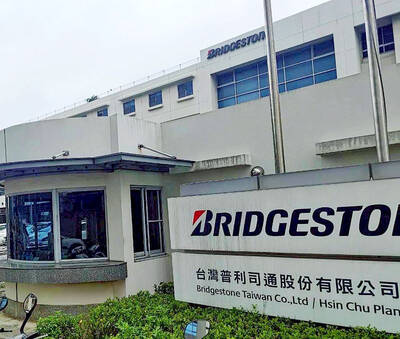
TRANSITION: With the closure, the company would reorganize its Taiwanese unit to a sales and service-focused model, Bridgestone said Bridgestone Corp yesterday announced it would cease manufacturing operations at its tire plant in Hsinchu County’s Hukou Township (湖口), affecting more than 500 workers. Bridgestone Taiwan Co (台灣普利司通) said in a statement that the decision was based on the Tokyo-based tire maker’s adjustments to its global operational strategy and long-term market development considerations. The Taiwanese unit would be reorganized as part of the closure, effective yesterday, and all related production activities would be concluded, the statement said. Under the plan, Bridgestone would continue to deepen its presence in the Taiwanese market, while transitioning to a sales and service-focused business model, it added. The Hsinchu


 RSS
RSS