


Citi Commercial Bank Taiwan recently held a forum on “The Future of the Post-Pandemic Economy and New Supply Chain Insights”, attended by more than 100 clients in Taipei. With clients facing multiple complexities in the macro and operating environment, Citi economists discussed the three primary themes that are shaping the global economy with an impact on global supply chains - the extension of the U.S. interest rate hike cycle, China’s economic reboot, and geopolitics.
Helping clients navigate challenges and expand their businesses beyond borders, Citi Commercial Bank serves over 1,600 home-grown emerging corporate champions in Taiwan. Citi is also the largest foreign bank in the market, providing services to over 700 multinationals and more than 100 leading local corporations and financial institutions.
Michelle Yu, Head of Citi Commercial Bank Taiwan, said, “To effectively manage and mitigate risks from inflation and ongoing uncertainty in markets, mid-sized corporates need to prioritize diversifying their supply chains and leveraging digital platforms and processes to gain efficiencies. As demand and supply forces gradually re-adjust in the post-pandemic economy, companies need to reassess their operational and cash flow requirements to build in resilience and facilitate sustainable growth and development.”
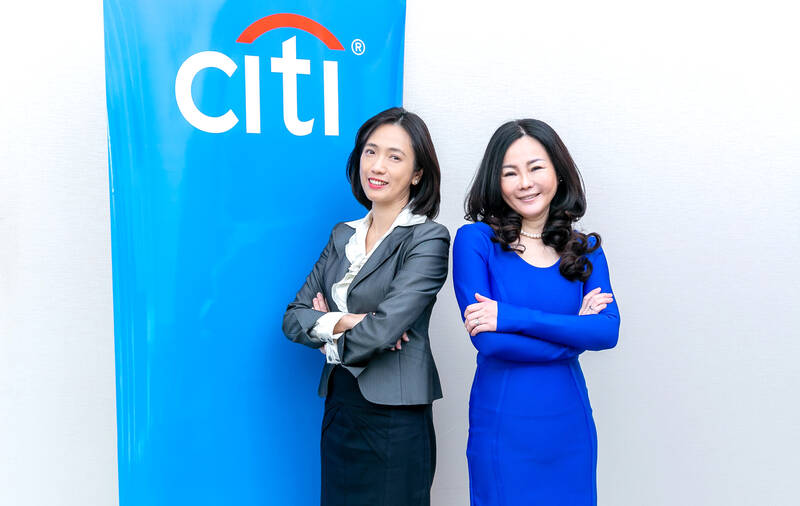
Speaking to clients, Citi economists noted inflation in the U.S. as a major concern. Separately, the impact of China’s reopening and its growth plans on the global economy remains to be seen, they added. Geopolitics, they said, continues to influence corporate investment as firms diversify their supply chains including manufacturing bases. For example, with the Russia-Ukraine war having led to rising energy prices and costs in Europe, firms are considering Asia, including ASEAN, as alternative manufacturing locations. Markets including Vietnam, India, Malaysia, Thailand and Indonesia are benefiting from this trend, they added.
As Taiwanese companies with operations overseas navigate these trends, including volatility in exchange rates, Citi has observed that an increasing number of businesses are considering the possibility of building a second or backup capital management center.
Vivian Cheng, Head of Treasury and Trade Solutions (TTS), Taiwan, emphasized, “Various factors have to be taken into account when establishing a capital management backup center including differences in tax, legal and accounting requirements across multiple markets and how to link funds across different geographies to meet operational needs. Digitizing processes and using digital financial services can also simplify operations for companies while creating flexibility.”
Citi’s Treasury and Trade Solutions business in Taiwan provides clients with services across cash management and working capital, liquidity management and trade financing. As mid-sized companies respond to the pressures and challenges of funding demands across their supply chain operations, the TTS business is helping clients by leveraging relevant products and services.
Virtual Card Accounts, for example, can be used for many payment needs while allowing companies to keep cash on hand when making payments, thereby deferring cash outflows. This includes payments for digital advertising, cloud services, domestic and international supply chains, online subscription services and events. In trade financing, Usance Letters of Credit provide companies with the flexibility to deploy their funds and extend payment periods as needed.
Citi also integrates trade financing services with digitalization and ESG trends so that companies can significantly reduce the time taken for manual verifications and processes. Sustainability-linked financing products and services further support clients who are advancing their sustainability journeys.

The domestic unit of the Chinese-owned, Dutch-headquartered chipmaker Nexperia BV will soon be able to produce semiconductors locally within China, according to two company sources. Nexperia is at the center of a global tug-of-war over critical semiconductor technology, with a Dutch court in February ordering a probe into alleged mismanagement at the company. The geopolitical tussle has disrupted supply chains, with some carmakers reportedly forced to cut production due to chip shortages. Local production would allow Nexperia’s domestic arm, Nexperia Semiconductors (China) Ltd (安世半導體中國), to bypass restrictions in place since October on the supply of silicon wafers — etched with tiny components to

Singapore-based ride-hailing and delivery giant Grab Holdings Ltd has applied for regulatory approval to acquire the Taiwan operations of Germany-based Delivery Hero SE's Foodpanda in a deal valued at about US$600 million. Grab submitted the filing to the Fair Trade Commission on Friday last week, with the transaction subject to regulatory review and approval, the company said in a statement yesterday. Its independent governance structure would help foster a healthy and competitive market in Taiwan if the deal is approved, Grab said. Grab, which is listed on the NASDAQ, said in the filing that US-based Uber Technologies Inc holds about 13 percent of

Taiwan Semiconductor Manufacturing Co (TSMC, 台積電) yesterday received government approval to deploy its advanced 3-nanometer (3nm) process at its second fab currently under construction in Japan, the Ministry of Economic Affairs said in a news release. The ministry green-lit the plan for the facility in Kumamoto, which is scheduled to start installing equipment and come online in 2028 with a monthly production capacity of 15,000 12-inch wafers, the ministry said. The Department of Investment Review in June 2024 authorized a US$5.26 billion investment for the facility, slated to manufacture 6- to 12nm chips, significantly less advanced than 3nm process. At a meeting with

Taiwan’s food delivery market could undergo a major shift if Singapore-based Grab Holdings Ltd completes its planned acquisition of Delivery Hero SE’s Foodpanda business in Taiwan, industry experts said. Grab on Monday last week announced it would acquire Foodpanda’s Taiwan operations for US$600 million. The deal is expected to be finalized in the second half of this year, with Grab aiming to complete user migration to its platform by the first half of next year. A duopoly between Uber Eats and Foodpanda dominates Taiwan’s delivery market, a structure that has remained intact since the Fair Trade Commission (FTC) blocked Uber Technologies Inc’s


 RSS
RSS