


Allianz Global Investors is predicting that a resurgence in demand for semiconductors in the second half of this year is likely to drive a long-anticipated revival of the global chip sector.
Chip industry sales could hit bottom in the second quarter before a recovery happens, said Benson Pan (潘育憲), who manages the firm’s NT$24.7 billion (US$809.09 million) Taiwan Technology Fund.
Pan said he added investments in Taiwan Semiconductor Manufacturing Co (TSMC, 台積電) and other Taiwan chip companies in the fourth quarter of last year.
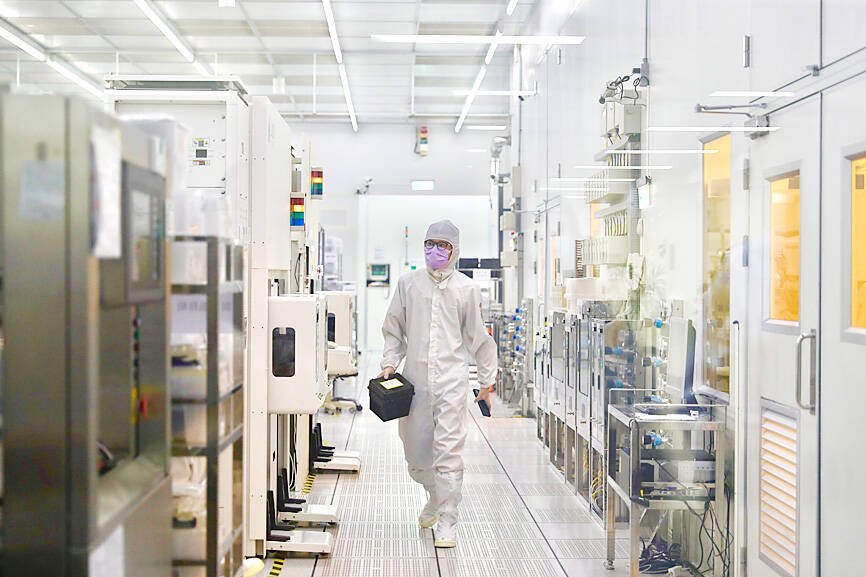
Photo: Ritchie B. Tongo, EPA-EFE
“My positioning strategy is based on a clear direction that the semiconductor industry is heading toward a cyclical recovery,” Pan said in an interview.
“The chip industry tends to be overly pessimistic on outlook when it is going through a down-cycle,” he said.
Global demand for chips remains weak as soaring inflation, rising interest rates and concerns of a potential global recession dampen consumer spending on computers and smartphones.
However, chip stocks have beaten the broader market this year, with the Philadelphia Semiconductor Index gaining 22 percent versus a 7 percent advance for the S&P 500 Index.
Pan said he expects semiconductor stocks to rebound in one or two quarters before a turnaround in chip sales occurs.
Now is a good time to add exposure, he added.
Pan’s outlook puts him at odds with Warren Buffett, whose Berkshire Hathaway Inc dumped 86 percent of its TSMC American depository receipts (ADRs) late last year, a move that startled the market and triggered more selling of TSMC shares.
TSMC in January cut its spending plan for this year on expectations that demand could be “softer than previously prognosticated,” and signaled that the company might face its first quarterly decline in revenue in four years.
TCMC stock is up 18 percent this year, compared with a 12 percent gain for the benchmark TAIEX.
Pan said he expects TSMC’s full-year results to remain flat or to contract slightly, although he remains bullish on the chipmaker’s outlook over a two-year span.
The firm has maintained its solid market share, despite challenges including a planned overseas expansion and a US crackdown on chip exports to China, he said.
“I am not too worried about the current weary chip demand, as it’s obvious that long-term usage of semiconductors will grow substantially,” Pan said.
Applications for advanced chips is expanding far beyond traditional consumer goods to servers, automobiles and artificial intelligence, Pan said, adding that “this demand will eventually feed back to TSMC and other Taiwan suppliers.”
Escalating tensions between the US and China and fears of a global economic slowdown drove foreign investors to pull cash from Taiwanese stocks last year, the first net outflow since 2019. That trend has since reversed, with the Taiwan Stock Exchange recording NT$12 billion of inflows in the first quarter, the most in Asia excluding China.
“The worst is over” for cross-strait tensions as China reopens and focuses on boosting its economy, which should help Taiwan’s tech companies attract more overseas money, he said.
Pan said he plans to maintain the portfolio’s focus on the chip sector.
His top three positions are eMemory Technology Inc, TSMC and United Microelectronics Corp (聯電), he said.
Allianz’s Taiwan Technology Fund is up 22 percent this year after an 11 percent loss over the past 12 months, data compiled by Bloomberg showed.
Pan said the past year was “especially challenging” because of unprecedented macro surprises such as Russia’s war in Ukraine and aggressive interest-rate increases by the US Federal Reserve.

SECOND-RATE: Models distilled from US products do not perform the same as the original and undo measures that ensure the systems are neutral, the US’ cable said The US Department of State has ordered a global push to bring attention to what it said are widespread efforts by Chinese companies, including artificial intelligence (AI) start-up DeepSeek (深度求索), to steal intellectual property from US AI labs, according to a diplomatic cable. The cable, dated Friday and sent to diplomatic and consular posts around the world, instructs diplomatic staff to speak to their foreign counterparts about “concerns over adversaries’ extraction and distillation of US AI models.” Distillation is the process of training smaller AI models using output from larger, more expensive ones to lower the costs of training a powerful new
Shares of Taiwan Semiconductor Manufacturing Co (TSMC, 台積電) have repeatedly hit new highs, but an equity analyst said the stock’s valuation remains within a reasonable range and any pullback would likely be technical. The contract chipmaker’s historical price-to-earnings (P/E) ratio has ranged between 20 and 30, Cathay Futures Consultant Co (國泰證期) analyst Tsai Ming-han (蔡明翰) told Central News Agency. With market consensus projecting that TSMC would post earnings per share of about NT$100 (US$3.17) this year, supported by strong global demand for artificial intelligence (AI) applications, and the stock currently trading at a P/E ratio of below 25, Tsai said the valuation
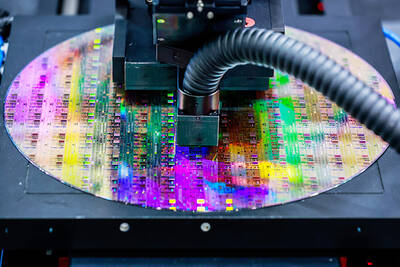
The artificial intelligence (AI) boom has triggered a seismic reshuffling of global equity markets, with Taiwan and South Korea muscling past European nations one by one. With its stock market now valued at nearly US$4.3 trillion, Taiwan surpassed the UK, Europe’s biggest market, earlier this month, data compiled by Bloomberg showed. South Korea is about US$140 billion away from doing the same. The tech-heavy Asian markets have shot past Germany and France in the past seven months. The shift is largely down to massive gains in shares of three companies that provide essential hardware for AI: Taiwan Semiconductor Manufacturing Co (TSMC, 台積電),
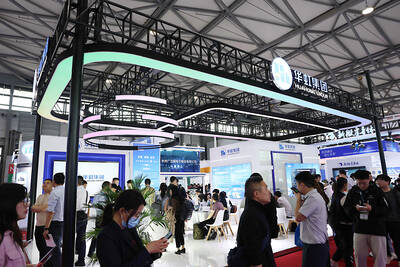
The US Department of Commerce last week ordered multiple chip equipment companies to halt shipments of certain tools to China’s second-largest chipmaker, Hua Hong Semiconductor Ltd (華虹半導體), its latest action to slow the country’s development of advanced chips, two people familiar with the matter said. The department sent letters to at least a handful of companies informing them of restrictions on tools and other materials destined for two Hua Hong facilities US officials believe make China’s most sophisticated chips, the people said. Top US chip equipment companies Lam Research Corp, Applied Materials Inc and KLA Corp, each of which has significant


 RSS
RSS