


Commercial property transactions in the first quarter shrank 63 percent from a year earlier, while land deals plunged 73 percent, as economic weakness and interest rate hikes sidelined life insurers and developers, property consultancy Colliers International Taiwan (高力國際) said on Monday last week.
Commercial property transactions — including for offices, factories, and logistics and warehousing facilities — totaled NT$15 billion (US$492.55 million) in the first quarter, down 63 percent year-on-year, Colliers said, citing an internal survey.
Office buildings took the hardest hit, with trading volume tumbling by 87 percent to slightly more than NT$2 billion, compared with NT$17 billion a year earlier, the consultancy said.
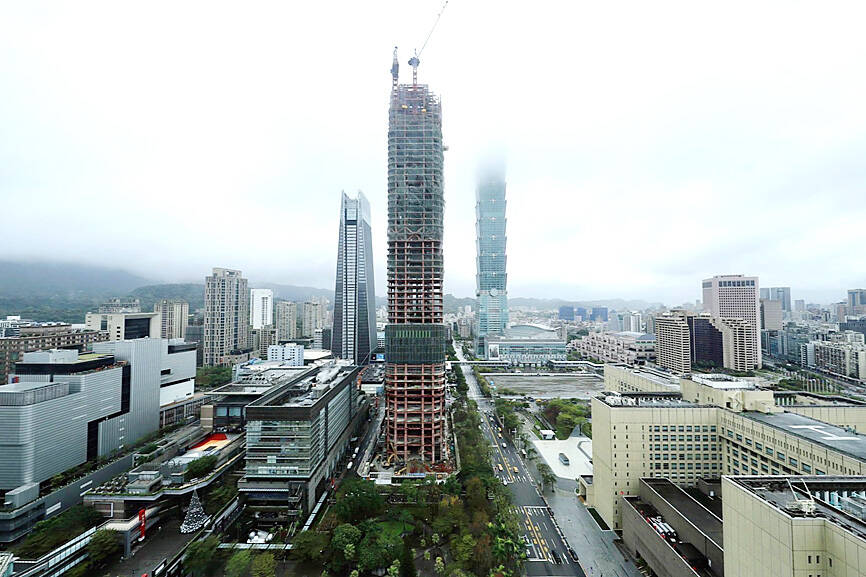
Photo: Hsu Yi-ping, Taipei Times
Topco Scientific Co (崇越科技), which distributes semiconductor materials, bought an office complex in Taipei’s Neihu District (內湖) for NT$5.4 billion, making it the largest deal with a 42 percent share of quarterly trading volume, Colliers said.
That is because prospective buyers turned cautious and adopted a wait-and-see attitude before the market sheds more light on future directions, it added.
The conservative approach was especially evident with domestic life insurers, the main players that spent more than NT$20 billion a year earlier, but contributed less than NT$2 billion, Colliers said.
The five interest rate hikes by the central bank since March last year bolstered the minimum yield threshold on real-estate investment by life insurers to 2.845 percent, significantly limiting the pool of investment targets in light of soaring prices across Taiwan in recent years, it said.
Against that backdrop, institutional investors shifted their attention to Taipei, Colliers said, adding that the city showed resiliency as property prices in other locations grow susceptible to corrections.
Land deals, a leading indicator of future property development projects, dwindled 73 percent annually to NT$14.5 billion in the first quarter as developers refrained from buying stock, it said.
Residential and commercial plots slumped 80 percent to NT$6.1 billion and NT$3.5 billion respectively, while industrial lots fell 43 percent to NT$3.4 billion, it said.
Taichung land deals in the first quarter saw a sharp 93 percent decline to NT$390 million, compared with other cities and counties in the nation, Colliers said.
The consultancy attributed the decline in land deals to the central bank having imposed selective credit controls on banks, which not only tightened financing terms, but raised investment and holding costs for potential land developers.
Shares of contract chipmaker Taiwan Semiconductor Manufacturing Co (TSMC, 台積電) came under pressure yesterday after a report that Apple Inc is looking to shift some orders from the Taiwanese company to Intel Corp. TSMC shares fell NT$55, or 2.4 percent, to close at NT$2,235 on the local main board, Taiwan Stock Exchange data showed. Despite the losses, TSMC is expected to continue to benefit from sound fundamentals, as it maintains a lead over its peers in high-end process development, analysts said. “The selling was a knee-jerk reaction to an Intel-Apple report over the weekend,” Mega International Investment Services Corp (兆豐國際投顧) analyst Alex Huang
Taiwan Semiconductor Manufacturing Co (TSMC, 台積電) is expected to remain Apple Inc’s primary chip manufacturing partner despite reports that Apple could shift some orders to Intel Corp, industry experts said yesterday. The comments came after The Wall Street Journal reported on Friday that Apple and Intel had reached a preliminary agreement following more than a year of negotiations for Intel to manufacture some chips for Apple devices. Taiwan Institute of Economic Research (台灣經濟研究院) economist Arisa Liu (劉佩真) said TSMC’s advanced packaging technologies, including integrated fan-out and chip-on-wafer-on-substrate, remain critical to the performance of Apple’s A-series and M-series chips. She said Intel and Samsung
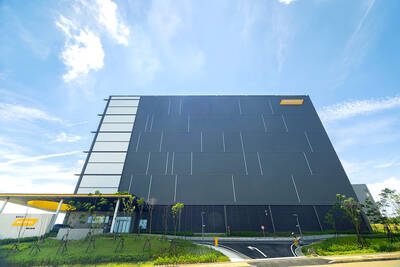
POWER BUILDUP: Powered by Nvidia’s B200 Blackwell chips, the data center would support MediaTek’s computing power demand and business growth, the company said Smartphone chip designer MediaTek Inc (聯發科) yesterday launched a new artificial intelligence (AI) data center with a maximum capacity of 45 megawatts to meet its rising demand for computing power required to develop new advanced chips for AI applications. The company has completed the first-phase computing power buildup at the data center in Miaoli County’s Tongluo Township (銅鑼), providing 15 megawatts of capacity to support its research and development (R&D) capabilities, despite an industrywide shortage of key components, MediaTek said. Supply constraints have plagued a wide range of key components, including memory chips, solid-state drives, power supply units and central
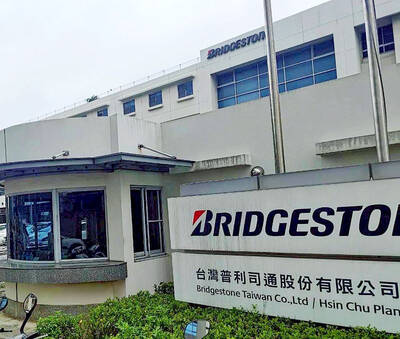
TRANSITION: With the closure, the company would reorganize its Taiwanese unit to a sales and service-focused model, Bridgestone said Bridgestone Corp yesterday announced it would cease manufacturing operations at its tire plant in Hsinchu County’s Hukou Township (湖口), affecting more than 500 workers. Bridgestone Taiwan Co (台灣普利司通) said in a statement that the decision was based on the Tokyo-based tire maker’s adjustments to its global operational strategy and long-term market development considerations. The Taiwanese unit would be reorganized as part of the closure, effective yesterday, and all related production activities would be concluded, the statement said. Under the plan, Bridgestone would continue to deepen its presence in the Taiwanese market, while transitioning to a sales and service-focused business model, it added. The Hsinchu


 RSS
RSS