


Japanese industrial company Daikin Industries Ltd has signed a deal with the northern English city of Manchester to deploy heat pumps in some of its public buildings and act as a test bed for the technology, the company said.
Daikin — one of the world’s largest air-conditioning manufacturers — would provide heat pumps and cooling systems to public buildings including social housing in the city that would be monitored and tested remotely.
Demand for heat pumps — which rely on electricity to transfer heat — has been booming in Europe amid soaring natural gas prices, with consumers in many countries waiting months for heat pump installations.

Photo: REUTERS
Manchester, one of the birthplaces of the industrial revolution, plans to become carbon neutral by 2038, 12 years ahead of the rest of the UK.
“Daikin’s aim is to demonstrate and promote technology to achieve carbon neutrality that can be deployed ... around the world,” Daikin Europe’s board chairman Masatsugu Minaka said.
“The two parties’ intentions were aligned and they recognized each other as the most suitable partners, leading to the conclusion of this agreement,” Minaka said.
Greater Manchester Mayor Andy Burnham said the partnership with Daikin symbolized the city’s industrial ambitions.
“Obviously with that ambition around 2038, we’re a place that’s going to move faster. In doing so, that presents opportunities to organizations like Daikin,” Burnham said.
Installations would take place over the next two years, the two sides said, without giving any further details.
Under the agreement, Daikin would also establish a training program in Manchester for heating and cooling system skills that are in short supply in the UK.
Manchester hopes its universities, known for their strength in science and engineering, would help spur foreign investment.
“Having access to that wealth of talent I think is a big attraction,” Deloitte partner and honorary consul of Japan in Manchester Jo Ahmed said.
Heat pumps, sometimes described as reverse air conditioners, use electricity to concentrate heat potential and are more energy efficient than gas boilers.
Daikin, headquartered in Osaka, Japan, last year said it would build a heat pump factory in Poland as part of its expansion plans.

The domestic unit of the Chinese-owned, Dutch-headquartered chipmaker Nexperia BV will soon be able to produce semiconductors locally within China, according to two company sources. Nexperia is at the center of a global tug-of-war over critical semiconductor technology, with a Dutch court in February ordering a probe into alleged mismanagement at the company. The geopolitical tussle has disrupted supply chains, with some carmakers reportedly forced to cut production due to chip shortages. Local production would allow Nexperia’s domestic arm, Nexperia Semiconductors (China) Ltd (安世半導體中國), to bypass restrictions in place since October on the supply of silicon wafers — etched with tiny components to

Singapore-based ride-hailing and delivery giant Grab Holdings Ltd has applied for regulatory approval to acquire the Taiwan operations of Germany-based Delivery Hero SE's Foodpanda in a deal valued at about US$600 million. Grab submitted the filing to the Fair Trade Commission on Friday last week, with the transaction subject to regulatory review and approval, the company said in a statement yesterday. Its independent governance structure would help foster a healthy and competitive market in Taiwan if the deal is approved, Grab said. Grab, which is listed on the NASDAQ, said in the filing that US-based Uber Technologies Inc holds about 13 percent of

Taiwan Semiconductor Manufacturing Co (TSMC, 台積電) yesterday received government approval to deploy its advanced 3-nanometer (3nm) process at its second fab currently under construction in Japan, the Ministry of Economic Affairs said in a news release. The ministry green-lit the plan for the facility in Kumamoto, which is scheduled to start installing equipment and come online in 2028 with a monthly production capacity of 15,000 12-inch wafers, the ministry said. The Department of Investment Review in June 2024 authorized a US$5.26 billion investment for the facility, slated to manufacture 6- to 12nm chips, significantly less advanced than 3nm process. At a meeting with
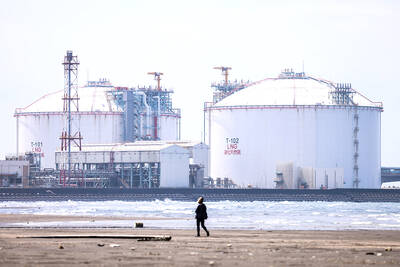
Taiwan is open to joining a global liquefied natural gas (LNG) program if one is created, but on the condition that countries provide delivery even in a scenario where there is a conflict with China, an energy department official said yesterday. While Taiwan’s priority is to have enough LNG at home, the nation is open to exploring potential strategic reserves in other countries such as Japan or South Korea, Energy Administration Deputy Director-General Chen Chung-hsien (陳崇憲) said. While the LNG market does not have a global reserve for emergencies like that of oil, the concept has been raised a few times —


 RSS
RSS