


In a post-COVID-19 world, the public better understands the importance of the global healthcare industry, Novartis Taiwan president Frances Milnes said in an interview with the Taipei Times.
Novartis aims to reimagine medicine to improve and extend people’s lives, Milnes said, adding that the company uses scientific innovation to address some of the most challenging healthcare issues, and it is passionate about “the impact we have on patients and societies.”
Novartis signed the Patient-Friendly Workplace Declaration, which was launched by the Taiwan Young Patient Association (TYPA) to raise awareness of workers’ health by providing health examinations for employees, as well as providing career support and fair opportunities for patients.
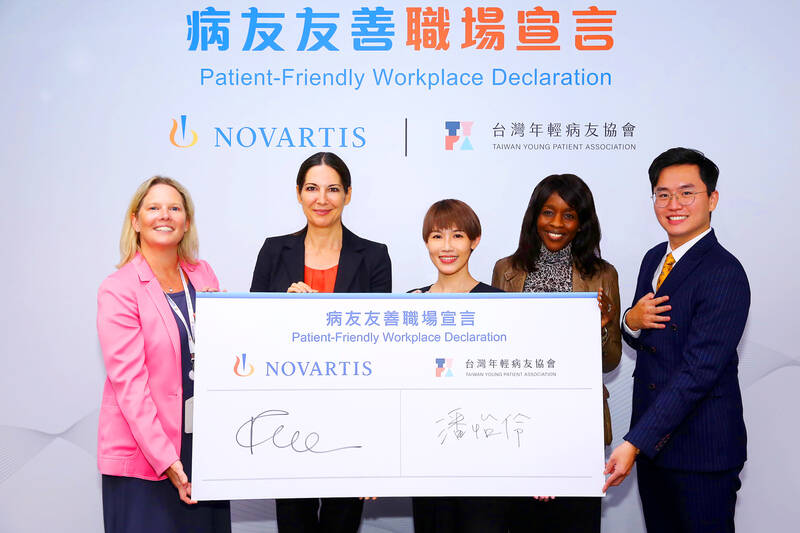
Photo courtesy of Novartis Taiwan
“Novartis has four commitments to patients and caretakers, namely, respecting and understanding the patient community perspective, expanding access to medicines, conducting responsible clinical trials, and recognizing the importance of transparency and reporting. By signing this declaration, we are turning our words into action,” Milnes said.
Despite increased awareness surrounding workplace equality, many companies still discriminate against employees who have a disease, with some companies going as far as to force such employees to resign, said Eric Liu (劉桓睿), vice president of TYPA, a Taipei-based organization serving hundreds of cancer patients.
There is no best work schedule for all companies to adopt for employees with diseases, Liu said, giving the example of a five-hour work day or a three-day work week.
This is because people with different illness, or people with the same disease but at different stages, might have distinct needs that their work schedule should account for.
“The decisions are completely case by case, but we hope that companies in Taiwan are at least willing to discuss with their employees and have an open mind,” Liu said.
The partnership between Novartis and TYPA has been strategic and consistent, collaborating on corporate social responsibility projects since 2020. For example, the two organizations went to Hsin Kwang Elementary School in Hsinchu County to conduct a “dreamers” campaign, which taught about anti-pandemic measures that helped students facing illnesses gain courage and a positive attitude.
Since 2020, TYPA has also participated in the Alliance and Partnerships for Patient Innovation and Solutions Initiative, which is co-organized by Novartis and international patient groups, and brings together patient communities and key stakeholders including policymakers, taxpayers, physicians, academics and digital innovators to collaborate on key challenges and prioritize action toward better patient outcomes in the Asia-Pacific region, the Middle East and Africa.
Novartis and TYPA have also worked together to promote health education and raise awareness of diseases. For example, an app, “Blossom Notebook,” was developed to help breast cancer patients navigate and track their treatment journeys.
The app is a practical care tool that can track data throughout the recovery from breast cancer, Liu said, adding that it not only can record the treatment journey, but it can also help mitigate the anxiety of patients and their family members.
Conducting responsible clinical trials helps represent underserved people. This can be done by supporting the RIGHT Choice study, which showed that the proportion of premenopausal and perimenopausal patients with breast cancer is 10 percent higher in Asia than the rest of the world, Milnes said.
Novartis plans to continue collaborating with patient groups to enhance disease awareness and create a better healthcare ecosystem to realize the organization’s commitment to patients and caregivers, Milnes added.

Taiwanese firms have increased investment in the Philippines in recent years as Manila’s ties with Washington deepen and global supply chains continue to shift away from China, an expert at the Chung-Hua Institution for Economic Research (CIER, 中華經濟研究院) said yesterday. The Philippines had not been among Taiwanese investors’ top choices in Southeast Asia, CIER Taiwan ASEAN Studies Center director Kristy Hsu (徐遵慈) said at a seminar in Taipei. However, Taiwan’s investment in the country has grown significantly since the COVID-19 pandemic, reaching US $257 million last year, a high in recent years, she said. Although Taiwan’s total investment in the Philippines still lags
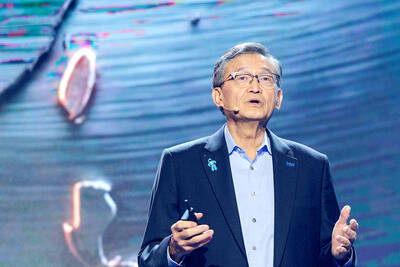
Intel Corp regards Taiwan Semiconductor Manufacturing Co (TSMC, 台積電) as a longstanding partner, as the US chipmaker would continue outsourcing production of advanced chips to TSMC, Intel chief executive officer Lip-Bu Tan (陳立武) said yesterday. “I don’t look at people as competitors. I look at the collaboration... Nvidia is also, you know, a good friend,” Tan told a news conference following his keynote speech at the Computex trade show in Taipei. “It’s a very trusted partnership for us... We are a big, top customer for them, and we’re going to continue doing that,” he said, referring to TSMC, the world’s largest foundry
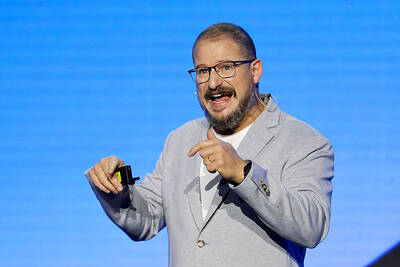
Artificial intelligence (AI) agents would supplant smartphones as the center of people’s digital lives, fundamentally reshaping personal devices and driving a major computing upgrade cycle, Qualcomm Inc CEO Cristiano Amon said yesterday. In his keynote speech for this year’s Computex trade show in Taipei, Amon said that the rise of "agentic AI" — AI systems capable of reasoning, planning and carrying out tasks autonomously — would transform how people interact with technology across phones, PCs, vehicles and wearable devices. Describing the technology as the next major evolution in computing, Amon said that "2026 is the year of agents.” For decades, smartphones have sat

Hon Hai Precision Industry Co (鴻海精密) yesterday said it would work with US chipmaker Intel Corp to jointly develop and deploy next-generation artificial intelligence (AI) infrastructure and intelligent computing platforms in a move to capture booming demand for AI computing systems. Hon Hai, also known as Foxconn Technology Group (富士康), said in a statement that the partnership would combine its global manufacturing scale, system integration expertise and AI data center deployment capabilities with Intel’s strengths in processor architecture, silicon technologies and software ecosystem. The companies said they plan to work on equipment used in AI data centers, including server racks powered by


 RSS
RSS