


Flat-panel maker AUO Corp (友達) yesterday posted its worst quarterly losses in about 10 years and said it would suspend construction of a new advanced fab due to a dismal demand outlook as consumers turn conservative amid soaring inflation and greater macroeconomic downside risks.
The Hsinchu-based company said the latest industrial downcycle is the most severe in about 10 years, mainly due to plunging demand rather than overcapacity.
“Previous display market downcycles were mainly driven by the supply side, as panel makers’ aggressive capacity expansion caused an oversupply,” AUO chairman Paul Peng (彭双浪) told an online investors’ conference. “This time, it is driven by the demand side. End demand plummeted within a very short period because of the macroeconomic environment.”
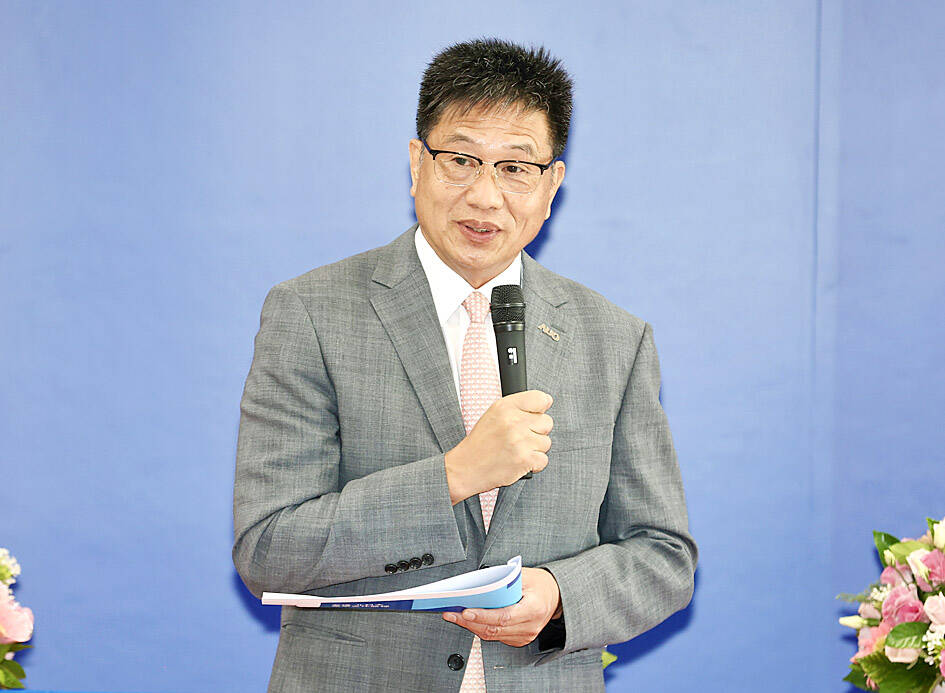
Photo: CNA
It would take longer to see a recovery in view of soaring inflation, an energy crisis and Russia’s invasion of Ukraine, Peng said.
If the demand outlook does not improve in the short term, “we will not need to build new capacity at this stage to meet demand. So we are delaying the construction of a new fab in Taichung’s Houli District (后里),” Peng said.
No timetable has been set on when the fab construction would resume, Peng said.
The planned 8.5-generation Houli fab, which was estimated to cost about NT$150 billion (US$4.66 billion) to build, would produce high-end displays using next-generation micro-LED technology.
The board of directors in February approved an initial investment of NT$28 billion, it said.
For this quarter, AUO expects shipments to rise by up to 5 percent sequentially, as TV customers rush orders to rebuild inventory to meet year-end shopping demand.
Some TV customers and channels had reduced inventory substantially last quarter by offering deep discounts, while PC vendors are still struggling to digest excess inventory, AUO said.
The average selling price is expected to dip by about 5 percent sequentially in the final quarter, following a quarterly decline of 3.7 percent or annual drop of 29 percent to US$360 per square meter last quarter, AUO said.
As demand remains weak for most applications, AUO said it would continue “adjusting” its equipment-loading rate.
The panel maker said it lowered its factory utilization rate to 50 percent last quarter, as customers slashed orders to digest inventory.
In the third quarter, AUO saw its losses balloon to NT$10.43 billion, compared with losses of NT$5.63 billion in the second quarter. The company posted a net profit of NT$19.31 billion a year earlier.
AUO’s gross margin dropped to minus-14.6 percent last quarter from 2.7 percent in the second quarter and 27.7 percent in the third quarter last year.

The domestic unit of the Chinese-owned, Dutch-headquartered chipmaker Nexperia BV will soon be able to produce semiconductors locally within China, according to two company sources. Nexperia is at the center of a global tug-of-war over critical semiconductor technology, with a Dutch court in February ordering a probe into alleged mismanagement at the company. The geopolitical tussle has disrupted supply chains, with some carmakers reportedly forced to cut production due to chip shortages. Local production would allow Nexperia’s domestic arm, Nexperia Semiconductors (China) Ltd (安世半導體中國), to bypass restrictions in place since October on the supply of silicon wafers — etched with tiny components to

Singapore-based ride-hailing and delivery giant Grab Holdings Ltd has applied for regulatory approval to acquire the Taiwan operations of Germany-based Delivery Hero SE's Foodpanda in a deal valued at about US$600 million. Grab submitted the filing to the Fair Trade Commission on Friday last week, with the transaction subject to regulatory review and approval, the company said in a statement yesterday. Its independent governance structure would help foster a healthy and competitive market in Taiwan if the deal is approved, Grab said. Grab, which is listed on the NASDAQ, said in the filing that US-based Uber Technologies Inc holds about 13 percent of

Taiwan Semiconductor Manufacturing Co (TSMC, 台積電) yesterday received government approval to deploy its advanced 3-nanometer (3nm) process at its second fab currently under construction in Japan, the Ministry of Economic Affairs said in a news release. The ministry green-lit the plan for the facility in Kumamoto, which is scheduled to start installing equipment and come online in 2028 with a monthly production capacity of 15,000 12-inch wafers, the ministry said. The Department of Investment Review in June 2024 authorized a US$5.26 billion investment for the facility, slated to manufacture 6- to 12nm chips, significantly less advanced than 3nm process. At a meeting with
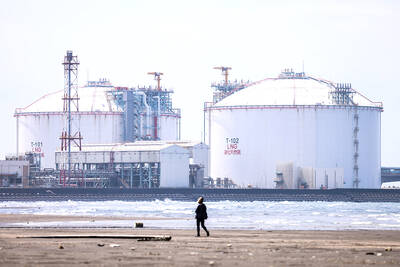
Taiwan is open to joining a global liquefied natural gas (LNG) program if one is created, but on the condition that countries provide delivery even in a scenario where there is a conflict with China, an energy department official said yesterday. While Taiwan’s priority is to have enough LNG at home, the nation is open to exploring potential strategic reserves in other countries such as Japan or South Korea, Energy Administration Deputy Director-General Chen Chung-hsien (陳崇憲) said. While the LNG market does not have a global reserve for emergencies like that of oil, the concept has been raised a few times —


 RSS
RSS