


Samsung Electronics Co is shifting away from fossil fuels and aiming to entirely power its global operations with clean energy by 2050, a challenging goal that experts say could be hampered by South Korea’s modest climate change commitments.
The company yesterday announced that it aims to achieve net zero carbon emissions across its mobile device, television and consumer electronics divisions by 2030, and across all global operations, including chips, by 2050.
It plans to invest 7 trillion won (US$5 billion) through 2030 on projects aimed at reducing emissions from process gases, controlling and recycling electronic waste, conserving water and minimizing pollutants.
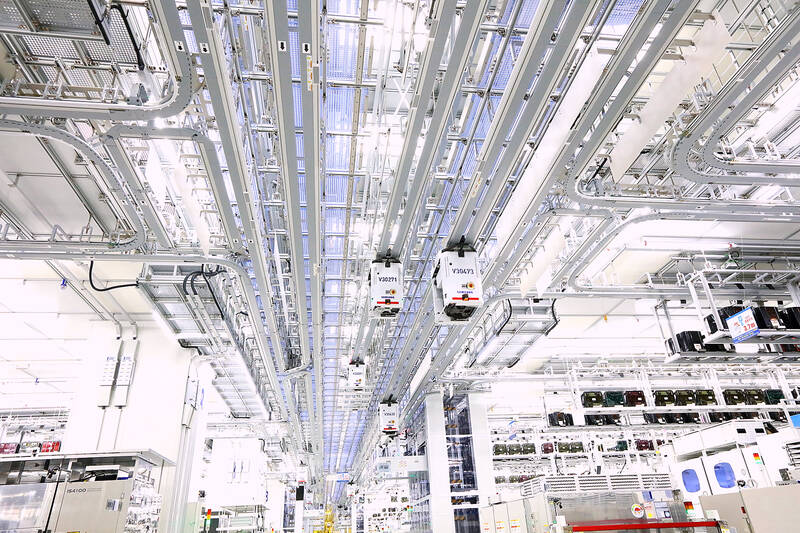
Photo: Reuters
It plans to develop new technologies to reduce power consumption in consumer electronics devices and data centers, which would require more efficient memory chips.
“Samsung is responding to the threats of climate change with a comprehensive plan that includes reducing emissions, new sustainability practices, and the development of innovative technologies and products that are better for our planet,” Samsung CEO Han Jong-hee said in an e-mailed statement.
Samsung’s plan drew praise from some of its investors, including Dutch pension fund manager APG, which said the company could potentially make a “significant contribution” to cleaning up South Korea’s electricity market.
However, APG also expressed concern that Samsung’s announcement comes at a time when South Korea has been dialing back on its climate change goals.
South Korean President Yoon Suk-yeol has focused much of its energy policy on promoting nuclear-generated electricity. Desperate to boost a weak economy, Yoon’s government has also indicated reluctance to sharply reduce the nation’s dependence on coal and gas, which generate about 65 percent of South Korea’s electricity.
South Korea got 7.5 percent of its electricity from renewable sources last month, significantly lower than the 30 percent average among rich nations making up the Organisation for Economic Co-operation and Development.
Yoon’s government recently adjusted the nation’s renewable energy target to 21 percent of the total energy mix by 2030, softening the 30 percent target announced by his predecessor, Moon Jae-in.
Samsung acknowledged that it would have a harder time converting to renewable electricity sources at home than at its foreign operations, where it aims to get to 100 percent clean energy by 2027.
It said renewable energy supplies in South Korea “have begun to expand, but remain limited,” while its electricity needs continue to rise as it boosts production at its domestic semiconductor lines to meet global demands.
“As a long-term investor in Korea, we are concerned about how the government plans to reconcile the industry’s desperate need for clean electricity to stay relevant in the long run,” Park Yoo-kyung, APG’s Asia-Pacific head of responsible investment and governance, said in a statement.

The domestic unit of the Chinese-owned, Dutch-headquartered chipmaker Nexperia BV will soon be able to produce semiconductors locally within China, according to two company sources. Nexperia is at the center of a global tug-of-war over critical semiconductor technology, with a Dutch court in February ordering a probe into alleged mismanagement at the company. The geopolitical tussle has disrupted supply chains, with some carmakers reportedly forced to cut production due to chip shortages. Local production would allow Nexperia’s domestic arm, Nexperia Semiconductors (China) Ltd (安世半導體中國), to bypass restrictions in place since October on the supply of silicon wafers — etched with tiny components to

Singapore-based ride-hailing and delivery giant Grab Holdings Ltd has applied for regulatory approval to acquire the Taiwan operations of Germany-based Delivery Hero SE's Foodpanda in a deal valued at about US$600 million. Grab submitted the filing to the Fair Trade Commission on Friday last week, with the transaction subject to regulatory review and approval, the company said in a statement yesterday. Its independent governance structure would help foster a healthy and competitive market in Taiwan if the deal is approved, Grab said. Grab, which is listed on the NASDAQ, said in the filing that US-based Uber Technologies Inc holds about 13 percent of
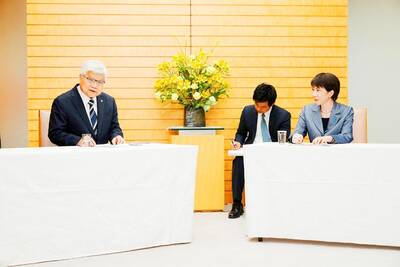
Taiwan Semiconductor Manufacturing Co (TSMC, 台積電) yesterday received government approval to deploy its advanced 3-nanometer (3nm) process at its second fab currently under construction in Japan, the Ministry of Economic Affairs said in a news release. The ministry green-lit the plan for the facility in Kumamoto, which is scheduled to start installing equipment and come online in 2028 with a monthly production capacity of 15,000 12-inch wafers, the ministry said. The Department of Investment Review in June 2024 authorized a US$5.26 billion investment for the facility, slated to manufacture 6- to 12nm chips, significantly less advanced than 3nm process. At a meeting with
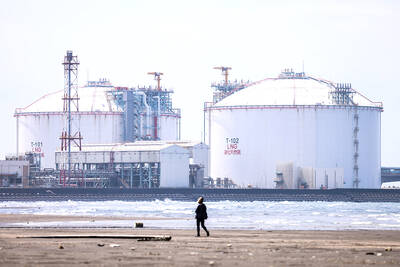
Taiwan is open to joining a global liquefied natural gas (LNG) program if one is created, but on the condition that countries provide delivery even in a scenario where there is a conflict with China, an energy department official said yesterday. While Taiwan’s priority is to have enough LNG at home, the nation is open to exploring potential strategic reserves in other countries such as Japan or South Korea, Energy Administration Deputy Director-General Chen Chung-hsien (陳崇憲) said. While the LNG market does not have a global reserve for emergencies like that of oil, the concept has been raised a few times —


 RSS
RSS