


Only one in three Indonesians favor Chinese investors buying a controlling stake in major local companies, a survey found, showing the difficulty Beijing faces to improve its image across Southeast Asia.
The poll by Australia-based Lowy Institute asked respondents about a range of topics, including whether they would favor companies, banks or investment funds from eight particular countries purchasing a majority share in major Indonesian firms.
It found Saudi Arabia the most popular with 57 percent, with the US at 42 percent and China at the bottom with 30 percent.
While trust in both of the world’s biggest economies fell among Indonesians, the survey found more negativity aimed toward China. More respondents saw the US as more important for Indonesia’s economy than China, and a majority said that Southeast Asia’s most-populous country should join with other nations to limit China’s influence.
“China ranks less favorably than the United States across a range of indicators, from military and economic leadership, and influence and security concerns, to ‘soft power’ benchmarks such as education and work destinations,” Lowy said in a summary of its “Indonesia Poll 2021.”
The survey comes as Indonesia turns to the Middle East and China to finance the construction of a new US$34 billion capital in Borneo after Softbank Group Corp founder Masayoshi Son pulled out of the project.
Indonesian Minister for Investment and Maritime Affairs Luhut Panjaitan has said overseas financers had expressed interest, including from Saudi Arabia and one from Abu Dhabi in partnership with Chinese funds.
“Indonesians appear to hold Islamic countries in particularly high regard,” the report said, adding that it surveyed 3,000 Indonesians.
Saudi Arabia topped a “feelings thermometer” that measures perceptions about countries and territories.
After Indonesian President Joko Widodo, the next two leaders that inspire the most confidence among those surveyed were Saudi Arabian Crown Prince Mohammed bin Salman at 57 percent, and United Arab Emirates Crown Prince Sheikh Mohammed bin Zayed at 52 percent.
US President Joe Biden at 44 percent outranked Chinese President Xi Jinping (習近平) and North Korean leader Kim Jong-un, both of whom had the confidence of about one-third of Indonesians.
“Amid talk of an Islamic turn in Indonesian foreign policy, and rising religious conservatism at home, more Indonesians express confidence in the leaders of Saudi Arabia and the United Arab Emirates than in any other foreign leaders,” the survey said.
The survey found Indonesians have grown distrustful of major powers over the past decade. While 56 percent of respondents trusted the US, that number was down 16 percentage points compared with a decade ago. Trust in China fell even further, dropping to 42 percent in that period.
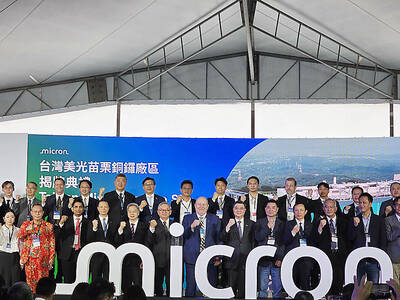
UNPRECEDENTED PACE: Micron Technology has announced plans to expand manufacturing capabilities with the acquisition of a new chip plant in Miaoli Micron Technology Inc unveiled a newly acquired chip plant in Miaoli County yesterday, as the company expands capacity to meet growing demand for advanced DRAM chips, including high-bandwidth memory chips amid the artificial intelligence boom. The plant in Miaoli County’s Tongluo Township (銅鑼), which Micron acquired from Powerchip Semiconductor Manufacturing Corp (力積電) for US$1.8 billion, is expected to make a sizeable capacity contribution to the company from fiscal 2028, the company said in a statement. It would be an extended production site of Micron’s large-scale manufacturing hub in Taichung, the company said. As the global semiconductor industry is racing to reach US$1 trillion

Singapore-based ride-hailing and delivery giant Grab Holdings Ltd has applied for regulatory approval to acquire the Taiwan operations of Germany-based Delivery Hero SE's Foodpanda in a deal valued at about US$600 million. Grab submitted the filing to the Fair Trade Commission on Friday last week, with the transaction subject to regulatory review and approval, the company said in a statement yesterday. Its independent governance structure would help foster a healthy and competitive market in Taiwan if the deal is approved, Grab said. Grab, which is listed on the NASDAQ, said in the filing that US-based Uber Technologies Inc holds about 13 percent of
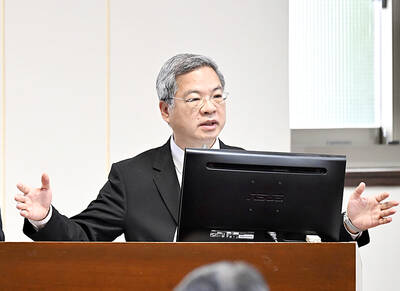
ABOVE LEGAL REQUIREMENT: The Ministry of Economic Affairs is prepared if LNG supply is disrupted, with more than the legal requirement of 11 days of inventory Taiwan has largely secured liquefied natural gas (LNG) supplies through May and arranged about half of June’s supply, Minister of Economic Affairs Kung Ming-hsin (龔明鑫) said yesterday. Since the Middle East conflict began on Feb. 28, Taiwan’s LNG inventories have remained more than 12 days, exceeding the legal requirement of 11 days, indicating no major supply concerns for domestic gas and electricity, Kung said at a meeting of the legislature’s Economics Committee in Taipei. The ministry aims to increase the figure to 14 days by the end of next year, he said. While one or two LNG or crude oil shipments for May

Taiwan’s food delivery market could undergo a major shift if Singapore-based Grab Holdings Ltd completes its planned acquisition of Delivery Hero SE’s Foodpanda business in Taiwan, industry experts said. Grab on Monday last week announced it would acquire Foodpanda’s Taiwan operations for US$600 million. The deal is expected to be finalized in the second half of this year, with Grab aiming to complete user migration to its platform by the first half of next year. A duopoly between Uber Eats and Foodpanda dominates Taiwan’s delivery market, a structure that has remained intact since the Fair Trade Commission (FTC) blocked Uber Technologies Inc’s


 RSS
RSS