


Michele Bullock yesterday was named as the Reserve Bank of Australia’s (RBA) first female deputy governor, propelling her to the front of the line to succeed RBA Governor Philip Lowe.
Bullock was appointed to a five-year term as the central bank’s No. 2 official and is to take up her role immediately, statements from the treasurer and the RBA said.
“Bullock will become the first female deputy governor of the RBA in their 62-year history,” Australian Treasurer Josh Frydenberg said in announcing her appointment.
Bullock replaces Guy Debelle, who resigned for a job in the private sector.
Bullock is the most experienced of the bank’s five assistant governors and was widely seen as a front-runner for the role.
She was assistant governor for currency and business services from 2010 to 2016, before taking on her most recent position overseeing the financial system.
She is working with a group of other central banks and the Bank for International Settlements to help develop prototypes for a common digital currencies platform.
“Michele Bullock is a strong appointment,” said John Hawkins, who previously worked at the RBA, Australian Treasury and the Bank for International Settlements. “With increasing discussion of issues such as the impact of decentralized finance and the question of whether the [central] bank should issue its own digital currency, her experience would be very useful.”
“Bullock’s fairly quick appointment suggests that the RBA did not look externally, continuing a long-established tradition of promoting from within,” said Su-Lin Ong, head of Australian economic and fixed-income strategy at the Royal Bank of Canada.
Ong said that unlike previous deputy governors, Bullock has not spent time overseeing economics.
Lowe pledged to improve gender equality shortly after taking the helm at the RBA in late 2016 after being challenged by his then 15-year-old daughter about the dearth of females in senior roles.
Under Lowe, the RBA has made progress in filling more jobs with women.
It has a longer-term goal of 40 percent women in managerial positions, from 34.4 percent now.
The gender pay gap at the RBA has declined to 14.5 percent under Lowe, compared with the nationwide disparity of 22.8 percent.

UNPRECEDENTED PACE: Micron Technology has announced plans to expand manufacturing capabilities with the acquisition of a new chip plant in Miaoli Micron Technology Inc unveiled a newly acquired chip plant in Miaoli County yesterday, as the company expands capacity to meet growing demand for advanced DRAM chips, including high-bandwidth memory chips amid the artificial intelligence boom. The plant in Miaoli County’s Tongluo Township (銅鑼), which Micron acquired from Powerchip Semiconductor Manufacturing Corp (力積電) for US$1.8 billion, is expected to make a sizeable capacity contribution to the company from fiscal 2028, the company said in a statement. It would be an extended production site of Micron’s large-scale manufacturing hub in Taichung, the company said. As the global semiconductor industry is racing to reach US$1 trillion

Singapore-based ride-hailing and delivery giant Grab Holdings Ltd has applied for regulatory approval to acquire the Taiwan operations of Germany-based Delivery Hero SE's Foodpanda in a deal valued at about US$600 million. Grab submitted the filing to the Fair Trade Commission on Friday last week, with the transaction subject to regulatory review and approval, the company said in a statement yesterday. Its independent governance structure would help foster a healthy and competitive market in Taiwan if the deal is approved, Grab said. Grab, which is listed on the NASDAQ, said in the filing that US-based Uber Technologies Inc holds about 13 percent of
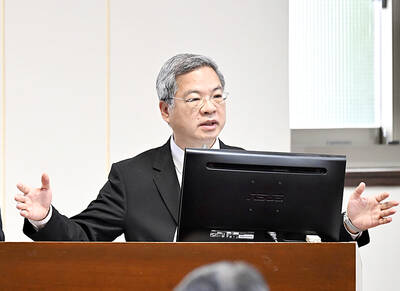
ABOVE LEGAL REQUIREMENT: The Ministry of Economic Affairs is prepared if LNG supply is disrupted, with more than the legal requirement of 11 days of inventory Taiwan has largely secured liquefied natural gas (LNG) supplies through May and arranged about half of June’s supply, Minister of Economic Affairs Kung Ming-hsin (龔明鑫) said yesterday. Since the Middle East conflict began on Feb. 28, Taiwan’s LNG inventories have remained more than 12 days, exceeding the legal requirement of 11 days, indicating no major supply concerns for domestic gas and electricity, Kung said at a meeting of the legislature’s Economics Committee in Taipei. The ministry aims to increase the figure to 14 days by the end of next year, he said. While one or two LNG or crude oil shipments for May

Taiwan’s food delivery market could undergo a major shift if Singapore-based Grab Holdings Ltd completes its planned acquisition of Delivery Hero SE’s Foodpanda business in Taiwan, industry experts said. Grab on Monday last week announced it would acquire Foodpanda’s Taiwan operations for US$600 million. The deal is expected to be finalized in the second half of this year, with Grab aiming to complete user migration to its platform by the first half of next year. A duopoly between Uber Eats and Foodpanda dominates Taiwan’s delivery market, a structure that has remained intact since the Fair Trade Commission (FTC) blocked Uber Technologies Inc’s


 RSS
RSS