


Hon Hai Precision Industry Co (鴻海精密) subsidiary Sharp Corp yesterday said it would take full control of Sakai Display Products Corp through a stock swap.
The company, based in Osaka, Japan, reached an agreement with Sakai’s majority shareholder, World Praise Ltd, to bring Sakai completely under its corporate umbrella, Sharp chairman and CEO J.W. Tai (戴正吳) said in a statement.
Tai said the move would help make Sharp’s flat-panel business more competitive globally.
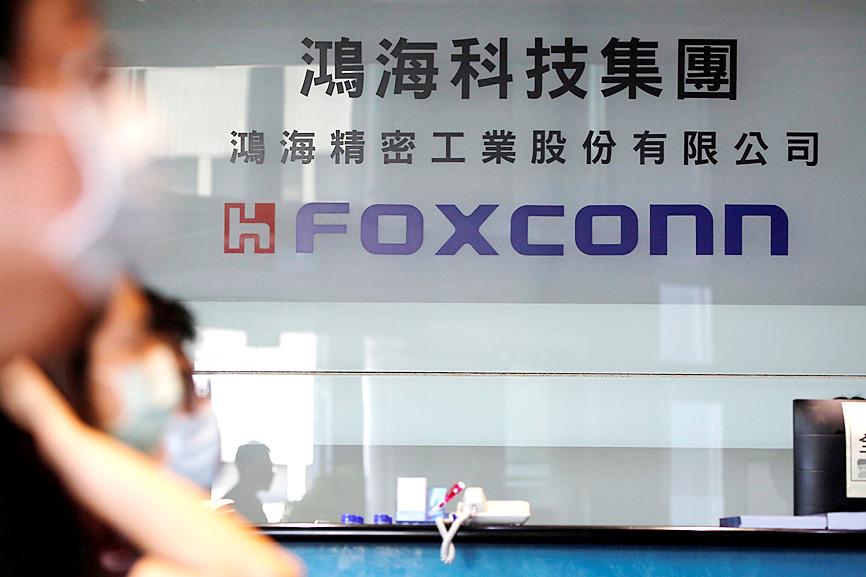
Photo: Ann Wang, Reuters
The deal would give Sharp, which owns about 20 percent of Sakai shares, priority rights to supplies from an 8.5 generation plant that the display maker partially owns in Guangzhou, China, Tai said, adding that the plant is producing 55, 65 and 75-inch flat displays for TVs.
The move took into consideration the need for a stable supply of high-quality panels to achieve Sharp’s goal of expanding its global large TV and professional display businesses amid growing global demand, the company said in a statement.
Sharp’s board last month approved the acquisition, it said.
Under the agreement with World Praise, Sharp would acquire the remaining 80 percent of Sakai shares, exchanging 11.45 of its common shares per one Sakai share.
Sharp is to issue about 38.45 million new common shares ahead of the swap, Sharp said, adding that no timetable has been set for the transaction given that is subject to regulatory approval.
Sakai, which is also headquartered in Osaka, has ¥32.49 billion (US$281.44 million) in capital and about 4.2 million shares in circulation, Sharp said.
Sakai chairman Leroy Yau (邱啟華) is World Praise’s largest investor, Sharp said.
As of the end of June last year, Sakai had 1,150 employees, and its major clients were Samsung Electronics Corp and LG Corp.
Sakai in 2020 posted a net loss of ¥101.99 billion, bringing aggregate losses since 2018 to ¥150.11 billion.
Shares of contract chipmaker Taiwan Semiconductor Manufacturing Co (TSMC, 台積電) came under pressure yesterday after a report that Apple Inc is looking to shift some orders from the Taiwanese company to Intel Corp. TSMC shares fell NT$55, or 2.4 percent, to close at NT$2,235 on the local main board, Taiwan Stock Exchange data showed. Despite the losses, TSMC is expected to continue to benefit from sound fundamentals, as it maintains a lead over its peers in high-end process development, analysts said. “The selling was a knee-jerk reaction to an Intel-Apple report over the weekend,” Mega International Investment Services Corp (兆豐國際投顧) analyst Alex Huang
Taiwan Semiconductor Manufacturing Co (TSMC, 台積電) is expected to remain Apple Inc’s primary chip manufacturing partner despite reports that Apple could shift some orders to Intel Corp, industry experts said yesterday. The comments came after The Wall Street Journal reported on Friday that Apple and Intel had reached a preliminary agreement following more than a year of negotiations for Intel to manufacture some chips for Apple devices. Taiwan Institute of Economic Research (台灣經濟研究院) economist Arisa Liu (劉佩真) said TSMC’s advanced packaging technologies, including integrated fan-out and chip-on-wafer-on-substrate, remain critical to the performance of Apple’s A-series and M-series chips. She said Intel and Samsung
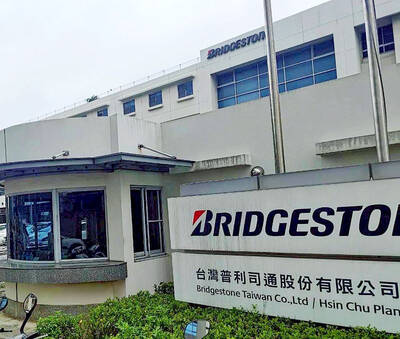
TRANSITION: With the closure, the company would reorganize its Taiwanese unit to a sales and service-focused model, Bridgestone said Bridgestone Corp yesterday announced it would cease manufacturing operations at its tire plant in Hsinchu County’s Hukou Township (湖口), affecting more than 500 workers. Bridgestone Taiwan Co (台灣普利司通) said in a statement that the decision was based on the Tokyo-based tire maker’s adjustments to its global operational strategy and long-term market development considerations. The Taiwanese unit would be reorganized as part of the closure, effective yesterday, and all related production activities would be concluded, the statement said. Under the plan, Bridgestone would continue to deepen its presence in the Taiwanese market, while transitioning to a sales and service-focused business model, it added. The Hsinchu
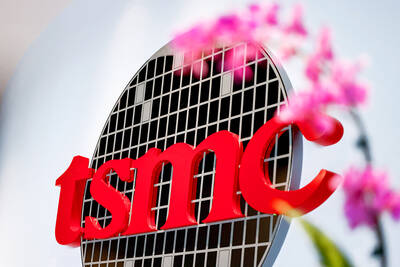
Taiwan Semiconductor Manufacturing Co (TSMC, 台積電) has approved a capital budget of US$31.28 billion for production expansion to meet long-term development needs during the artificial intelligence (AI) boom. The company’s board meeting yesterday approved the capital appropriation plan for purposes such as the installation of advanced technology capacity and fab construction, the world’s largest contract chipmaker said in a statement. At an earnings conference last month, TSMC forecast that its capital expenditure for this year would be at the higher end of the US$52 billion to US$56 billion range it forecast in January in response to robust demand for 5G, AI and


 RSS
RSS