


BP PLC moved to dump its shares in oil giant Rosneft PJSC, taking a financial hit of as much as US$25 billion by joining the campaign to isolate Russia’s economy.
The surprise move from the British company is the latest sign of how far Western powers are willing to go to punish Russian President Vladimir Putin for his invasion of Ukraine. BP has been in Russia for three decades and just weeks ago was staunchly defending its presence there.
However, it was coming under growing pressure from the UK government over the alliance with Rosneft.
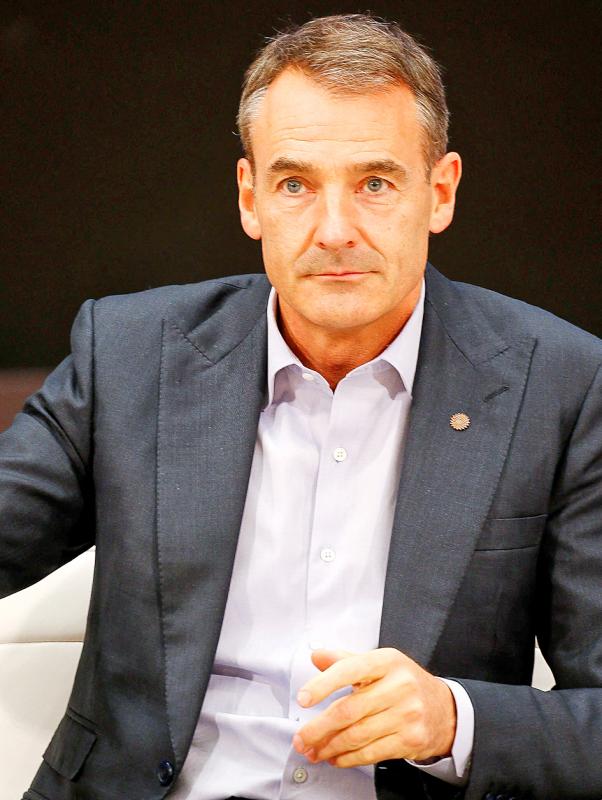
Photo: Reuters
BP chief executive Bernard Looney was summoned by UK Secretary of State for Business, Energy and Industrial Strategy Kwasi Kwarteng to explain the company’s Russian links last week.
Kwarteng welcomed BP’s move on Sunday.
“This military action represents a fundamental change,” BP chairman Helge Lund said in a statement. “It has led the BP board to conclude, after a thorough process, that our involvement with Rosneft, a state-owned enterprise, simply cannot continue.”
BP did not say whether it was planning to sell its about 20 percent stake in Rosneft, or simply walk away. Any potential buyer would have to navigate a tightening web of economic sanctions that would make any transaction extremely difficult.
In a memo to employees, Looney said there would be “financial consequences” from the move that would show up in its next quarterly results.
A spokesperson said there could be a writedown of as much as US$25 billion.
The London-based company did confirm that it would no longer account for its share of oil and gas reserves, production and profit from its stake in Rosneft.
Looney is also to resign with immediate effect from the Russian company’s board, as will his predecessor, Bob Dudley.
Moreover, BP is to exit its other business in Russia, which includes three joint ventures with a carrying value on its books of about US$1.4 billion.
BP’s move — and the associated financial costs — comes as a surprise to investors. BP shares have risen 15 percent this year, bolstered by rising oil prices even as Russian forces were massing on Ukraine’s border.
Early last month, Looney was still arguing that BP could “avoid politics” in Russia, which was “a large member of the energy system.” The shock of Putin’s large military incursion into Ukraine made that position untenable.
BP has a longer history in Russia than many of its peers. It was one of the first Western oil majors to establish a presence in Russia after the collapse of the Soviet Union.
While BP reported its share of Rosneft production, reserves and profit for accounting purposes, it did not have direct stakes in any of Rosneft’s fields nor physical access to the hydrocarbons they produced. The company did receive regular dividends from Rosneft, which last year amounted to US$640 million, compared with BP’s total operational cash flow of US$23.6 billion.
Rosneft said the move “destroys the successful 30-year cooperation” of the two companies.
“The decision was made under unprecedented pressure from politically engaged forces,” it said in a statement on its Web site.
BP had the largest interest in Russian oil and gas, but its Big Oil peers also hold important stakes in the country. TotalEnergies SE’s operations in Russia represent about US$1.5 billion of its total cash flow, or around 5 percent. It has a stake in gas producer Novatek, as well as a large interest in the Yamal LNG project.
Shell PLC has a large holding in the Gazprom PJSC-led LNG project Sakhalin Energy, while Chevron Corp and Exxon Corp have a presence in lubricants.
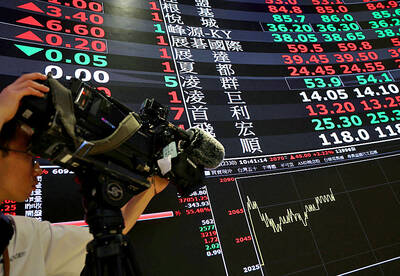
After several years flying high as Asia’s best Nvidia Corp proxy, Taiwan Semiconductor Manufacturing Co (TSMC, 台積電) is increasingly vying with other artificial intelligence (AI) stocks for investor attention. Stock traders are chasing a wider array of beneficiaries as mainstream usage of AI creates demand for hardware beyond the most-advanced chips TSMC makes for Nvidia. Subthemes from the deepening memory crunch to advances in robotics are also luring bids. At the same time, investment caps on single stocks are pushing funds to diversify, while retail investors long familiar with TSMC through its US depositary receipts are being offered a broader set of
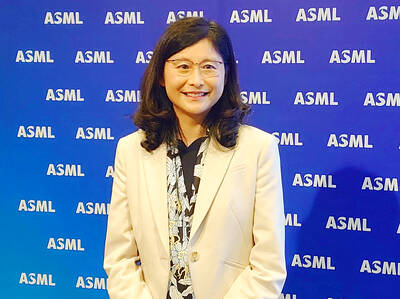
Netherlands-based semiconductor equipment supplier ASML Holding NV yesterday said that it is planning to hire an additional 1,000 people in Taiwan this year in response to growing demand from clients. ASML had previously planned to recruit 600 people this year, but that the plan has been adjusted upward, ASML vice president and ASML Taiwan general manager Grace Wang (汪佳慧) told reporters. ASML has a workforce of more than 4,500 in Taiwan, accounting for about 10 percent of its global total, Wang said. This year’s recruitment campaign would focus on adding people in the customer support, manufacturing and supply chain domains to assist ASML
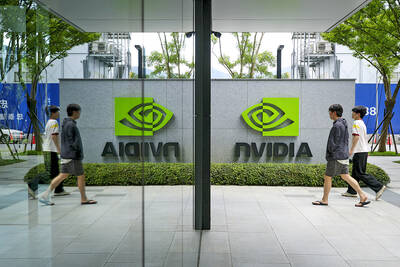
UNDER MICROSCOPE: Taiwan detained three people who allegedly conspired to buy servers in Taiwan and export them using fraudulent documentation, prosecutors said Nvidia Corp chief executive officer Jensen Huang (黃仁勳) on Saturday urged Super Micro Computer Inc to tighten up on compliance after Taiwan detained three people this week for allegedly making fraudulent declarations about artificial intelligence (AI) servers made by its US partner. The development marked the nation’s first crackdown on semiconductor smuggling, which grew after the US slapped restrictions on exports of high-end chips such as Nvidia AI accelerators to China. Nvidia is “rigorous” in explaining regulations to all of its partners, Huang told reporters after arriving in Taipei. “Ultimately Super Micro has to run their own company,” he said in response to

Nvidia Corp yesterday announced that CEO Jensen Huang (黃仁勳) would attend an employee meeting in Taipei tomorrow to celebrate the launch of the company’s Taiwan headquarters project. Huang would attend a gathering at the site of Nvidia’s planned headquarters in Beitou Shilin Technology Park (北投士林科技園區), the company said in a statement. After arriving in Taiwan on Saturday last week, Huang told reporters that he plans to meet with Quanta Computer Inc (廣達) chairman Barry Lam (林百里) and Taiwan Semiconductor Manufacturing Co (TSMC, 台積電) chairman C.C. Wei (魏哲家), and would attend the groundbreaking ceremony for Nvidia’s Taiwan headquarters tomorrow. Nvidia has not yet applied


 RSS
RSS