


Axis Bank Ltd is nearing a deal to buy Citigroup Inc’s India retail banking business in a transaction that could be valued at about US$2.5 billion, people familiar with the matter said.
An agreement for the consumer unit could be announced within the next few weeks, and is contingent on approval from the Reserve Bank of India, the people said on the condition of anonymity.
The deal would include a cash component of less than US$2 billion, accounting for the consumer business’ liabilities, they said.
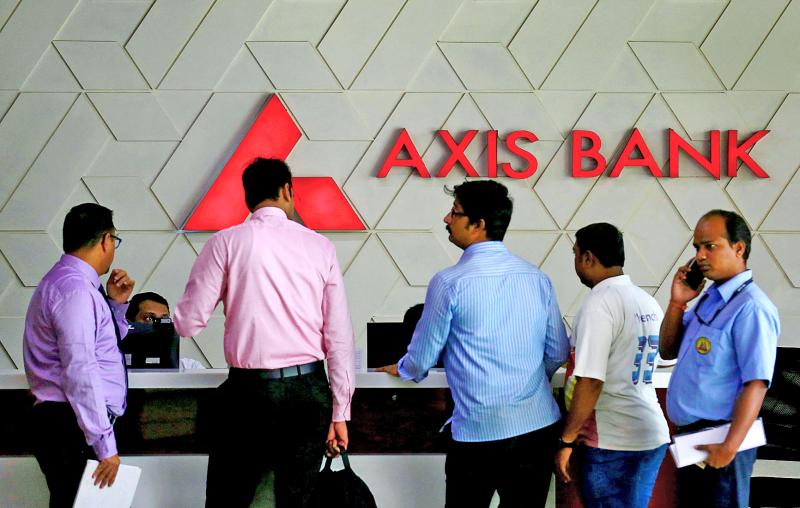
Photo: Reuters
The Indian lender emerged as the buyer after beating out rivals, with factors such as job security for Citigroup employees and competition concerns being taken into account, one of the people said.
Axis Bank would need about six months to merge its consumer business in the country with Citigroup’s, a different person said.
While talks are advanced, as with all deals, an agreement could be delayed or fall apart. Representatives for Axis Bank and Citigroup declined to comment.
The planned India retail sale is said to be a part of a restructuring to simplify the US lender, do away with its retail banking operations in 13 countries across Asia and Europe, and focus on high-growth businesses such as wealth management.
Axis Bank, India’s third-largest private-sector lender, has been trying to boost retail loans to tap pent-up demand after the first two waves of COVID-19.
Mumbai-based Axis Bank said last month that quarterly profit more than tripled on robust earnings from lending and its non-core business, including fees and trading, as the easing of the COVID-19 pandemic helped revive consumer demand.
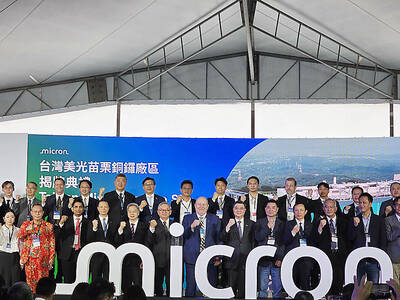
UNPRECEDENTED PACE: Micron Technology has announced plans to expand manufacturing capabilities with the acquisition of a new chip plant in Miaoli Micron Technology Inc unveiled a newly acquired chip plant in Miaoli County yesterday, as the company expands capacity to meet growing demand for advanced DRAM chips, including high-bandwidth memory chips amid the artificial intelligence boom. The plant in Miaoli County’s Tongluo Township (銅鑼), which Micron acquired from Powerchip Semiconductor Manufacturing Corp (力積電) for US$1.8 billion, is expected to make a sizeable capacity contribution to the company from fiscal 2028, the company said in a statement. It would be an extended production site of Micron’s large-scale manufacturing hub in Taichung, the company said. As the global semiconductor industry is racing to reach US$1 trillion

Singapore-based ride-hailing and delivery giant Grab Holdings Ltd has applied for regulatory approval to acquire the Taiwan operations of Germany-based Delivery Hero SE's Foodpanda in a deal valued at about US$600 million. Grab submitted the filing to the Fair Trade Commission on Friday last week, with the transaction subject to regulatory review and approval, the company said in a statement yesterday. Its independent governance structure would help foster a healthy and competitive market in Taiwan if the deal is approved, Grab said. Grab, which is listed on the NASDAQ, said in the filing that US-based Uber Technologies Inc holds about 13 percent of

Taiwan’s food delivery market could undergo a major shift if Singapore-based Grab Holdings Ltd completes its planned acquisition of Delivery Hero SE’s Foodpanda business in Taiwan, industry experts said. Grab on Monday last week announced it would acquire Foodpanda’s Taiwan operations for US$600 million. The deal is expected to be finalized in the second half of this year, with Grab aiming to complete user migration to its platform by the first half of next year. A duopoly between Uber Eats and Foodpanda dominates Taiwan’s delivery market, a structure that has remained intact since the Fair Trade Commission (FTC) blocked Uber Technologies Inc’s

Memory chip stocks extended their losses yesterday after Alphabet Inc’s Google publicized research that could allow more efficient use of the storage needed for artificial intelligence (AI) development. SK Hynix Inc and Samsung Electronics Co, South Korean leaders in the market, fell more than 6 percent and about 5 percent respectively in Seoul. In the US, Micron Technology Inc, Western Digital Corp and Sandisk Corp slid more than 2 percent in pre-market trading, after they all closed lower on Wednesday. Memory companies have been on a tear in recent months as the rapid development of AI infrastructure triggered a spike in chip


 RSS
RSS