


Cable and connectivity service provider BizLink Holding Inc (貿聯控股) yesterday said that it had acquired Leoni AG’s industrial solutions unit, enabling it to start booking income from the new business.
The company also renamed the new German business to INBG, BizLink said in a filing with the Taiwan Stock Exchange.
“INBG is a technical standard-setter and a market leader across a number of end markets. This deal will accelerate our long-term product segment and footprint diversification plans, as well as greatly raise our exposure to high-end applications,” BizLink said in the filing.
On Oct. 1 last year, BizLink announced that it had reached a binding agreement with Leoni to acquire the Nuremberg-based company’s industrial business for 451 million euros (US$511 million) in an all-cash transaction.
The company said it expected the acquisition to expand its market presence, especially in Europe.
INBG is a leading supplier of cables and cable systems for a wide range of sectors, including telecoms, healthcare, robotics, factory automation, e-mobility and rolling stock.
It has more than 3,000 employees and operates 15 production sites in Europe, North America and Asia.
Under BizLink, INBG is expected to contribute “sales, costs and supply-chain related synergies” to the parent company as integration efforts progress, the filing said.
INBG has six business units — silicone cables, tailor-made wire harnesses, telecom solutions, healthcare, robotic solutions and automation — and reported sales of 431.6 million euros, gross profit of 107.3 million euros and operating profit of 29.1 million euros in 2020, BizLink said.
INBG’s sales last year are estimated to have risen to more than 500 million euros, BizLink added.
“INBG’s operations are strong and profitability is stable, and there are no plans to reorganize [the unit] immediately after completing the acquisition,” BizLink said in the filing, adding that it intends to continue to develop INBG’s businesses, improve its product portfolio and integrate its resources with the parent company to achieve long-term growth.
BizLink — whose products range from cable assemblies to wire harnesses for use in the information technology, data communications, medical, consumer electronic, motor vehicle and industrial equipment industries — on Jan. 5 reported that revenue for last year grew 27.03 percent year-on-year to NT$28.68 billion.
The company has yet to release its full-year results for last year, but net profit in the first three quarters increased 18.21 percent year-on-year to NT$1.47 billion, or earnings per share of NT$11.02, company data showed.
Yuanta Securities Investment Consulting Co (元大投顧) forecast that the acquisition of INBG would increase BizLink’s annual revenue to NT$48.6 billion this year and NT$53.5 billion next year, as well as enhance the company’s net profit to NT$3.7 billion this year and NT$4.45 billion next year, up from an estimated net profit of NT$2.05 billion this year.
“We believe that INBG’s gross margin and operating margin are better than BizLink’s, and it will have a positive impact on the company’s overall profitability after the merger,” Yuanta said in a client note yesterday.
BizLink shares rose 1.15 percent to NT$264.5 yesterday, outperforming the broader market, which fell 1.75 percent, Taiwan Stock Exchange data showed.
Shares of contract chipmaker Taiwan Semiconductor Manufacturing Co (TSMC, 台積電) came under pressure yesterday after a report that Apple Inc is looking to shift some orders from the Taiwanese company to Intel Corp. TSMC shares fell NT$55, or 2.4 percent, to close at NT$2,235 on the local main board, Taiwan Stock Exchange data showed. Despite the losses, TSMC is expected to continue to benefit from sound fundamentals, as it maintains a lead over its peers in high-end process development, analysts said. “The selling was a knee-jerk reaction to an Intel-Apple report over the weekend,” Mega International Investment Services Corp (兆豐國際投顧) analyst Alex Huang
Taiwan Semiconductor Manufacturing Co (TSMC, 台積電) is expected to remain Apple Inc’s primary chip manufacturing partner despite reports that Apple could shift some orders to Intel Corp, industry experts said yesterday. The comments came after The Wall Street Journal reported on Friday that Apple and Intel had reached a preliminary agreement following more than a year of negotiations for Intel to manufacture some chips for Apple devices. Taiwan Institute of Economic Research (台灣經濟研究院) economist Arisa Liu (劉佩真) said TSMC’s advanced packaging technologies, including integrated fan-out and chip-on-wafer-on-substrate, remain critical to the performance of Apple’s A-series and M-series chips. She said Intel and Samsung
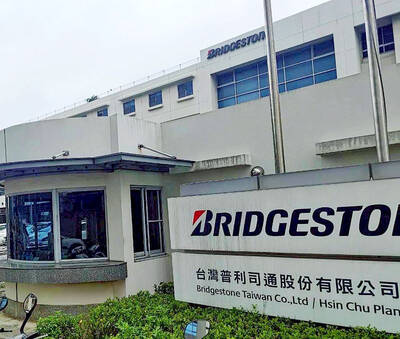
TRANSITION: With the closure, the company would reorganize its Taiwanese unit to a sales and service-focused model, Bridgestone said Bridgestone Corp yesterday announced it would cease manufacturing operations at its tire plant in Hsinchu County’s Hukou Township (湖口), affecting more than 500 workers. Bridgestone Taiwan Co (台灣普利司通) said in a statement that the decision was based on the Tokyo-based tire maker’s adjustments to its global operational strategy and long-term market development considerations. The Taiwanese unit would be reorganized as part of the closure, effective yesterday, and all related production activities would be concluded, the statement said. Under the plan, Bridgestone would continue to deepen its presence in the Taiwanese market, while transitioning to a sales and service-focused business model, it added. The Hsinchu
Taiwan Semiconductor Manufacturing Co (TSMC, 台積電) has approved a capital budget of US$31.28 billion for production expansion to meet long-term development needs during the artificial intelligence (AI) boom. The company’s board meeting yesterday approved the capital appropriation plan for purposes such as the installation of advanced technology capacity and fab construction, the world’s largest contract chipmaker said in a statement. At an earnings conference last month, TSMC forecast that its capital expenditure for this year would be at the higher end of the US$52 billion to US$56 billion range it forecast in January in response to robust demand for 5G, AI and


 RSS
RSS