


US-based biotech developer DynaFlex and German semiconductor equipment supplier SUSS MicroTec are to increase investment in Taiwan as they look to develop the nation into one of their global manufacturing hubs, they said on Wednesday.
At a news conference held by the Hsinchu Science Park Bureau at Hsinchu Science Park (新竹科學園區), DynaFlex vice president for operations Cherie Hung (洪巧俐) told reporters that the company moved into the science park’s biotech development section in 2019, rolling out 5,000 cerebral and cardiac catheters per month.
DynaFlex is planning to rent another plant in the science park this year, which would double its monthly capacity and workforce of 30 employees, Hung said.
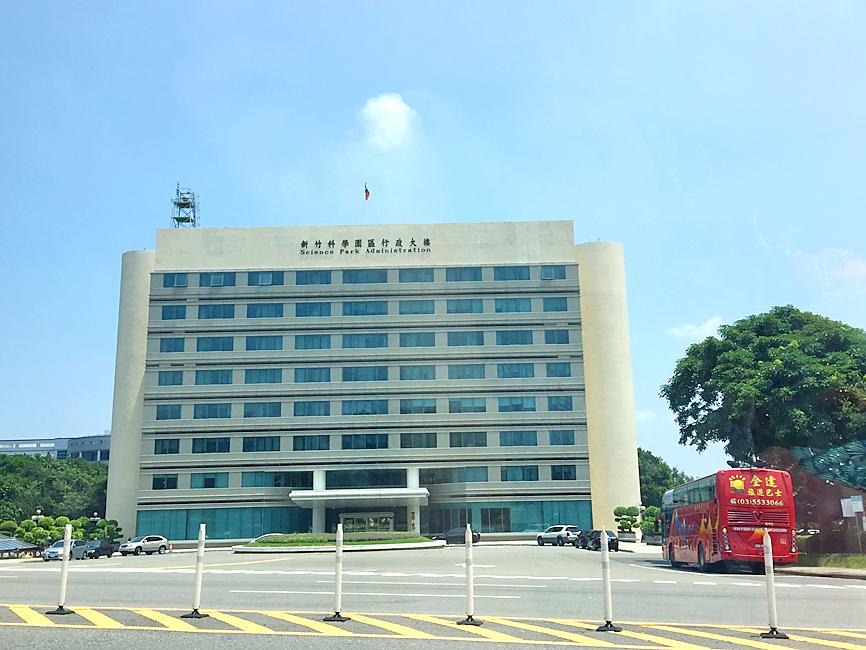
Photo: Grace Hung, Taipei Times
The increased investment is expected to help the company provide customers with one-stop shopping services, as it aims to make Taiwan one of its most important manufacturing bases, she added.
SUSS MicroTec is also looking to transform its Taiwanese production site into one of the firm’s overseas manufacturing hubs by taking advantage of the country’s rich high-tech talent pool and location in the Asian market.
The German manufacturer opened a sales office and customer service center in Taiwan in 2001 before setting up a production base in the Hsinchu Science Park in 2020.
Its product portfolio in Taiwan largely focuses on semiconductor UV projection scanners, and semiconductor spin coaters and developers, it said.
Shipments from Taiwan last year topped 20 units, a 10-fold increase from the end of 2020, while its workforce increased from about 90 employees to 185 in the same period, the company said.
SUSS MicroTec said that it would continue to boost production capacity of semiconductor spin coaters and developers in Taiwan, adding that production capacity of the machinery in Taiwan could top that of its German base.
It would also raise production of semiconductor UV projection scanners by further expanding its workforce, it said, adding that the increase in wages for employees in Taiwan this year was double that of last year.
The company has also started to purchase raw materials in Taiwan for local production, it said.
Hsinchu Science Park Bureau director-general Wayne Wang (王永壯) told reporters that companies in Taiwan last year purchased NT$700 billion (US$25.33 billion) of semiconductor equipment, including NT$600 billion in imports.
Taiwan is keen to boost local production of semiconductor equipment by increasing investment in the sector, Wang said.
Several US semiconductor equipment suppliers, including KLA Corp and Lam Research Corp, have inquired park about establishing plants in the science park, he said.
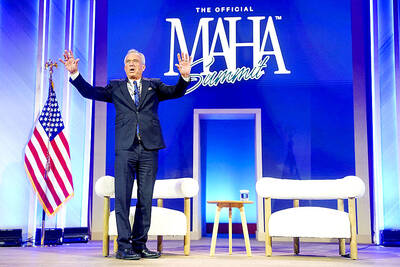
Sweeping policy changes under US Secretary of Health and Human Services Robert F. Kennedy Jr are having a chilling effect on vaccine makers as anti-vaccine rhetoric has turned into concrete changes in inoculation schedules and recommendations, investors and executives said. The administration of US President Donald Trump has in the past year upended vaccine recommendations, with the country last month ending its longstanding guidance that all children receive inoculations against flu, hepatitis A and other diseases. The unprecedented changes have led to diminished vaccine usage, hurt the investment case for some biotechs, and created a drag that would likely dent revenues and
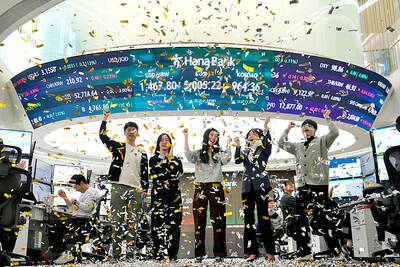
Global semiconductor stocks advanced yesterday, as comments by Nvidia Corp chief executive officer Jensen Huang (黃仁勳) at Davos, Switzerland, helped reinforce investor enthusiasm for artificial intelligence (AI). Samsung Electronics Co gained as much as 5 percent to an all-time high, helping drive South Korea’s benchmark KOSPI above 5,000 for the first time. That came after the Philadelphia Semiconductor Index rose more than 3 percent to a fresh record on Wednesday, with a boost from Nvidia. The gains came amid broad risk-on trade after US President Donald Trump withdrew his threat of tariffs on some European nations over backing for Greenland. Huang further
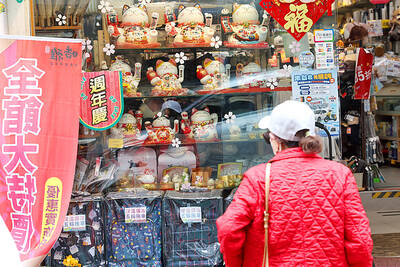
CULPRITS: Factors that affected the slip included falling global crude oil prices, wait-and-see consumer attitudes due to US tariffs and a different Lunar New Year holiday schedule Taiwan’s retail sales ended a nine-year growth streak last year, slipping 0.2 percent from a year earlier as uncertainty over US tariff policies affected demand for durable goods, data released on Friday by the Ministry of Economic Affairs showed. Last year’s retail sales totaled NT$4.84 trillion (US$153.27 billion), down about NT$9.5 billion, or 0.2 percent, from 2024. Despite the decline, the figure was still the second-highest annual sales total on record. Ministry statistics department deputy head Chen Yu-fang (陳玉芳) said sales of cars, motorcycles and related products, which accounted for 17.4 percent of total retail rales last year, fell NT$68.1 billion, or
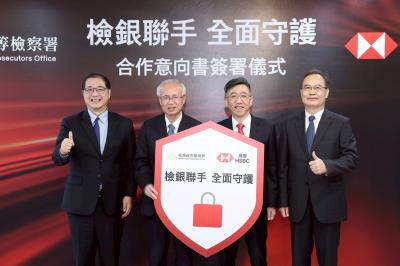
HSBC Bank Taiwan Ltd (匯豐台灣商銀) and the Taiwan High Prosecutors Office recently signed a memorandum of understanding (MOU) to enhance cooperation on the suspicious transaction analysis mechanism. This landmark agreement makes HSBC the first foreign bank in Taiwan to establish such a partnership with the High Prosecutors Office, underscoring its commitment to active anti-fraud initiatives, financial inclusion, and the “Treating Customers Fairly” principle. Through this deep public-private collaboration, both parties aim to co-create a secure financial ecosystem via early warning detection and precise fraud prevention technologies. At the signing ceremony, HSBC Taiwan CEO and head of banking Adam Chen (陳志堅)


 RSS
RSS