


Contract laptop maker Compal Electronics Inc (仁寶電腦) yesterday said that operations at its plant in Taoyuan’s Pingjhen District (平鎮) are continuing, after two employees at the facility tested positive for COVID-19 last week.
The company said in a regulatory filing that it had contacted all local employees and related personnel who visited the plant from Jan. 8 to Saturday to conduct polymerase chain reaction (PCR) tests.
Compal immediately activated emergency responses and disease prevention measures at the plant, the manufacturer said.
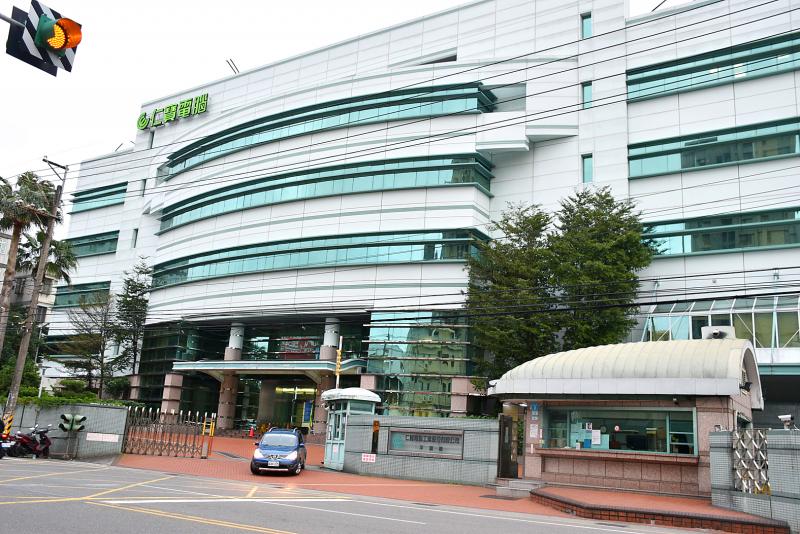
Photo: Lee Jung-ping, Taipei Times
The firm has also established a response team to closely monitor the development of the COVID-19 situation, the company added.
The Central News Agency reported that Taoyuan Mayor Cheng Wen-tsan (鄭文燦) earlier yesterday said the firm had requested that about 1,500 employees at the Pingjhen plant undergo PCR tests.
The plant mainly produces notebook computers, servers and Internet of Things devices.
Compal’s plants in China or Vietnam would temporarily fill the gap if production at the Pingjhen plant is disrupted, the company said.
Compal said it did not expect that the cases would significantly affect its business and finances.
Compal reported record revenue of NT$1.24 trillion (US$44.9 million) for last year, up 17.8 percent from NT$1.05 trillion in 2020, the company said last week.
The manufacturer has not yet released its earnings results for last quarter.
In the first three quarters of last year, net profit reached NT$9.44 billion, up from NT$4.78 billion during the same period of 2020, company data showed.
Earnings per share were NT$2.17, compared with NT$1.1 a year earlier, it showed.
Compal is the latest company to report COVID-19 cases among its employees in Taoyuan, after five employees of consumer electronics connector maker Aces Electronics Co (宏致電子) in the Jhongli Industrial Park (中壢工業區) and 13 employees at a Union Bank of Taiwan (聯邦銀行) branch in Jhongli District (中壢) tested positive last week.
All cases were linked to cluster infections at Taiwan Taoyuan International Airport, the Central Epidemic Command Center said.
To contain the spread of COVID-19, several financial companies, including CTBC Financial Holding Co (中信金控), Fubon Financial Holding Co (富邦金控) and Cathay Financial Holding Co (國泰金控), have allowed some of their employees to work from home, while front-office staff would from today work in staggered shifts, the companies said.

The domestic unit of the Chinese-owned, Dutch-headquartered chipmaker Nexperia BV will soon be able to produce semiconductors locally within China, according to two company sources. Nexperia is at the center of a global tug-of-war over critical semiconductor technology, with a Dutch court in February ordering a probe into alleged mismanagement at the company. The geopolitical tussle has disrupted supply chains, with some carmakers reportedly forced to cut production due to chip shortages. Local production would allow Nexperia’s domestic arm, Nexperia Semiconductors (China) Ltd (安世半導體中國), to bypass restrictions in place since October on the supply of silicon wafers — etched with tiny components to

Singapore-based ride-hailing and delivery giant Grab Holdings Ltd has applied for regulatory approval to acquire the Taiwan operations of Germany-based Delivery Hero SE's Foodpanda in a deal valued at about US$600 million. Grab submitted the filing to the Fair Trade Commission on Friday last week, with the transaction subject to regulatory review and approval, the company said in a statement yesterday. Its independent governance structure would help foster a healthy and competitive market in Taiwan if the deal is approved, Grab said. Grab, which is listed on the NASDAQ, said in the filing that US-based Uber Technologies Inc holds about 13 percent of

Taiwan Semiconductor Manufacturing Co (TSMC, 台積電) yesterday received government approval to deploy its advanced 3-nanometer (3nm) process at its second fab currently under construction in Japan, the Ministry of Economic Affairs said in a news release. The ministry green-lit the plan for the facility in Kumamoto, which is scheduled to start installing equipment and come online in 2028 with a monthly production capacity of 15,000 12-inch wafers, the ministry said. The Department of Investment Review in June 2024 authorized a US$5.26 billion investment for the facility, slated to manufacture 6- to 12nm chips, significantly less advanced than 3nm process. At a meeting with

Taiwan’s food delivery market could undergo a major shift if Singapore-based Grab Holdings Ltd completes its planned acquisition of Delivery Hero SE’s Foodpanda business in Taiwan, industry experts said. Grab on Monday last week announced it would acquire Foodpanda’s Taiwan operations for US$600 million. The deal is expected to be finalized in the second half of this year, with Grab aiming to complete user migration to its platform by the first half of next year. A duopoly between Uber Eats and Foodpanda dominates Taiwan’s delivery market, a structure that has remained intact since the Fair Trade Commission (FTC) blocked Uber Technologies Inc’s


 RSS
RSS