


E.Sun Financial Holding Co (玉山金控), the first signatory of the “Business Ambition for 1.5°C” among banks in Asia, has joined the Partnership for Carbon Accounting Financials.
By signing on to the partnership, E.Sun has committed to measuring and disclosing its financed greenhouse gas (GHG) emissions by following the Global GHG Accounting and Reporting Standard for the Financial Industry.
This is another step forward for E.Sun, which was the first financial institution in Asia to adopt the 1.5°C climate target.
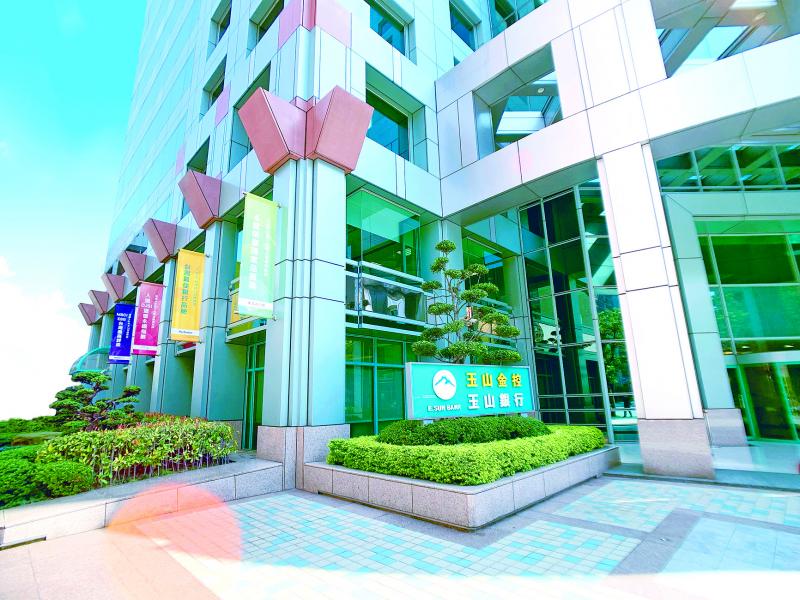
Photo courtesy of E.Sun Financial Holding Co
Last year, E.Sun set medium and long-term climate goals, vowing to convert its proprietary domestic buildings into green buildings by 2027 and to derive 100 percent of its energy use from renewable sources at domestic business locations by 2030. It aims to achieve net-zero carbon emissions by 2050.
Through planned, systematic and disciplined actions, concrete measures will be taken and the greatest efforts will be made on the part of E.Sun to reduce its contribution to global warming, it said.
“The financial sector has the capability to engage with individuals and corporates on ESG [environmental, social and corporate governance],” said E.Sun Bank chairman Joseph Huang (黃男州), who leads the company’s ESG policy. “This is also the main reason why the financial sector has been expected to play a key role in the trends of ESG development and be given heavy responsibilities.”
E.Sun plays a leading role on climate change and environmental issues, the company said.
It was one of the first domestic financial institutions to be a signatory to the Equator Principles.
In 2017, E.Sun became the first Taiwanese signatory company of the Task Force on Climate-Related Financial Disclosures.
Last year, E.Sun published the first sustainability report in Taiwan that adopted the Sustainability Accounting Standards and the Global Reporting Initiative standards.
E.Sun pledged to achieve intermediate targets approved by the Science-Based Targets initiative and joined the carbon partnership, a collaboration of financial institutions worldwide aiming to enable harmonized assessments and disclosures of GHG emissions.
More than 190 banks and investors from six continents have committed to the Partnership for Carbon Accounting Financials.
Climate change is one of the most crucial issues in the world, E.Sun said, adding that it upholds its responsibility as a global corporate citizen by continuing to work and cooperate with like-minded partners to take concrete actions to mitigate climate change and ensure environmental sustainability as it seeks to build a safe and beautiful home for humankind with net-zero carbon emissions.
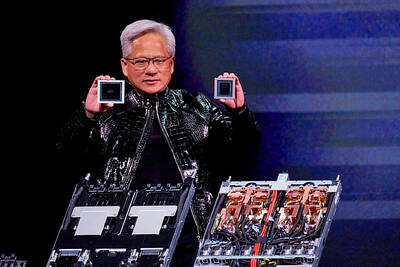
Nvidia Corp chief executive officer Jensen Huang (黃仁勳) on Monday introduced the company’s latest supercomputer platform, featuring six new chips made by Taiwan Semiconductor Manufacturing Co (TSMC, 台積電), saying that it is now “in full production.” “If Vera Rubin is going to be in time for this year, it must be in production by now, and so, today I can tell you that Vera Rubin is in full production,” Huang said during his keynote speech at CES in Las Vegas. The rollout of six concurrent chips for Vera Rubin — the company’s next-generation artificial intelligence (AI) computing platform — marks a strategic
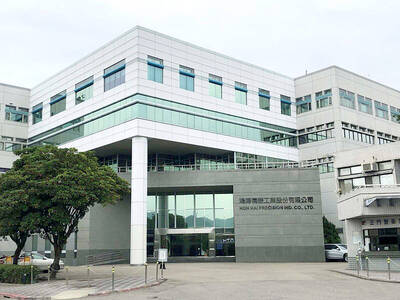
REVENUE PERFORMANCE: Cloud and network products, and electronic components saw strong increases, while smart consumer electronics and computing products fell Hon Hai Precision Industry Co (鴻海精密) yesterday posted 26.51 percent quarterly growth in revenue for last quarter to NT$2.6 trillion (US$82.44 billion), the strongest on record for the period and above expectations, but the company forecast a slight revenue dip this quarter due to seasonal factors. On an annual basis, revenue last quarter grew 22.07 percent, the company said. Analysts on average estimated about NT$2.4 trillion increase. Hon Hai, which assembles servers for Nvidia Corp and iPhones for Apple Inc, is expanding its capacity in the US, adding artificial intelligence (AI) server production in Wisconsin and Texas, where it operates established campuses. This
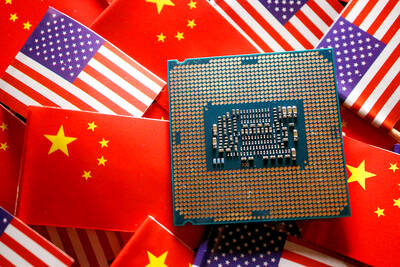
US President Donald Trump on Friday blocked US photonics firm HieFo Corp’s US$3 million acquisition of assets in New Jersey-based aerospace and defense specialist Emcore Corp, citing national security and China-related concerns. In an order released by the White House, Trump said HieFo was “controlled by a citizen of the People’s Republic of China” and that its 2024 acquisition of Emcore’s businesses led the US president to believe that it might “take action that threatens to impair the national security of the United States.” The order did not name the person or detail Trump’s concerns. “The Transaction is hereby prohibited,”
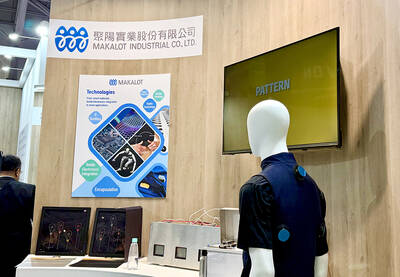
Garment maker Makalot Industrial Co (聚陽) yesterday reported lower-than-expected fourth-quarter revenue of NT$7.93 billion (US$251.44 million), down 9.48 percent from NT$8.76 billion a year earlier. On a quarterly basis, revenue fell 10.83 percent from NT$8.89 billion, company data showed. The figure was also lower than market expectations of NT$8.05 billion, according to data compiled by Yuanta Securities Investment and Consulting Co (元大投顧), which had projected NT$8.22 billion. Makalot’s revenue this quarter would likely increase by a mid-teens percentage as the industry is entering its high season, Yuanta said. Overall, Makalot’s revenue last year totaled NT$34.43 billion, down 3.08 percent from its record NT$35.52


 RSS
RSS