


The InvesTaiwan Service Center yesterday approved an application by Sigurd Microelectronics Corp (矽格) to invest NT$4 billion (US$144.5 million) to expand smart production lines at its plants in Hsinchu County’s Jhudong (竹東) and Hukou (湖口) townships, the Ministry of Economic Affairs said.
The investment by Sigurd, which provides semiconductor back-end manufacturing services, comes as more semiconductor companies are expanding production capacity to meet increasing demand.
‘DRIVING FORCE’
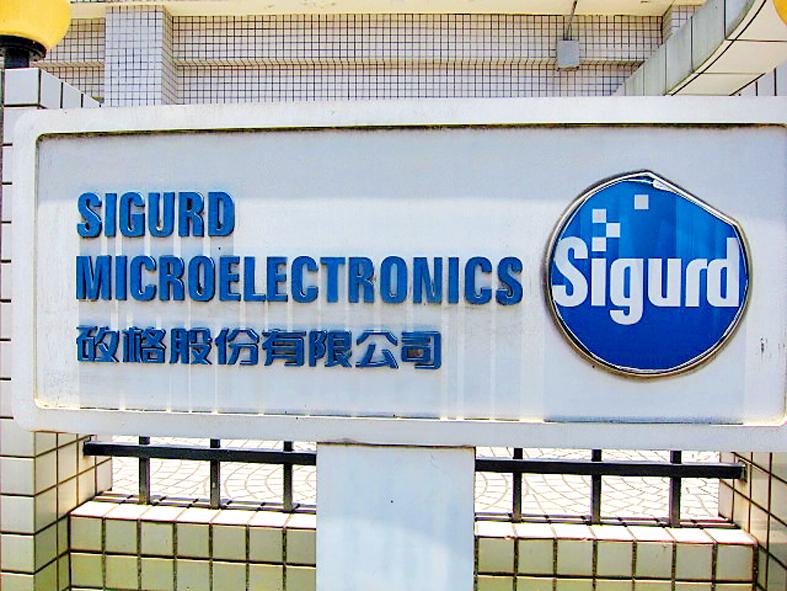
Photo: Grace Hung, Taipei Times
“The COVID-19-pandemic-induced stay-at-home economy and the development of new technology applications are a key driving force behind the business growth of global chip packaging and testing service providers,” the ministry said in a statement.
Sigurd is to install more smart production lines to test chips or modules used in 5G applications, artificial intelligence devices, network products and automotive electronics, the ministry said.
The company’s subsidiary, Sigurd UTC Corp (矽格聯測), in October gained the center’s permission to invest NT$2.9 billion to add clean rooms and expand smart production lines at its plants in the Hsinchu Science Park (新竹科學園區).
Thanks to sales contributions from its subsidiary, Sigurd Microelectronics reported consolidated revenue of NT$15.16 billion for the first 11 months of this year, up 35.16 percent from a year earlier.
Sigurd was one of eight local companies that yesterday obtained the center’s permission to join the government’s three major programs under the Invest in Taiwan initiative, the ministry said.
The companies, which include Wus Printed Circuit Co (楠梓電子), Forming Bicycles Parts Co (鋒明興業) and SCI Pharmtech Inc (旭富製藥), are to invest a combined NT$9.7 billion, the ministry said.
As of yesterday, the center had approved 1,134 applications from Taiwanese businesses to invest a total of NT$1.62 trillion through the three incentive programs launched in early 2019, the ministry said.
The investments pledged so far are expected to generate 128,635 jobs, it said.
Another 51 firms are awaiting approval to invest, it added.

Cairo’s new monorail slices across the city skyline, running above the familiar chaos of blaring horns and aging buses’ exhaust fumes that mark rush hour below. The US$4.5 billion monorail, opened this month, is among Egypt’s most prominent new transport projects, part of a debt-funded infrastructure drive criticized for sapping state finances while bringing limited benefits to most of the country’s 109 million people. “It feels like you’re in a different country,” said Ramy Sayed, a restaurant manager, aboard a driverless Innovia 300 train. “No noise, no traffic, we’re not used to this.” The eastern line runs 56km from the bustling middle-class

Taiwanese firms have increased investment in the Philippines in recent years as Manila’s ties with Washington deepen and global supply chains continue to shift away from China, an expert at the Chung-Hua Institution for Economic Research (CIER, 中華經濟研究院) said yesterday. The Philippines had not been among Taiwanese investors’ top choices in Southeast Asia, CIER Taiwan ASEAN Studies Center director Kristy Hsu (徐遵慈) said at a seminar in Taipei. However, Taiwan’s investment in the country has grown significantly since the COVID-19 pandemic, reaching US $257 million last year, a high in recent years, she said. Although Taiwan’s total investment in the Philippines still lags

Intel Corp regards Taiwan Semiconductor Manufacturing Co (TSMC, 台積電) as a longstanding partner, as the US chipmaker would continue outsourcing production of advanced chips to TSMC, Intel chief executive officer Lip-Bu Tan (陳立武) said yesterday. “I don’t look at people as competitors. I look at the collaboration... Nvidia is also, you know, a good friend,” Tan told a news conference following his keynote speech at the Computex trade show in Taipei. “It’s a very trusted partnership for us... We are a big, top customer for them, and we’re going to continue doing that,” he said, referring to TSMC, the world’s largest foundry
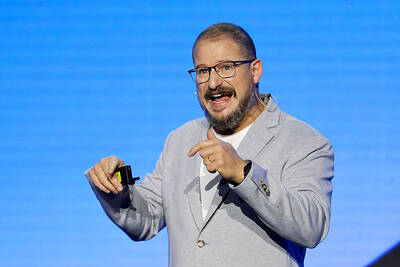
Artificial intelligence (AI) agents would supplant smartphones as the center of people’s digital lives, fundamentally reshaping personal devices and driving a major computing upgrade cycle, Qualcomm Inc CEO Cristiano Amon said yesterday. In his keynote speech for this year’s Computex trade show in Taipei, Amon said that the rise of "agentic AI" — AI systems capable of reasoning, planning and carrying out tasks autonomously — would transform how people interact with technology across phones, PCs, vehicles and wearable devices. Describing the technology as the next major evolution in computing, Amon said that "2026 is the year of agents.” For decades, smartphones have sat


 RSS
RSS