


China Fortune Land Development Co (華夏幸福) said it has been unable to get hold of a money manager that it gave US$313 million for investment, casting a shadow over the profit outlook of the debt-laden developer.
Fortune Land has “lost contact” with China Create Capital Ltd (中創資本), a British Virgin Islands-registered firm to which it handed more than US$313 million in 2018 in hopes of receiving an annual return of 7 to 10 percent through next year, it said in a filing with the Shanghai bourse late on Wednesday.
The Beijing-based developer has reported the matter to the local police, it said, adding that it remains unclear how it would affect current and future earnings.
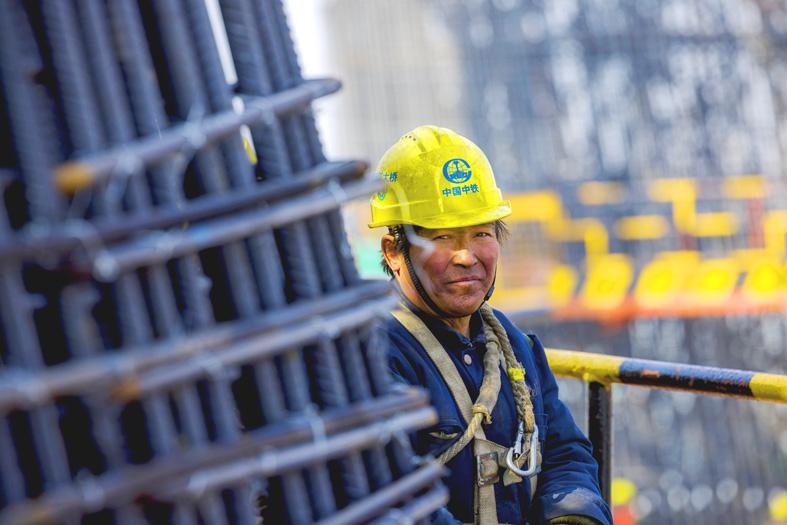
Photo: EPA-EFE
Fortune Land is among a growing list of Chinese developers that are embroiled in a debt crisis following Beijing’s deleveraging campaign aimed at defusing financial risks and making housing more affordable.
The company in March defaulted on a US$530 million bond, becoming China’s first real-estate firm to post a repayment failure since Beijing tightened controls of the debt-burdened sector last year.
Fortune Land said in the exchange filing that one of its offshore units in 2018 signed an agreement to entrust a company called Wingskengo Ltd to provide wealth management services for the developer, helping it buy fixed-income products.
As instructed by Wingskengo, Fortune Land transferred US$313 million to China Create Capital for wealth management, the filing said.
Fortune Land said it has booked the sum as part of its non-current financial assets, and the fair value has yet to be adjusted.
Shanghai-listed shares of Fortune Land were down slightly morning yesterday. Its US dollar bond prices have plunged since its default and are at distressed levels of about US$0.3 on the dollar, data compiled by Bloomberg showed.

The domestic unit of the Chinese-owned, Dutch-headquartered chipmaker Nexperia BV will soon be able to produce semiconductors locally within China, according to two company sources. Nexperia is at the center of a global tug-of-war over critical semiconductor technology, with a Dutch court in February ordering a probe into alleged mismanagement at the company. The geopolitical tussle has disrupted supply chains, with some carmakers reportedly forced to cut production due to chip shortages. Local production would allow Nexperia’s domestic arm, Nexperia Semiconductors (China) Ltd (安世半導體中國), to bypass restrictions in place since October on the supply of silicon wafers — etched with tiny components to

Singapore-based ride-hailing and delivery giant Grab Holdings Ltd has applied for regulatory approval to acquire the Taiwan operations of Germany-based Delivery Hero SE's Foodpanda in a deal valued at about US$600 million. Grab submitted the filing to the Fair Trade Commission on Friday last week, with the transaction subject to regulatory review and approval, the company said in a statement yesterday. Its independent governance structure would help foster a healthy and competitive market in Taiwan if the deal is approved, Grab said. Grab, which is listed on the NASDAQ, said in the filing that US-based Uber Technologies Inc holds about 13 percent of
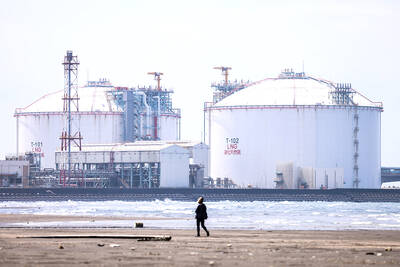
Taiwan is open to joining a global liquefied natural gas (LNG) program if one is created, but on the condition that countries provide delivery even in a scenario where there is a conflict with China, an energy department official said yesterday. While Taiwan’s priority is to have enough LNG at home, the nation is open to exploring potential strategic reserves in other countries such as Japan or South Korea, Energy Administration Deputy Director-General Chen Chung-hsien (陳崇憲) said. While the LNG market does not have a global reserve for emergencies like that of oil, the concept has been raised a few times —

Taiwan Semiconductor Manufacturing Co (TSMC, 台積電) yesterday received government approval to deploy its advanced 3-nanometer (3nm) process at its second fab currently under construction in Japan, the Ministry of Economic Affairs said in a news release. The ministry green-lit the plan for the facility in Kumamoto, which is scheduled to start installing equipment and come online in 2028 with a monthly production capacity of 15,000 12-inch wafers, the ministry said. The Department of Investment Review in June 2024 authorized a US$5.26 billion investment for the facility, slated to manufacture 6- to 12nm chips, significantly less advanced than 3nm process. At a meeting with


 RSS
RSS