


OIL
Price dip benefits output: IEA
An oil market rally might ease off as prices that last month hit a three-year high help push up global production, particularly in the US, the International Energy Agency (IEA) said yesterday. “The world oil market remains tight by all measures, but a reprieve from the price rally could be on the horizon ... due to rising oil supplies,” the Paris-based agency said in its monthly oil report. “Current prices provide a strong incentive to boost [US] activity even as operators stick to capital discipline pledges,” it said. The IEA said that US production would not return to levels before the COVID-19 pandemic until the end of next year.
WINE AND SPIRITS
Diageo expects sales growth
Diageo PLC expects organic sales growth to be between 5 and 7 percent for fiscal year 2023-2025, up from 4 to 6 percent growth during fiscal year 2017-2019, the world’s largest spirits maker said yesterday as it laid out its medium-term targets. The Johnnie Walker whisky maker expects organic net sales growth of at least 16 percent in the first half of this fiscal year and organic operating profit growth to be ahead of sales growth. “While we expect inflationary pressures to increase, we also expect to benefit from operating leverage, premiumization, revenue growth management and productivity gains,” chief financial officer Lavanya Chandrashekar said.
TOBACCO
Imperial sales edge up
Tobacco group Imperial Brands PLC yesterday reported a slight uptick in its full-year sales, aided by higher cigarette prices that more than offset a decline in volumes. The maker of Gauloises and West cigarettes reported organic adjusted group revenue of £7.59 billion (US$10.22 billion), up 1.4 percent in constant currencies, for the full year ended on Sept. 30. The company said it raised tobacco prices by 4.4 percent during the year, which helped offset a 2.9 percent decline in overall volumes. Sales of next-generation products, such as e-cigarettes and tobacco-heating products, fell 3.9 percent during the year, in part due to the company’s exit from some markets.
ENGINEERING
Thyssenkrupp unit eyes IPO
Thyssenkrupp AG is pushing ahead with plans for an initial public offering (IPO) of a unit that helps to build hydrogen plants, people familiar with the matter said. The German engineering group is looking to list Uhde Chlorine Engineers as soon as the first quarter of next year to capitalize on surging interest in hydrogen-based technologies, the people said. An IPO could value the business at as much as 5 billion euros (US$5.68 billion), they said on condition of anonymity. Thyssenkrupp has been working with Citigroup Inc to explore options for Uhde.
SINGAPORE
Temasek unloads shares
State-owned investor Temasek Holdings Pte sold shares of US-listed Chinese tech firms amid regulatory crackdowns. Temasek cut 16 percent of its stake in Alibaba Group Holding Ltd (阿里巴巴) and 11 percent of its shares in ride-hailing service Didi Global Inc (滴滴), a 13F filing for the three months ended on Sept. 30 showed. It exited Chinese search engine operator Baidu Inc (百度), TAL Education Group (好未來教育集團), New Oriental Education & Technology Group Inc (新東方教育科技集團) and jobs service provider Kanzhun Ltd (看准). Temasek rebalances its portfolio from time to time in the usual course of business, a company representative said.
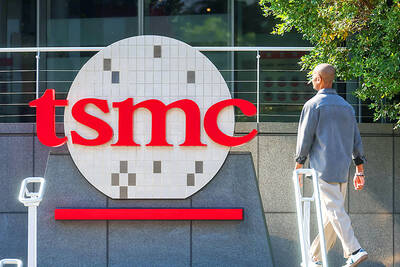
Shares of contract chipmaker Taiwan Semiconductor Manufacturing Co (TSMC, 台積電) came under pressure yesterday after a report that Apple Inc is looking to shift some orders from the Taiwanese company to Intel Corp. TSMC shares fell NT$55, or 2.4 percent, to close at NT$2,235 on the local main board, Taiwan Stock Exchange data showed. Despite the losses, TSMC is expected to continue to benefit from sound fundamentals, as it maintains a lead over its peers in high-end process development, analysts said. “The selling was a knee-jerk reaction to an Intel-Apple report over the weekend,” Mega International Investment Services Corp (兆豐國際投顧) analyst Alex Huang
Taiwan Semiconductor Manufacturing Co (TSMC, 台積電) is expected to remain Apple Inc’s primary chip manufacturing partner despite reports that Apple could shift some orders to Intel Corp, industry experts said yesterday. The comments came after The Wall Street Journal reported on Friday that Apple and Intel had reached a preliminary agreement following more than a year of negotiations for Intel to manufacture some chips for Apple devices. Taiwan Institute of Economic Research (台灣經濟研究院) economist Arisa Liu (劉佩真) said TSMC’s advanced packaging technologies, including integrated fan-out and chip-on-wafer-on-substrate, remain critical to the performance of Apple’s A-series and M-series chips. She said Intel and Samsung
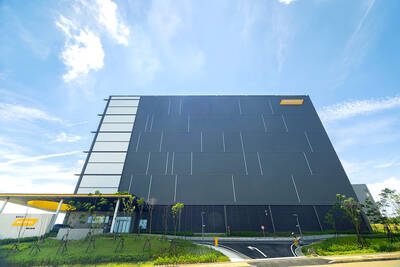
POWER BUILDUP: Powered by Nvidia’s B200 Blackwell chips, the data center would support MediaTek’s computing power demand and business growth, the company said Smartphone chip designer MediaTek Inc (聯發科) yesterday launched a new artificial intelligence (AI) data center with a maximum capacity of 45 megawatts to meet its rising demand for computing power required to develop new advanced chips for AI applications. The company has completed the first-phase computing power buildup at the data center in Miaoli County’s Tongluo Township (銅鑼), providing 15 megawatts of capacity to support its research and development (R&D) capabilities, despite an industrywide shortage of key components, MediaTek said. Supply constraints have plagued a wide range of key components, including memory chips, solid-state drives, power supply units and central
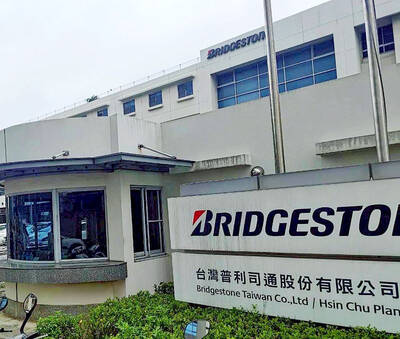
TRANSITION: With the closure, the company would reorganize its Taiwanese unit to a sales and service-focused model, Bridgestone said Bridgestone Corp yesterday announced it would cease manufacturing operations at its tire plant in Hsinchu County’s Hukou Township (湖口), affecting more than 500 workers. Bridgestone Taiwan Co (台灣普利司通) said in a statement that the decision was based on the Tokyo-based tire maker’s adjustments to its global operational strategy and long-term market development considerations. The Taiwanese unit would be reorganized as part of the closure, effective yesterday, and all related production activities would be concluded, the statement said. Under the plan, Bridgestone would continue to deepen its presence in the Taiwanese market, while transitioning to a sales and service-focused business model, it added. The Hsinchu


 RSS
RSS