


Indonesia’s economy decelerated in the third quarter as harsh lockdowns to contain a record spike in COVID-19 cases outweighed higher commodity prices and trade.
GDP in the quarter rose 3.51 percent from a year earlier, Indonesia’s statistics bureau, Badan Pusat Statistik (BPS), announced yesterday, down from 7.07 percent growth in the second quarter, as the virus wave peaked in July and August.
That below the median estimate of 3.88 percent in a Bloomberg survey of economists and the government’s projection of 4.5 percent.
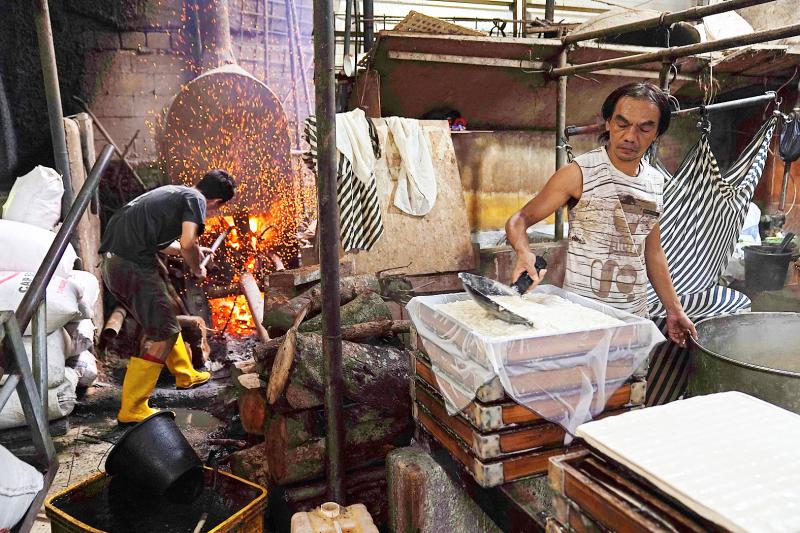
Photo: Bloomberg
“Third-quarter growth slipped below market consensus, as mobility curbs implemented during the period likely weighed on consumption, offsetting robust exports” said Nicholas Mapa, a senior economist at ING Groep NV in Manila. “We expect better fourth-quarter GDP results as movement restrictions have been relaxed further.”
Indonesian stocks extended declines after the report, with the Jakarta Composite Index falling as much as 0.2 percent. The rupiah was down 0.4 percent to 14,388 rupiah to the dollar as of 9:41am in Jakarta.
Authorities had ordered people to stay home and shut most businesses in the third quarter as the highly infectious Delta variant of SARS-CoV-2 sent caseloads skyrocketing, inundating hospitals and spurring a race to vaccinate 1 million people per day.
GDP growth for the July-to-September period was 1.55 percent compared with the previous quarter on a non-seasonally adjusted basis, lower than the 1.9 percent seen by economists.
Public activity and domestic tourism during the period declined both from a year earlier and the preceding quarter, BPS head Margo Yuwono told a news conference.
Meanwhile, the global economic recovery improved, including in trade partner countries, while commodity prices rose, he said.
While consumption and foreign direct investment stalled due to the outbreak, soaring prices of commodities have been a lifeline for Indonesia, a top exporter of coal and palm oil.
Outbound shipments hit an all-time high in August, while the trade surplus surged to more than US$4 billion in the third quarter.
Exports in the third quarter rose 51 percent from a year ago to US$61.4 billion, the statistics office said, while imports rose 47 percent to US$48.2 billion.
Southeast Asia’s largest economy expects the recovery to regain pace this quarter as the outbreak is brought under control and movement curbs are relaxed.
Improved manufacturing activity and retail sales should add to export momentum and drive full-year GDP, which the Indonesian Ministry of Finance last month said it expects to grow at 4 percent. The government had earlier set a target range of 3.7 to 4.5 percent for the year.
“Resurgent consumption alongside a strong export rebound should figure in a strong finish for the year,” Mapa said.
Bank Indonesia said it would keep its policy interest rate at a record low until the economy is on steadier footing, likely deferring any increase until late next year.
The central bank also could maintain looser policy on down payments for home and auto purchases until 2023 to spur lending.

The domestic unit of the Chinese-owned, Dutch-headquartered chipmaker Nexperia BV will soon be able to produce semiconductors locally within China, according to two company sources. Nexperia is at the center of a global tug-of-war over critical semiconductor technology, with a Dutch court in February ordering a probe into alleged mismanagement at the company. The geopolitical tussle has disrupted supply chains, with some carmakers reportedly forced to cut production due to chip shortages. Local production would allow Nexperia’s domestic arm, Nexperia Semiconductors (China) Ltd (安世半導體中國), to bypass restrictions in place since October on the supply of silicon wafers — etched with tiny components to

Singapore-based ride-hailing and delivery giant Grab Holdings Ltd has applied for regulatory approval to acquire the Taiwan operations of Germany-based Delivery Hero SE's Foodpanda in a deal valued at about US$600 million. Grab submitted the filing to the Fair Trade Commission on Friday last week, with the transaction subject to regulatory review and approval, the company said in a statement yesterday. Its independent governance structure would help foster a healthy and competitive market in Taiwan if the deal is approved, Grab said. Grab, which is listed on the NASDAQ, said in the filing that US-based Uber Technologies Inc holds about 13 percent of
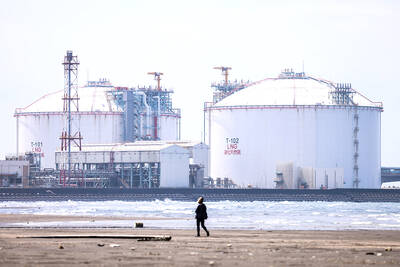
Taiwan is open to joining a global liquefied natural gas (LNG) program if one is created, but on the condition that countries provide delivery even in a scenario where there is a conflict with China, an energy department official said yesterday. While Taiwan’s priority is to have enough LNG at home, the nation is open to exploring potential strategic reserves in other countries such as Japan or South Korea, Energy Administration Deputy Director-General Chen Chung-hsien (陳崇憲) said. While the LNG market does not have a global reserve for emergencies like that of oil, the concept has been raised a few times —

Taiwan Semiconductor Manufacturing Co (TSMC, 台積電) yesterday received government approval to deploy its advanced 3-nanometer (3nm) process at its second fab currently under construction in Japan, the Ministry of Economic Affairs said in a news release. The ministry green-lit the plan for the facility in Kumamoto, which is scheduled to start installing equipment and come online in 2028 with a monthly production capacity of 15,000 12-inch wafers, the ministry said. The Department of Investment Review in June 2024 authorized a US$5.26 billion investment for the facility, slated to manufacture 6- to 12nm chips, significantly less advanced than 3nm process. At a meeting with


 RSS
RSS