


Japanese automaker Toyota Motor Corp is boosting acquisitions in mobility technology, adding Renovo Motors Inc, a Silicon Valley software developer, to its Woven Planet Holdings team, which is working on automated driving.
The addition, announced yesterday, follows the purchase earlier this year of CARMERA Inc, a US venture that specializes in sophisticated road-mapping updates made cheaper and faster by using crowdsourced information obtained from millions of Internet-connected Toyota vehicles.
The company has not disclosed the value of either deal.
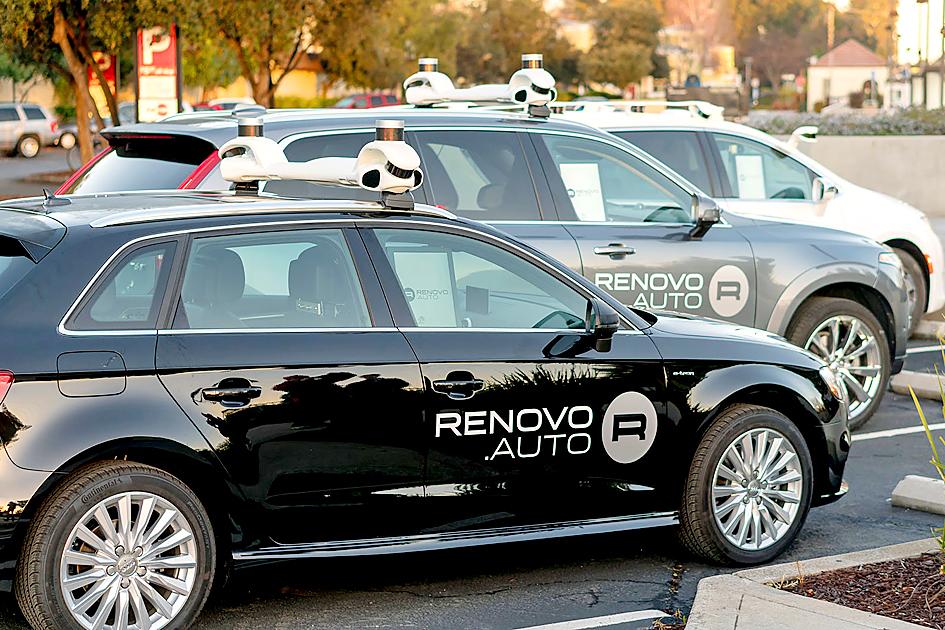
Photo: AP
Renovo develops automotive operating systems, which Toyota sees as essential to develop programmed vehicles so it can transition to what it calls “a mobility company” that includes more than just cars.
Renovo means “renew” in Latin.
Renovo’s data-management platform enables automakers to continuously learn from their vehicles, using a so-called “complete loop” approach, so vehicles can be made safer and more reliable.
“In Woven Planet and Toyota, we’ve found partners committed to doing exactly what we have always wanted to do on a global scale and that’s a great feeling,” Renovo chief executive officer Christopher Heiser said.
Woven Planet, a wholly owned subsidiary of Toyota, earlier acquired San Francisco-based Lyft Inc’s self-driving division Level 5.
Woven Planet chief executive officer James Kuffner said that more acquisitions might be on the way.
“The big picture is Woven Planet creating a ‘dream team’ of software and vehicle engineering people globally to deliver the world’s programmable and safest mobility,” Kuffner told reporters. “That’s the context.”
“Always as an executive, you are trying to balance the speed and the growth versus the focus and maintaining company culture,” he said. “The larger you grow, the risk is that you slow down.”
“We will keep growing, but we are going to be careful,” he said.
Kuffner declined to comment on an incident at the Paralympics Athletes Village in Tokyo last month, when a Toyota bus equipped with automated driving technology bumped into a Paralympian athlete and injured him.
The incident is still under investigation and might be an example of the kinds of hurdles to be overcome before the technology can be widely used on public roads.
The bus is not approved for widespread use on public roads, but was shuttling athletes and officials at the site during the Tokyo Olympics and Paralympics.
A human driver was on the vehicle as a safety precaution.
Toyota president Akio Toyoda has apologized and promised improvements.
Major automakers are working on various driving technologies.
Some analysts say that companies should avoid suggesting that vehicles with such technology can safely drive themselves.
Woven Planet, known previously as the Toyota Research Institute, is working on technologies spanning smart cities, green energy and mobility solutions, and robotics that are meant to eventually become consumer products, said Kuffner, who has worked on Google’s self-driving vehicles and robots at Boston Dynamics Inc.

The domestic unit of the Chinese-owned, Dutch-headquartered chipmaker Nexperia BV will soon be able to produce semiconductors locally within China, according to two company sources. Nexperia is at the center of a global tug-of-war over critical semiconductor technology, with a Dutch court in February ordering a probe into alleged mismanagement at the company. The geopolitical tussle has disrupted supply chains, with some carmakers reportedly forced to cut production due to chip shortages. Local production would allow Nexperia’s domestic arm, Nexperia Semiconductors (China) Ltd (安世半導體中國), to bypass restrictions in place since October on the supply of silicon wafers — etched with tiny components to

Singapore-based ride-hailing and delivery giant Grab Holdings Ltd has applied for regulatory approval to acquire the Taiwan operations of Germany-based Delivery Hero SE's Foodpanda in a deal valued at about US$600 million. Grab submitted the filing to the Fair Trade Commission on Friday last week, with the transaction subject to regulatory review and approval, the company said in a statement yesterday. Its independent governance structure would help foster a healthy and competitive market in Taiwan if the deal is approved, Grab said. Grab, which is listed on the NASDAQ, said in the filing that US-based Uber Technologies Inc holds about 13 percent of

Taiwan is open to joining a global liquefied natural gas (LNG) program if one is created, but on the condition that countries provide delivery even in a scenario where there is a conflict with China, an energy department official said yesterday. While Taiwan’s priority is to have enough LNG at home, the nation is open to exploring potential strategic reserves in other countries such as Japan or South Korea, Energy Administration Deputy Director-General Chen Chung-hsien (陳崇憲) said. While the LNG market does not have a global reserve for emergencies like that of oil, the concept has been raised a few times —

Taiwan Semiconductor Manufacturing Co (TSMC, 台積電) yesterday received government approval to deploy its advanced 3-nanometer (3nm) process at its second fab currently under construction in Japan, the Ministry of Economic Affairs said in a news release. The ministry green-lit the plan for the facility in Kumamoto, which is scheduled to start installing equipment and come online in 2028 with a monthly production capacity of 15,000 12-inch wafers, the ministry said. The Department of Investment Review in June 2024 authorized a US$5.26 billion investment for the facility, slated to manufacture 6- to 12nm chips, significantly less advanced than 3nm process. At a meeting with


 RSS
RSS