


The Dow and S&P 500 on Friday edged higher and ended a turbulent week with slight increases, helped by gains in Tesla Inc and Facebook Inc that offset a tumble by Nike Inc.
Athletic wear company Nike’s shares fell 6.3 percent and were the biggest drag on the Dow and the S&P 500 after it delivered a downbeat sales forecast and warned of delays during the holiday shopping season, blaming a supply chain crunch.
Shares of footwear retailer Foot Locker Retail Inc also fell sharply.
On the flip side, Facebook climbed 2 percent and Tesla rose 2.7 percent.
The S&P communication services sector climbed 0.7 percent and was the second-biggest sector gainer of the day after energy, up 0.8 percent.
Stocks bounced back from a sharp sell-off at the start of the week tied in part to concerns over a default by China Evergrande Group (恆大集團) and its potential risk to global financial markets.
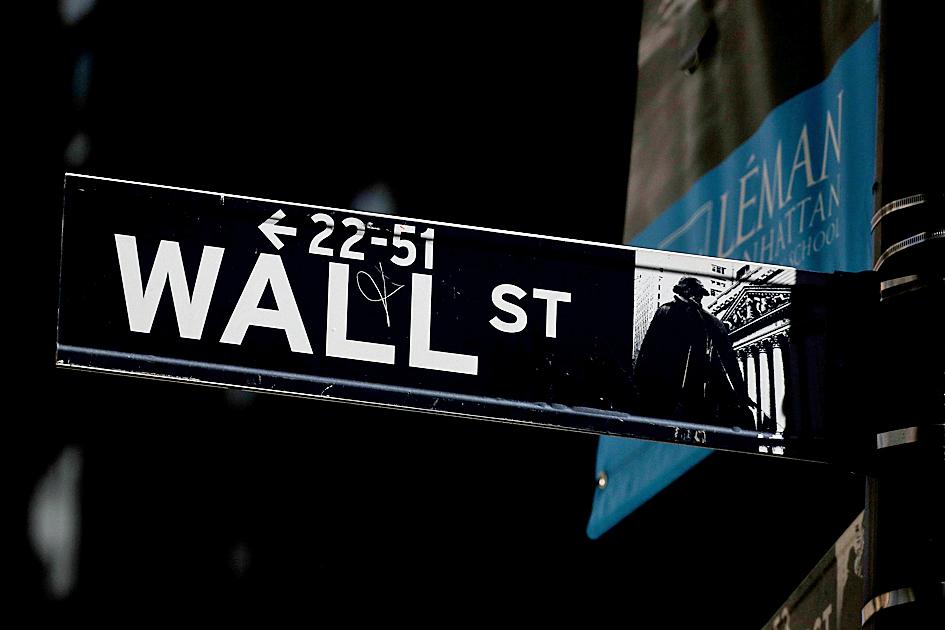
Photo: Reuters
On Friday, Evergrande’s electric vehicle unit said that it faced an uncertain future unless it got a swift injection of cash, the clearest sign yet that the property developer’s liquidity crisis is worsening in other parts of its business.
“You’ve had a good recovery from the lows” this week, said Rick Meckler, a partner at Cherry Lane Investments in New Vernon, New Jersey.
“With rates this low — even if they are going to move up slowly — and with the fiscal stimulus you’ll probably see coming, I think investors still prefer stocks to any other asset class. Stocks remain in a weird way what investors see as the safe place,” Meckler said.
On Wednesday, the US Federal Reserve said it would reduce its monthly bond purchases “soon” and half of the Fed’s policymakers projected that borrowing costs would need to rise next year.
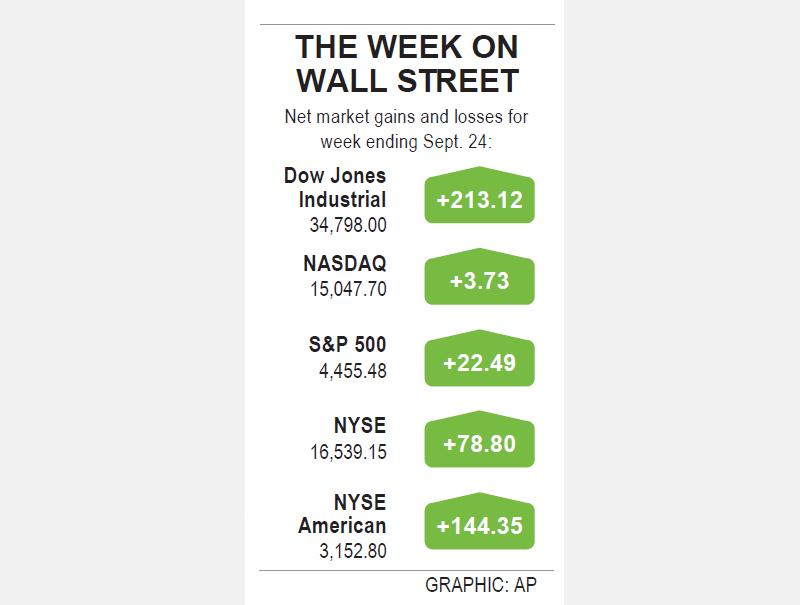
The Dow Jones Industrial Average rose 33.18 points, or 0.1 percent, to 34,798, the S&P 500 gained 6.5 points, or 0.15 percent, to 4,455.48 and the NASDAQ Composite dropped 4.54 points, or 0.03 percent, to 15,047.7.
For the week, the Dow was up 0.62 percent, the S&P 500 gained 0.51 percent and the NASDAQ gained 0.02 percent.
Shares of cryptocurrency-related firms Coinbase Global Inc, MicroStrategy Inc, Riot Blockchain Inc and Marathon Patent Group fell after China’s central bank put a ban on crypto trading and mining.
“It’s been a very volatile week to say the least, so I think going into the last week of September the volatility is likely to continue, especially with the end-of-the-quarter window dressing,” said Peter Cardillo, chief market economist at Spartan Capital Securities LLC in New York.
Investors are also looking for signs of progress on US President Joe Biden’s spending and budget bills.
Declining issues outnumbered advancing ones on the NYSE by a 1.50-to-1 ratio; on the NASDAQ, a 1.40-to-1 ratio favored decliners.
The S&P 500 posted 21 new 52-week highs and six new lows, while the NASDAQ Composite recorded 82 new highs and 73 new lows.
Volume on US exchanges was 9.00 billion shares, compared with the 10.11 billion average for the full session over the past 20 trading days.

The domestic unit of the Chinese-owned, Dutch-headquartered chipmaker Nexperia BV will soon be able to produce semiconductors locally within China, according to two company sources. Nexperia is at the center of a global tug-of-war over critical semiconductor technology, with a Dutch court in February ordering a probe into alleged mismanagement at the company. The geopolitical tussle has disrupted supply chains, with some carmakers reportedly forced to cut production due to chip shortages. Local production would allow Nexperia’s domestic arm, Nexperia Semiconductors (China) Ltd (安世半導體中國), to bypass restrictions in place since October on the supply of silicon wafers — etched with tiny components to

Singapore-based ride-hailing and delivery giant Grab Holdings Ltd has applied for regulatory approval to acquire the Taiwan operations of Germany-based Delivery Hero SE's Foodpanda in a deal valued at about US$600 million. Grab submitted the filing to the Fair Trade Commission on Friday last week, with the transaction subject to regulatory review and approval, the company said in a statement yesterday. Its independent governance structure would help foster a healthy and competitive market in Taiwan if the deal is approved, Grab said. Grab, which is listed on the NASDAQ, said in the filing that US-based Uber Technologies Inc holds about 13 percent of
Taiwan is open to joining a global liquefied natural gas (LNG) program if one is created, but on the condition that countries provide delivery even in a scenario where there is a conflict with China, an energy department official said yesterday. While Taiwan’s priority is to have enough LNG at home, the nation is open to exploring potential strategic reserves in other countries such as Japan or South Korea, Energy Administration Deputy Director-General Chen Chung-hsien (陳崇憲) said. While the LNG market does not have a global reserve for emergencies like that of oil, the concept has been raised a few times —

Taiwan Semiconductor Manufacturing Co (TSMC, 台積電) yesterday received government approval to deploy its advanced 3-nanometer (3nm) process at its second fab currently under construction in Japan, the Ministry of Economic Affairs said in a news release. The ministry green-lit the plan for the facility in Kumamoto, which is scheduled to start installing equipment and come online in 2028 with a monthly production capacity of 15,000 12-inch wafers, the ministry said. The Department of Investment Review in June 2024 authorized a US$5.26 billion investment for the facility, slated to manufacture 6- to 12nm chips, significantly less advanced than 3nm process. At a meeting with


 RSS
RSS