


Nike Inc lowered its sales outlook as production and shipping delays hobbled the company’s efforts to meet strong demand for shoes and athletic wear.
Sales this quarter could fall as factory closures in Vietnam prevent Nike from keeping up with consumer demand, the world’s largest athletic wear company said on Thursday. That means full-year growth would be in the mid-single digits rather than the low double digit percentage rate Nike targeted earlier.
Factory shutdowns in Vietnam due to a COVID-19 resurgence are hitting athletic wear makers hard as they are unable to supply enough shoes to consumers around the world. Adidas AG sourced about a third of its production from Vietnam last year. Puma SE CEO Bjorn Gulden said in July that the company was trying to source more from China to make up for the drop.
Nike chief financial officer Matthew Friend outlined the issues during a call with analysts. Most Nike factories in Vietnam remain shut due to government mandates, and the company has lost about 10 weeks of production since mid-July, he said. Nike does not expect the facilities to reopen until October, and they could require several months to ramp up manufacturing.
“It’s all about the inventory. Demand is clearly very high,” Bloomberg Intelligence analyst Poonam Goyal said. “How much inventory is in transit, and is it enough to meet holiday demand?”
The shoemaker said that inventories were at US$6.7 billion for the quarter, which is flat from a year ago. The company said in-transit inventories were high due to extended lead times.
Shipping times from Asia to North America, meanwhile, worsened in the quarter, doubling to 80 days due to port and rail congestion along with labor shortages. That has left large amounts of inventory lingering in transit while margins were hurt by higher ocean freight surcharges.
“We had full-price inventory that was unavailable to use to serve current consumer demand in this quarter,” Friend said.
Revenue rose 12 percent to US$12.2 billion in the three months through August after adjusting for currencies, missing analysts’ expectations of US$12.5 billion.
Nike has gained steam in recent quarters as sports resumed in earnest, with fans packing stadiums and kids returning to school playing fields. That has driven demand for sneakers and apparel around the world. Now, the prospect of meeting consumers’ voracious appetite during the holiday months seems daunting.
Cuts in wholesale distribution have put renewed focus on Nike’s direct-to-consumer channel, which grew 25 percent this quarter on a constant-currency basis.
Sales in China, meanwhile, which slowed last quarter after calls for boycotts over corporate statements on forced labor related to cotton production in the Xinjiang region, continued to be lackluster, rising 1 percent when adjusting for currency effects.

The domestic unit of the Chinese-owned, Dutch-headquartered chipmaker Nexperia BV will soon be able to produce semiconductors locally within China, according to two company sources. Nexperia is at the center of a global tug-of-war over critical semiconductor technology, with a Dutch court in February ordering a probe into alleged mismanagement at the company. The geopolitical tussle has disrupted supply chains, with some carmakers reportedly forced to cut production due to chip shortages. Local production would allow Nexperia’s domestic arm, Nexperia Semiconductors (China) Ltd (安世半導體中國), to bypass restrictions in place since October on the supply of silicon wafers — etched with tiny components to

Singapore-based ride-hailing and delivery giant Grab Holdings Ltd has applied for regulatory approval to acquire the Taiwan operations of Germany-based Delivery Hero SE's Foodpanda in a deal valued at about US$600 million. Grab submitted the filing to the Fair Trade Commission on Friday last week, with the transaction subject to regulatory review and approval, the company said in a statement yesterday. Its independent governance structure would help foster a healthy and competitive market in Taiwan if the deal is approved, Grab said. Grab, which is listed on the NASDAQ, said in the filing that US-based Uber Technologies Inc holds about 13 percent of
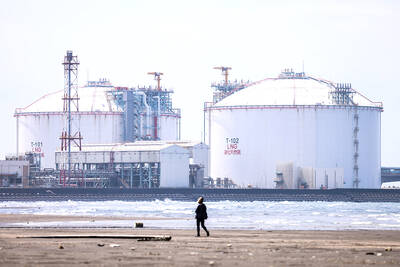
Taiwan is open to joining a global liquefied natural gas (LNG) program if one is created, but on the condition that countries provide delivery even in a scenario where there is a conflict with China, an energy department official said yesterday. While Taiwan’s priority is to have enough LNG at home, the nation is open to exploring potential strategic reserves in other countries such as Japan or South Korea, Energy Administration Deputy Director-General Chen Chung-hsien (陳崇憲) said. While the LNG market does not have a global reserve for emergencies like that of oil, the concept has been raised a few times —

Taiwan Semiconductor Manufacturing Co (TSMC, 台積電) yesterday received government approval to deploy its advanced 3-nanometer (3nm) process at its second fab currently under construction in Japan, the Ministry of Economic Affairs said in a news release. The ministry green-lit the plan for the facility in Kumamoto, which is scheduled to start installing equipment and come online in 2028 with a monthly production capacity of 15,000 12-inch wafers, the ministry said. The Department of Investment Review in June 2024 authorized a US$5.26 billion investment for the facility, slated to manufacture 6- to 12nm chips, significantly less advanced than 3nm process. At a meeting with


 RSS
RSS