


UK retail sales last month fell unexpectedly for a fourth month, the longest stretch of declines in at least 25 years, raising concerns about the economic recovery as a resurgence of COVID-19 cases and supply shortages take a toll.
The volume of goods sold in stores and online fell 0.9 percent after a 2.8 percent plunge in July, the Office for National Statistics said yesterday.
Food sales dropped sharply, as consumers steered spending toward bars, restaurants and entertainment venues that reopened after lockdowns, it said.
Doubts are growing about the outlook for consumer spending, which powers the British economy. COVID-19 cases are rising and millions of households now face a sharp squeeze on living standards after a surge in inflation.
Meanwhile, Brexit and the pandemic have dried up the pool of workers retailers rely on and created supply-chain disruptions.
The fall in sales last month surprised economists, who were predicting a small increase, and sales excluding auto fuel declined 1.2 percent. It was the first run of four consecutive declines since comparable records began in 1996.
A separate survey showed that 6.5 percent of retail businesses were unable to get the goods, materials and services they needed from Aug. 9 to Aug. 22. The figure was highest at department stores at 18.2 percent, followed by clothing stores at 11.2 percent.
“Recovery has been bumpy across the sector with many retailers dealing with supply-chain disruption and labor shortages,” said Emma-Lou Montgomery, associate director at the fund manager Fidelity International.
“Rising prices across the board will also be starting to pile pressure on households and could continue to hamper buying habits down the line,” she said.
The only categories that enjoyed an increase in sales were clothing and fuel, as more people returned to offices and traveled for summer holidays.
The figures “should cause markets to doubt” whether the Bank of England would hike interest rates as soon as February, Pantheon Macroeconomics chief UK economist Samuel Tombs said. “The near-term outlook for households’ spending is overcast.”
Consumer prices rose 3.2 percent in the year to last month, the fastest pace in more than nine years.
A further acceleration is almost inevitable, with natural gas and electricity bills set to increase sharply in the autumn and supply-chain disruptions leading to shortages of everyday goods.
The government is also paring back support for low-waged workers by phasing out a temporary increase in universal credit benefits. It is also eliminating a tax break on property purchases and planning to boost payroll taxes in April to pay for improved health care.
Meanwhile, an autumn spike in unemployment looms with the ending of furlough payments for those out of work during the pandemic.
High frequency indicators point to a loss of consumer momentum this month, with visits to shops, spending on cards and eating out at restaurants all easing.
“The numbers will stoke further fears that the pace of the UK economic recovery is slowing and that the revival in consumer demand has already peaked,” Equiti Capital head macroeconomist Stuart Cole said.

The domestic unit of the Chinese-owned, Dutch-headquartered chipmaker Nexperia BV will soon be able to produce semiconductors locally within China, according to two company sources. Nexperia is at the center of a global tug-of-war over critical semiconductor technology, with a Dutch court in February ordering a probe into alleged mismanagement at the company. The geopolitical tussle has disrupted supply chains, with some carmakers reportedly forced to cut production due to chip shortages. Local production would allow Nexperia’s domestic arm, Nexperia Semiconductors (China) Ltd (安世半導體中國), to bypass restrictions in place since October on the supply of silicon wafers — etched with tiny components to

Singapore-based ride-hailing and delivery giant Grab Holdings Ltd has applied for regulatory approval to acquire the Taiwan operations of Germany-based Delivery Hero SE's Foodpanda in a deal valued at about US$600 million. Grab submitted the filing to the Fair Trade Commission on Friday last week, with the transaction subject to regulatory review and approval, the company said in a statement yesterday. Its independent governance structure would help foster a healthy and competitive market in Taiwan if the deal is approved, Grab said. Grab, which is listed on the NASDAQ, said in the filing that US-based Uber Technologies Inc holds about 13 percent of
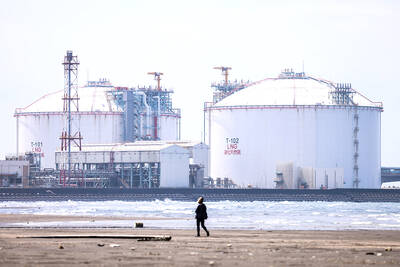
Taiwan is open to joining a global liquefied natural gas (LNG) program if one is created, but on the condition that countries provide delivery even in a scenario where there is a conflict with China, an energy department official said yesterday. While Taiwan’s priority is to have enough LNG at home, the nation is open to exploring potential strategic reserves in other countries such as Japan or South Korea, Energy Administration Deputy Director-General Chen Chung-hsien (陳崇憲) said. While the LNG market does not have a global reserve for emergencies like that of oil, the concept has been raised a few times —

Taiwan Semiconductor Manufacturing Co (TSMC, 台積電) yesterday received government approval to deploy its advanced 3-nanometer (3nm) process at its second fab currently under construction in Japan, the Ministry of Economic Affairs said in a news release. The ministry green-lit the plan for the facility in Kumamoto, which is scheduled to start installing equipment and come online in 2028 with a monthly production capacity of 15,000 12-inch wafers, the ministry said. The Department of Investment Review in June 2024 authorized a US$5.26 billion investment for the facility, slated to manufacture 6- to 12nm chips, significantly less advanced than 3nm process. At a meeting with


 RSS
RSS