


As Google expands its footprint in Taiwan, it plans to recruit software and hardware talent for its Google Nest smart device team, a chip development team, and teams to support its Pixel and Chromebook products, Google Taiwan said yesterday.
Supply chain management talent will also be in demand, the company said at an online event.
“There will always be openings for software engineers, hardware engineers and project managers,” Google Taiwan human resources head Vanessa Lu (呂亞樵) said.

Photo: CNA
“The strength of the Taiwanese industry is very clear,” Lu said, adding that the company would continue to invest in Taiwan.
Lu also doused some “urban myths” about how Taiwanese candidates can boost their chances of landing a coveted job at Google.
These false beliefs include: “Google’s Taiwanese staff are paid less” and “Goggle is only looking for graduates from top schools who speak fluent English,” she said.
Regarding interview tips, Lu said: “Taiwanese applicants often take too long in search of the perfect answer, but it’s more important to remain relaxed.”
“If the interview is more like a relaxed conversation, the chances of success would naturally be higher,” she said.
Aside from contending with applicants from around the world, job-seekers would also be competing with established Google employees, as the company encourages internal transfers.
Lu offered some tips on how candidates can make their resume stand out, including using concise language, as well as numbers to demonstrate their professional knowledge and other qualities that they can bring to the table.
“The low cost of labor is not why Google is in Taiwan,” Lu said, adding that what is more important is whether top talent is available and whether government policies are conducive.
While it is true that many Google employees come from top schools and speak fluent English, those attributes are not prerequisites, said Jeffrey Shih (石啟瑞), who works on talent and outreach programs at Google Taiwan.
“Most Google jobs ask for only a college degree, and might not even specify a particular major,” Shih said.
The level of English skills required depends on the position, as a sizeable number of jobs require only conversational English, he added.
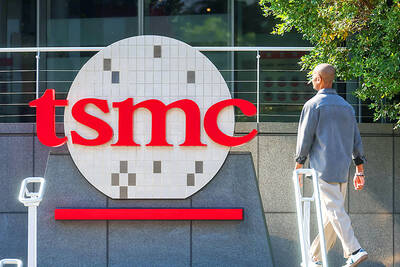
Shares of contract chipmaker Taiwan Semiconductor Manufacturing Co (TSMC, 台積電) came under pressure yesterday after a report that Apple Inc is looking to shift some orders from the Taiwanese company to Intel Corp. TSMC shares fell NT$55, or 2.4 percent, to close at NT$2,235 on the local main board, Taiwan Stock Exchange data showed. Despite the losses, TSMC is expected to continue to benefit from sound fundamentals, as it maintains a lead over its peers in high-end process development, analysts said. “The selling was a knee-jerk reaction to an Intel-Apple report over the weekend,” Mega International Investment Services Corp (兆豐國際投顧) analyst Alex Huang
Taiwan Semiconductor Manufacturing Co (TSMC, 台積電) is expected to remain Apple Inc’s primary chip manufacturing partner despite reports that Apple could shift some orders to Intel Corp, industry experts said yesterday. The comments came after The Wall Street Journal reported on Friday that Apple and Intel had reached a preliminary agreement following more than a year of negotiations for Intel to manufacture some chips for Apple devices. Taiwan Institute of Economic Research (台灣經濟研究院) economist Arisa Liu (劉佩真) said TSMC’s advanced packaging technologies, including integrated fan-out and chip-on-wafer-on-substrate, remain critical to the performance of Apple’s A-series and M-series chips. She said Intel and Samsung
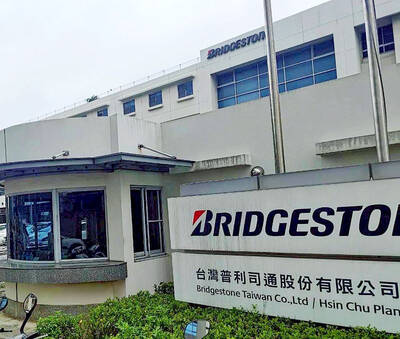
TRANSITION: With the closure, the company would reorganize its Taiwanese unit to a sales and service-focused model, Bridgestone said Bridgestone Corp yesterday announced it would cease manufacturing operations at its tire plant in Hsinchu County’s Hukou Township (湖口), affecting more than 500 workers. Bridgestone Taiwan Co (台灣普利司通) said in a statement that the decision was based on the Tokyo-based tire maker’s adjustments to its global operational strategy and long-term market development considerations. The Taiwanese unit would be reorganized as part of the closure, effective yesterday, and all related production activities would be concluded, the statement said. Under the plan, Bridgestone would continue to deepen its presence in the Taiwanese market, while transitioning to a sales and service-focused business model, it added. The Hsinchu
Taiwan Semiconductor Manufacturing Co (TSMC, 台積電) has approved a capital budget of US$31.28 billion for production expansion to meet long-term development needs during the artificial intelligence (AI) boom. The company’s board meeting yesterday approved the capital appropriation plan for purposes such as the installation of advanced technology capacity and fab construction, the world’s largest contract chipmaker said in a statement. At an earnings conference last month, TSMC forecast that its capital expenditure for this year would be at the higher end of the US$52 billion to US$56 billion range it forecast in January in response to robust demand for 5G, AI and


 RSS
RSS