


Auto parts suppliers last week reported mixed sales performances for last month, as shipments of gasoline-powered and electric vehicles continued to be affected by tight auto chip supply for tier-one parts suppliers and automakers.
The primary situation to keep an eye on would be the production recovery of major automakers amid a potential increase in auto chip supplies in the fourth quarter, as well as the COVID-19 situation in Malaysia, which is a major center for chip testing and packaging, Yuanta Securities Investment Consulting Co (元大投顧) said in a research note on Friday.
Cheng Shin Rubber Industry Co (正新橡膠), which sells its tire products under the Maxxis brand, saw its sales drop 18.3 percent from a year earlier to NT$7.68 billion (US$277.16 million); sunshade supplier Macauto Industrial Co (皇田工業) posted a decline of 15.51 percent to NT$338.88 million; and Chian Hsing Forging Industrial Co’s (江興鍛壓) sales were 5.26 percent lower at NT$197.69 million, the companies’ regulatory filings showed.
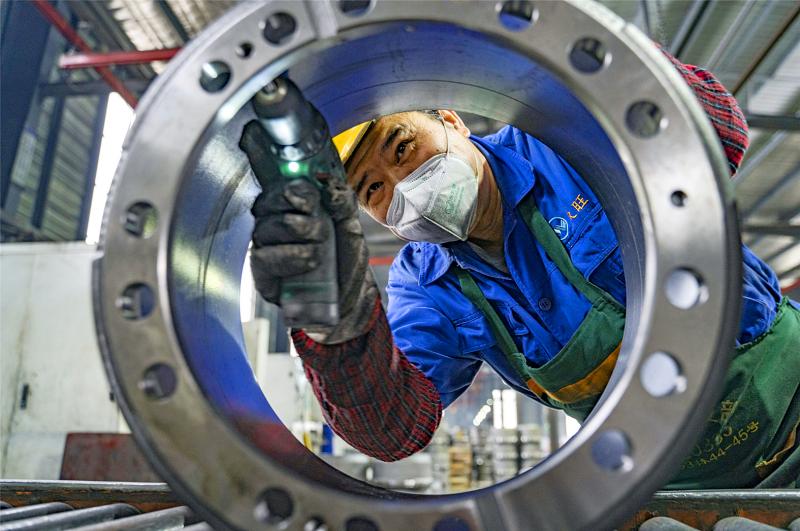
Photo: CNA
However, Tsang Yow Industrial Co (倉佑實業), which makes powertrain components, saw sales rise 2.08 percent year-on-year to NT$161.99 million; metal sheet and bumper manufacturer Tong Yang Industry Co’s (東陽實業) sales gained 4.04 percent to NT$1.49 billion; and Hiroca Holdings Ltd (廣華控股), which focuses on interior trim, posted an 8.41 percent increase to NT$554.08 million.
Kian Shen Corp (江申工業), a supplier of body frames, beams and suspension parts, reported that sales rose 12.33 percent to NT$91.64 million, and Hota Industrial Manufacturing Co (和大工業), which makes gears and shafts for transmissions, posted an increase of 48.56 percent to NT$625.08 million.
Meanwhile, Global PMX Co Ltd (智伸科), a provider of dual-clutch transmissions and direct-injection parts for gasoline motors, reported revenue growth of 3.95 percent year-on-year to NT$713.68 million, while Hu Lane Associate Inc (胡連精密), which makes electrical terminal components for cars and motorcycles, saw revenue increase 25.59 percent to NT$375.49 million.
Wire harness maker BizLink Holding Inc’s (貿聯控股) revenue rose 23.57 percent to NT$2.48 billion; diode maker Pan Jit International Inc (強茂) increased 34.47 percent to NT$1.23 billion; and electrical terminal supplier K.S. Terminals Inc (健和興端子) grew 32.09 percent to NT$383.42 million.
“Generally, electric vehicle and electrification-related supply chain firms saw sales grow in August,” Yuanta analysts said in the note.
The auto chip shortage has forced automakers worldwide to trim production, pushing passenger vehicle sales in China to fall 15 percent year-on-year to 1.45 million units last month, while sales of light vehicles in the US dropped 17 percent to 1.09 million units, Yuanta said, citing industry tallies.
“Given tighter than expected auto chip supply in the third quarter of this year, we cut our forecast for global light vehicle production to 74.9 million units for 2021, implying growth of 6 percent year-on-year compared with our estimate of 9 percent growth previously,” Yuanta analysts said. “Amid low car inventory levels in the US and China and with high used car prices, we believe slower-than-expected car sales are mainly owing to supply chain disruptions rather than a car demand decline,” they said.
Overall, Yuanta remains positive on the outlook of Taiwanese companies in the electric vehicle and electrification-related businesses, such as BizLink, KST and Pan Jit, as well as those benefiting from a recovery in demand for cars, such as Global PMX and Hu Lane, the note said.

The domestic unit of the Chinese-owned, Dutch-headquartered chipmaker Nexperia BV will soon be able to produce semiconductors locally within China, according to two company sources. Nexperia is at the center of a global tug-of-war over critical semiconductor technology, with a Dutch court in February ordering a probe into alleged mismanagement at the company. The geopolitical tussle has disrupted supply chains, with some carmakers reportedly forced to cut production due to chip shortages. Local production would allow Nexperia’s domestic arm, Nexperia Semiconductors (China) Ltd (安世半導體中國), to bypass restrictions in place since October on the supply of silicon wafers — etched with tiny components to

Singapore-based ride-hailing and delivery giant Grab Holdings Ltd has applied for regulatory approval to acquire the Taiwan operations of Germany-based Delivery Hero SE's Foodpanda in a deal valued at about US$600 million. Grab submitted the filing to the Fair Trade Commission on Friday last week, with the transaction subject to regulatory review and approval, the company said in a statement yesterday. Its independent governance structure would help foster a healthy and competitive market in Taiwan if the deal is approved, Grab said. Grab, which is listed on the NASDAQ, said in the filing that US-based Uber Technologies Inc holds about 13 percent of

Taiwan is open to joining a global liquefied natural gas (LNG) program if one is created, but on the condition that countries provide delivery even in a scenario where there is a conflict with China, an energy department official said yesterday. While Taiwan’s priority is to have enough LNG at home, the nation is open to exploring potential strategic reserves in other countries such as Japan or South Korea, Energy Administration Deputy Director-General Chen Chung-hsien (陳崇憲) said. While the LNG market does not have a global reserve for emergencies like that of oil, the concept has been raised a few times —

Taiwan Semiconductor Manufacturing Co (TSMC, 台積電) yesterday received government approval to deploy its advanced 3-nanometer (3nm) process at its second fab currently under construction in Japan, the Ministry of Economic Affairs said in a news release. The ministry green-lit the plan for the facility in Kumamoto, which is scheduled to start installing equipment and come online in 2028 with a monthly production capacity of 15,000 12-inch wafers, the ministry said. The Department of Investment Review in June 2024 authorized a US$5.26 billion investment for the facility, slated to manufacture 6- to 12nm chips, significantly less advanced than 3nm process. At a meeting with


 RSS
RSS