


Vietnam’s tough policies to control COVID-19, which have shuttered factories and stunted output, are being criticized by overseas industries and within the government as a threat to exports and investment.
The growing concerns come as the export-dependent economy battles its worst outbreak. The nation’s commercial hub of Ho Chi Minh City has enacted tough lockdown restrictions, including ordering factories in pandemic-hit areas to shut if they cannot provide sleeping accommodations for workers.
The European Chamber of Commerce (EuroCham) in Vietnam vice chairman Nguyen Hai Minh said that the group estimates 18 percent of its members have relocated some production to other countries to protect their supply chains.
Another 16 percent are considering similar moves, he said during a briefing on Thursday evening.
“There is no disguising the fact that this fourth wave outbreak is having a dire impact on business,” EuroCham chairman Alain Cany said in a statement. “If lockdowns, social distancing and travel restrictions continue for much longer, new investment projects could be put at risk and companies could consider relocating elsewhere in the region.”
Even the Vietnamese Ministry of Trade and Industry earlier this week said that the nation is at risk of losing export customers, and needs to revise some disease prevention measures to ensure production at factories while containing the pandemic.
Exporters could face difficulties restoring lost international business after the pandemic is contained, it said.
Eighty percent of shoe factories in the south have halted operations after failing to meet government directives for on-site sleeping accommodations and designated transportation routes to shuttle workers to plants, the ministry said. Shoe factories in the central and northern regions have cut production by 30 to 50 percent due to COVID-19 social distancing curbs and a shortage of workers.
Vietnam has been the second-largest supplier of apparel and footwear to the US for many years, according to the American Apparel & Footwear Association, which represents more than 1,000 brands, including Gap Inc, J Crew Group Inc and Levi Strauss & Co.
EuroCham urged the government to accelerate the vaccination process, especially for workers, to ensure production.
More than 571,000 domestic virus patients have been reported since the latest outbreak began in late April, with more than 14,400 fatalities, according to the Vietnamese Ministry of Health.
Most infections and deaths have been recorded in the south.
The nation of 98 million has administered nearly 25 million COVID-19 vaccine doses, with 4.3 percent of the population fully vaccinated, the health ministry said.

The domestic unit of the Chinese-owned, Dutch-headquartered chipmaker Nexperia BV will soon be able to produce semiconductors locally within China, according to two company sources. Nexperia is at the center of a global tug-of-war over critical semiconductor technology, with a Dutch court in February ordering a probe into alleged mismanagement at the company. The geopolitical tussle has disrupted supply chains, with some carmakers reportedly forced to cut production due to chip shortages. Local production would allow Nexperia’s domestic arm, Nexperia Semiconductors (China) Ltd (安世半導體中國), to bypass restrictions in place since October on the supply of silicon wafers — etched with tiny components to

Singapore-based ride-hailing and delivery giant Grab Holdings Ltd has applied for regulatory approval to acquire the Taiwan operations of Germany-based Delivery Hero SE's Foodpanda in a deal valued at about US$600 million. Grab submitted the filing to the Fair Trade Commission on Friday last week, with the transaction subject to regulatory review and approval, the company said in a statement yesterday. Its independent governance structure would help foster a healthy and competitive market in Taiwan if the deal is approved, Grab said. Grab, which is listed on the NASDAQ, said in the filing that US-based Uber Technologies Inc holds about 13 percent of
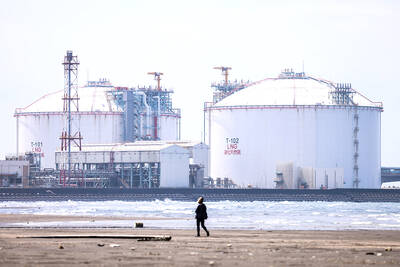
Taiwan is open to joining a global liquefied natural gas (LNG) program if one is created, but on the condition that countries provide delivery even in a scenario where there is a conflict with China, an energy department official said yesterday. While Taiwan’s priority is to have enough LNG at home, the nation is open to exploring potential strategic reserves in other countries such as Japan or South Korea, Energy Administration Deputy Director-General Chen Chung-hsien (陳崇憲) said. While the LNG market does not have a global reserve for emergencies like that of oil, the concept has been raised a few times —
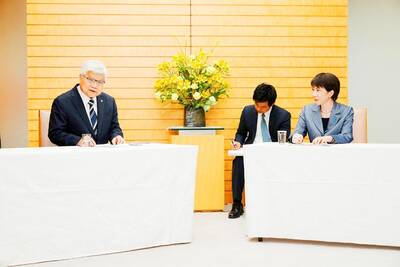
Taiwan Semiconductor Manufacturing Co (TSMC, 台積電) yesterday received government approval to deploy its advanced 3-nanometer (3nm) process at its second fab currently under construction in Japan, the Ministry of Economic Affairs said in a news release. The ministry green-lit the plan for the facility in Kumamoto, which is scheduled to start installing equipment and come online in 2028 with a monthly production capacity of 15,000 12-inch wafers, the ministry said. The Department of Investment Review in June 2024 authorized a US$5.26 billion investment for the facility, slated to manufacture 6- to 12nm chips, significantly less advanced than 3nm process. At a meeting with


 RSS
RSS