


A recovery in global trade during the summer is beginning to wane, according to some early warning signs pointing to the negative effects of widespread COVID-19 outbreaks in the manufacturing centers of east Asia.
A dramatic decline in exports from Taiwan, which makes many of the computer chips used in vehicles and mobile phones, has combined with temporary port closures and lockdowns in Australia, China and Japan to cut the level of global trade.
The signs of a slowdown sparked a reaction at the weekend from a key member of the oil cartel OPEC, who said plans for an expansion of oil output might need to be scrapped.
Kuwaiti Minister of Oil Mohammad Abdulatif al-Fares said the 400,000 barrel per day increase in oil output agreed by OPEC and its allies, a grouping known as OPEC+, at previous meetings this year to match rising demand might be reconsidered at its next gathering later this week.
The minister told Reuters that while the economies of East Asian countries continued to be affected by outbreaks of the Delta variant of SARS-CoV-2, “caution must be exercised.”
The cost of a barrel of Brent crude oil last week jumped 11 percent to US$72.70 a barrel in response to the concerns of cutbacks in supply by OPEC and energy firms shutting US production in the Gulf of Mexico as Hurricane Ida bore down.
“Energy traders are pushing crude prices higher in anticipation of disruptions in output in the Gulf of Mexico and on growing expectations OPEC+ might resist raising output given the recent Delta variant impact over crude demand,” Oanda Corp senior market analyst Edward Moya said.
Economists at Llewellyn Consulting said the outlook for Taiwanese export orders, looking three months ahead, had fallen from 70 percent year-on-year growth last year to just 20 percent.
After an 18-month backlog, the fall in export orders was likely to restrict the capacity of automakers and other manufacturers over the coming months.
Some automakers have warned customers that they face a wait of more than six months before some models are available again for sale.
“World trade continues to be disrupted by port closures, most recently at Ningbo — China’s third-largest port — which have also contributed to the enormous increase in shipping container costs this year that result from many containers being stranded in places other than where they are needed,” the independent consultancy said.
“Another drag on world trade has been the persistent shortage of semiconductor chips, which are nowadays a crucial input into motor vehicle manufacturing. Given Taiwan’s pivotal role in the global semiconductor industry, the decline in its export orders since February is a harbinger of some further slowing in world trade growth,” it said.
Australia, which exports much of the world’s iron ore, is expected to narrowly avoid a second recession in two years when it reports GDP figures later this week.
Some analysts expect the latest quarter to show it grew by as little as 0.1 percent, while others believe the country, where many cities and regions have entered fresh lockdowns, might see its GDP go into reverse.
Recent business surveys in the UK, Europe and the US have shown that a rapid expansion across the developed world following the lifting of restrictions in the spring has begun to peter out.
On Friday, US Federal Reserve Chair Jerome Powell said that the impact of shortages on prices was likely to be limited and not last beyond the end of the year.
However, some analysts have warned that low vaccination rates in some countries and the spread of the Delta variant would hinder the growth in exports well into next year.

The domestic unit of the Chinese-owned, Dutch-headquartered chipmaker Nexperia BV will soon be able to produce semiconductors locally within China, according to two company sources. Nexperia is at the center of a global tug-of-war over critical semiconductor technology, with a Dutch court in February ordering a probe into alleged mismanagement at the company. The geopolitical tussle has disrupted supply chains, with some carmakers reportedly forced to cut production due to chip shortages. Local production would allow Nexperia’s domestic arm, Nexperia Semiconductors (China) Ltd (安世半導體中國), to bypass restrictions in place since October on the supply of silicon wafers — etched with tiny components to

Singapore-based ride-hailing and delivery giant Grab Holdings Ltd has applied for regulatory approval to acquire the Taiwan operations of Germany-based Delivery Hero SE's Foodpanda in a deal valued at about US$600 million. Grab submitted the filing to the Fair Trade Commission on Friday last week, with the transaction subject to regulatory review and approval, the company said in a statement yesterday. Its independent governance structure would help foster a healthy and competitive market in Taiwan if the deal is approved, Grab said. Grab, which is listed on the NASDAQ, said in the filing that US-based Uber Technologies Inc holds about 13 percent of
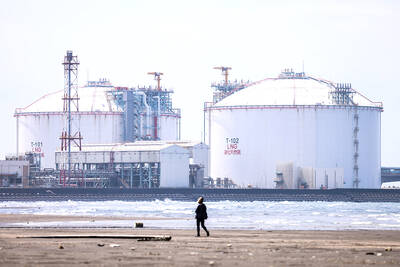
Taiwan is open to joining a global liquefied natural gas (LNG) program if one is created, but on the condition that countries provide delivery even in a scenario where there is a conflict with China, an energy department official said yesterday. While Taiwan’s priority is to have enough LNG at home, the nation is open to exploring potential strategic reserves in other countries such as Japan or South Korea, Energy Administration Deputy Director-General Chen Chung-hsien (陳崇憲) said. While the LNG market does not have a global reserve for emergencies like that of oil, the concept has been raised a few times —

Taiwan Semiconductor Manufacturing Co (TSMC, 台積電) yesterday received government approval to deploy its advanced 3-nanometer (3nm) process at its second fab currently under construction in Japan, the Ministry of Economic Affairs said in a news release. The ministry green-lit the plan for the facility in Kumamoto, which is scheduled to start installing equipment and come online in 2028 with a monthly production capacity of 15,000 12-inch wafers, the ministry said. The Department of Investment Review in June 2024 authorized a US$5.26 billion investment for the facility, slated to manufacture 6- to 12nm chips, significantly less advanced than 3nm process. At a meeting with


 RSS
RSS