


Nissan Motor Co on Tuesday debuted the latest edition of its Z series coupe in New York, marking the seventh generation of a sports-car line that was introduced in 1969 as the Fairlady Z in Japan and the Datsun 240Z in the US.
The new Z is the first refresh of the two-door platform in more than a decade and would be available for purchase next spring, Nissan said in a statement.
The vehicle will be offered in the US$40,000 range, Nissan chief operating officer Ashwani Gupta said, with full pricing details coming closer to when sales start.
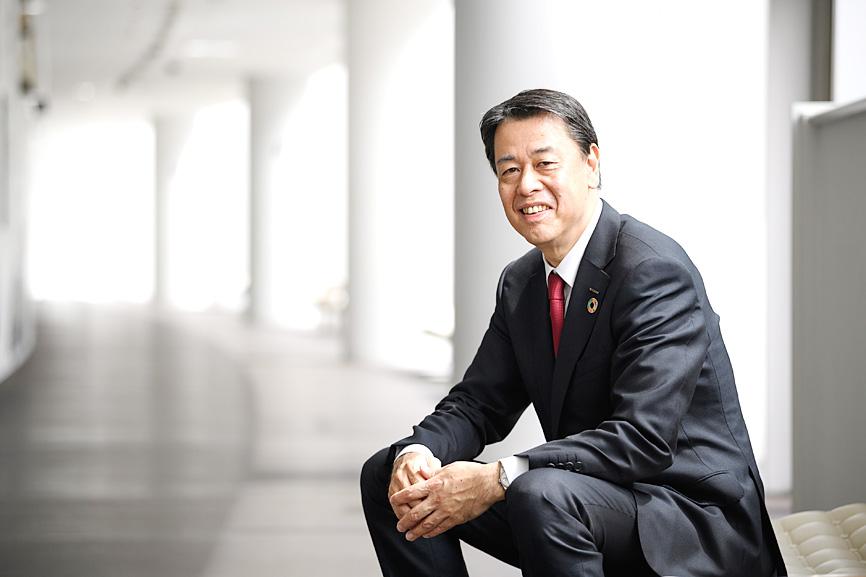
Photo: Bloomberg
“This is part of our culture,” he said in an interview. “And I’m pretty sure that it will bring further momentum in our growth.”
Nissan CEO Makoto Uchida is cutting costs and capacity after Nissan posted its biggest loss in two decades in the 2019-2020 fiscal year, while seeking to move past the turmoil triggered by the arrest of former chairman Carlos Ghosn.
Last year, Uchida unveiled the Ariya electric crossover and promised to roll out a dozen new vehicles within 18 months as part of a turnaround effort dubbed Nissan NEXT.
Gupta said the company, which recently forecast a return to annual profit for the first time in three years, was on track to meet the goals laid out in the plan.
COVID-19 outbreaks continue to pose a challenge, as does the global semiconductor shortage.
“It is progressing, but still there’s a ways to go to be 100 percent out of it,” he said of the lack of chips. “Accordingly, we are adjusting our production around the world to cater to the customer demand, like keeping the new models as the priority because, for Nissan, new models in production is one of the main pillars of growth.”
Dropping a numerical prefix to its name in the US for the first time, the revamped sports car will come in two versions, the Z Sport and the Z Performance, and a variety of two-tone and monotone color options.
Gupta did not provide a sales target, but predicted that consumers would be pleased with the Z’s performance — including a V6 twin-turbocharged engine with 400 horsepower — and its link with Nissan’s history.
Along with the Ariya and Z, updated iterations of Nissan’s Rogue, Pathfinder and Frontier are among the vehicles coming to market.
Nissan works with partners Renault SA and Mitsubishi Motors Corp as part of a three-way alliance. The partnership includes a lopsided ownership structure skewed in favor of Renault that has long been a source of tension between the automakers.
The French company owns 43 percent of Nissan, while the Yokohama, Japan-based automaker has just 15 percent of Renault and no voting rights. Nissan, in turn, holds a 34 percent stake in Mitsubishi.
The 2018 arrest of Ghosn brought tensions further into the open, but Uchida recently used a meeting with French President Emmanuel Macron to offer assurances that Nissan’s relationship with Renault is good.
“I can confirm there are no tensions,” he said. “As far as the alliance is concerned, we are focusing on our core areas of synergies, and now we are using electrification as the next pillar to find more and more synergies.”

The domestic unit of the Chinese-owned, Dutch-headquartered chipmaker Nexperia BV will soon be able to produce semiconductors locally within China, according to two company sources. Nexperia is at the center of a global tug-of-war over critical semiconductor technology, with a Dutch court in February ordering a probe into alleged mismanagement at the company. The geopolitical tussle has disrupted supply chains, with some carmakers reportedly forced to cut production due to chip shortages. Local production would allow Nexperia’s domestic arm, Nexperia Semiconductors (China) Ltd (安世半導體中國), to bypass restrictions in place since October on the supply of silicon wafers — etched with tiny components to

Singapore-based ride-hailing and delivery giant Grab Holdings Ltd has applied for regulatory approval to acquire the Taiwan operations of Germany-based Delivery Hero SE's Foodpanda in a deal valued at about US$600 million. Grab submitted the filing to the Fair Trade Commission on Friday last week, with the transaction subject to regulatory review and approval, the company said in a statement yesterday. Its independent governance structure would help foster a healthy and competitive market in Taiwan if the deal is approved, Grab said. Grab, which is listed on the NASDAQ, said in the filing that US-based Uber Technologies Inc holds about 13 percent of
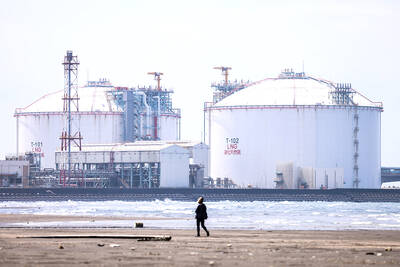
Taiwan is open to joining a global liquefied natural gas (LNG) program if one is created, but on the condition that countries provide delivery even in a scenario where there is a conflict with China, an energy department official said yesterday. While Taiwan’s priority is to have enough LNG at home, the nation is open to exploring potential strategic reserves in other countries such as Japan or South Korea, Energy Administration Deputy Director-General Chen Chung-hsien (陳崇憲) said. While the LNG market does not have a global reserve for emergencies like that of oil, the concept has been raised a few times —
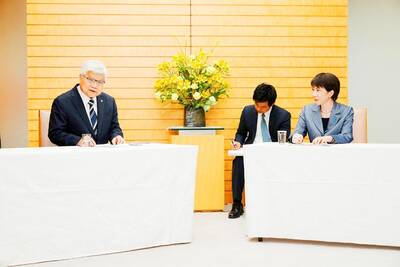
Taiwan Semiconductor Manufacturing Co (TSMC, 台積電) yesterday received government approval to deploy its advanced 3-nanometer (3nm) process at its second fab currently under construction in Japan, the Ministry of Economic Affairs said in a news release. The ministry green-lit the plan for the facility in Kumamoto, which is scheduled to start installing equipment and come online in 2028 with a monthly production capacity of 15,000 12-inch wafers, the ministry said. The Department of Investment Review in June 2024 authorized a US$5.26 billion investment for the facility, slated to manufacture 6- to 12nm chips, significantly less advanced than 3nm process. At a meeting with


 RSS
RSS