


The Ministry of Economic Affairs approved nine more Taiwanese companies’ applications to join the government’s three-year action plan for domestic investment, it said on Friday.
The additions bring the number of approved applications to 927 since the beginning of 2019, when the program was initiated amid a US-China trade dispute, the ministry said in a statement on its Web site.
Another 55 firms are waiting for their applications to be reviewed, it added.
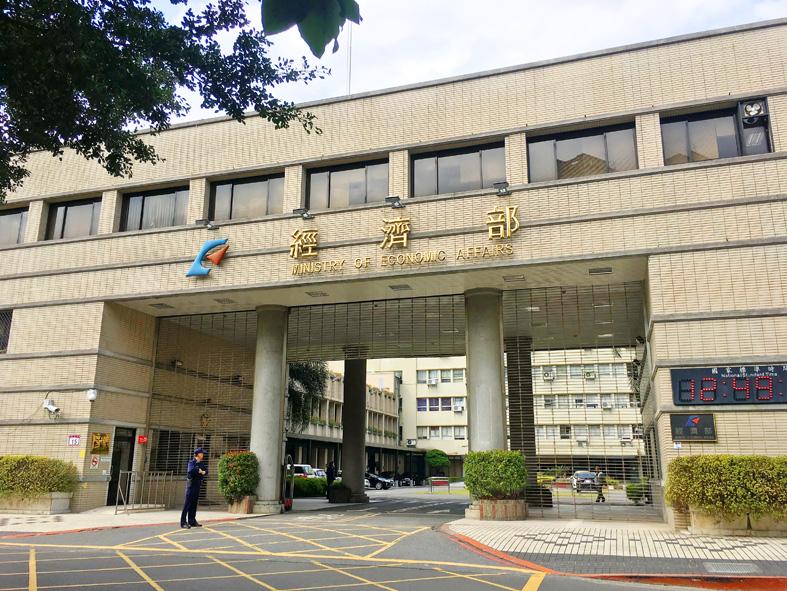
Photo: Huang Pei-chun, Taipei Times
The newly approved applicants aim to invest a combined NT$3.3 billion (US$118 million) in Taiwan, it said.
The ministry has approved more than NT$1.26 trillion in investments, which are expected to create 106,490 jobs, it said.
Automotive parts and green energy parts supplier World Known MFG (Cayman) Ltd (光隆精密), Superior Starch Co Ltd (優質澱粉), construction materials producer Road Applied Technology Inc (羅德應用材料), precision molding components maker Song Time Precision Industrial Co Ltd (松泰精密), metal forging supplier Kao Shang Industry Co (高尚工業), casting items maker Shin-Li Foundry Ltd (鑫立鑄造), CNC rotary tables and components producer Tanshing Accurate Industrial Co Ltd (潭興精工), Caitao Motors Co Ltd (凱桃汽車) and a subsidiary of seafood restaurant chain Hai Pa Wang (海霸王) are the latest firms to join the program.
The government’s action plan on domestic investment provides companies with assistance on taxes, financing, land, utilities and labor.
It comprises three programs to attract investments from Taiwanese businesses at home and abroad, and the number of companies applying to participate in the scheme has grown despite the effects of COVID-19, the ministry said.
Since early 2019, the action plan has encouraged 217 overseas Taiwanese companies to invest NT$823.4 billion in Taiwan, and potentially create 68,720 job opportunities, while 607 small and medium-sized enterprises have gained approval to invest NT$255.4 billion, which is expected to generate 23,783 jobs, the ministry said.

The domestic unit of the Chinese-owned, Dutch-headquartered chipmaker Nexperia BV will soon be able to produce semiconductors locally within China, according to two company sources. Nexperia is at the center of a global tug-of-war over critical semiconductor technology, with a Dutch court in February ordering a probe into alleged mismanagement at the company. The geopolitical tussle has disrupted supply chains, with some carmakers reportedly forced to cut production due to chip shortages. Local production would allow Nexperia’s domestic arm, Nexperia Semiconductors (China) Ltd (安世半導體中國), to bypass restrictions in place since October on the supply of silicon wafers — etched with tiny components to

Singapore-based ride-hailing and delivery giant Grab Holdings Ltd has applied for regulatory approval to acquire the Taiwan operations of Germany-based Delivery Hero SE's Foodpanda in a deal valued at about US$600 million. Grab submitted the filing to the Fair Trade Commission on Friday last week, with the transaction subject to regulatory review and approval, the company said in a statement yesterday. Its independent governance structure would help foster a healthy and competitive market in Taiwan if the deal is approved, Grab said. Grab, which is listed on the NASDAQ, said in the filing that US-based Uber Technologies Inc holds about 13 percent of
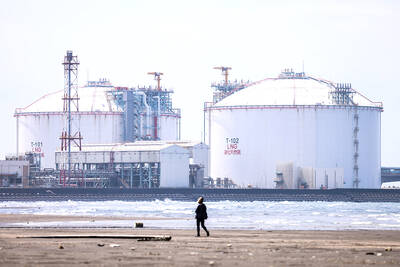
Taiwan is open to joining a global liquefied natural gas (LNG) program if one is created, but on the condition that countries provide delivery even in a scenario where there is a conflict with China, an energy department official said yesterday. While Taiwan’s priority is to have enough LNG at home, the nation is open to exploring potential strategic reserves in other countries such as Japan or South Korea, Energy Administration Deputy Director-General Chen Chung-hsien (陳崇憲) said. While the LNG market does not have a global reserve for emergencies like that of oil, the concept has been raised a few times —

Taiwan Semiconductor Manufacturing Co (TSMC, 台積電) yesterday received government approval to deploy its advanced 3-nanometer (3nm) process at its second fab currently under construction in Japan, the Ministry of Economic Affairs said in a news release. The ministry green-lit the plan for the facility in Kumamoto, which is scheduled to start installing equipment and come online in 2028 with a monthly production capacity of 15,000 12-inch wafers, the ministry said. The Department of Investment Review in June 2024 authorized a US$5.26 billion investment for the facility, slated to manufacture 6- to 12nm chips, significantly less advanced than 3nm process. At a meeting with


 RSS
RSS