


An increase in domestic COVID-19 infections has had little impact on Taiwan Business Bank’s (TBB, 台灣企銀) operations, it said yesterday, adding that it expects stable growth in mortgage lending this year, despite credit controls aimed at cooling the real-estate market.
The state-run bank gave the guardedly optimistic view during an online investors’ conference, where it confirmed a net profit of NT$1.1 billion (US$39.77 million) for the first quarter, or earnings per share of NT$0.17.
STILL AFFECTED
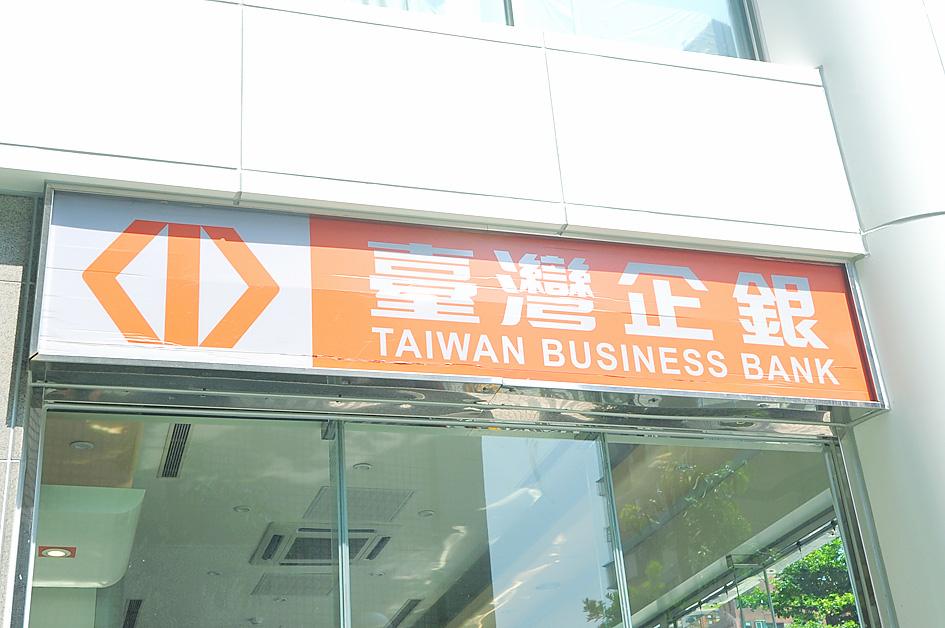
Photo: Wang Yi-sung, Taipei Times
The result was weaker than a year earlier, suggesting that the lender has not yet emerged from the effects of the COVID-19 pandemic, but it said it expects business to improve as the global economy gains traction.
Although uncertainty linked to the virus crisis lingers, business and investment sentiment is picking up, TBB spokesman Chang Yo-ming (張佑銘) said.
Sales of wealth management products such as mutual funds and foreign debts have gained in popularity amid abundant liquidity around the world, Chang said.
Interest spread gained 4 basis points to 1.28 percent at the end of March, while net interest margin added 5 basis points to 0.96 percent, company data showed.
Meanwhile, bad loans grew by NT$100 million to NT$624 million due to COVID-19 relief loans, as all banks responded to the government’s call to support troubled companies, TBB said.
LENDING SHIFT
Consequently, the ratio for nonperforming loans climbed to 0.51 percent, higher than the sector’s average, but declined somewhat in April, another official said.
TBB is to step up provisions for related financing as the government yesterday expanded the relief and subsidy program.
TBB expects its mortgage operation to see a stable increase this year on the back of property demand from individuals and companies returning from abroad, unaffected by credit controls aimed at property speculators.
Trading income slowed last quarter from a year or even three months earlier, but TBB might see dividend incomes from this month to August, Chang said.


The domestic unit of the Chinese-owned, Dutch-headquartered chipmaker Nexperia BV will soon be able to produce semiconductors locally within China, according to two company sources. Nexperia is at the center of a global tug-of-war over critical semiconductor technology, with a Dutch court in February ordering a probe into alleged mismanagement at the company. The geopolitical tussle has disrupted supply chains, with some carmakers reportedly forced to cut production due to chip shortages. Local production would allow Nexperia’s domestic arm, Nexperia Semiconductors (China) Ltd (安世半導體中國), to bypass restrictions in place since October on the supply of silicon wafers — etched with tiny components to

Taiwan is open to joining a global liquefied natural gas (LNG) program if one is created, but on the condition that countries provide delivery even in a scenario where there is a conflict with China, an energy department official said yesterday. While Taiwan’s priority is to have enough LNG at home, the nation is open to exploring potential strategic reserves in other countries such as Japan or South Korea, Energy Administration Deputy Director-General Chen Chung-hsien (陳崇憲) said. While the LNG market does not have a global reserve for emergencies like that of oil, the concept has been raised a few times —

Taiwan Semiconductor Manufacturing Co (TSMC, 台積電) yesterday received government approval to deploy its advanced 3-nanometer (3nm) process at its second fab currently under construction in Japan, the Ministry of Economic Affairs said in a news release. The ministry green-lit the plan for the facility in Kumamoto, which is scheduled to start installing equipment and come online in 2028 with a monthly production capacity of 15,000 12-inch wafers, the ministry said. The Department of Investment Review in June 2024 authorized a US$5.26 billion investment for the facility, slated to manufacture 6- to 12nm chips, significantly less advanced than 3nm process. At a meeting with
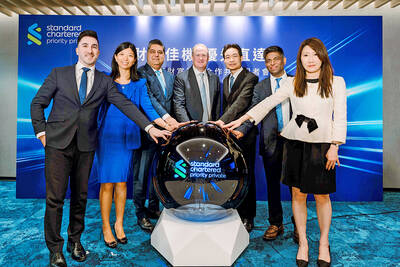
Standard Chartered Taiwan on March 26 announced that it has partnered with international fintech firm FinIQ to build an “Automated Structured Products Pricing Platform.” The bank is also introducing products from global issuers including Goldman Sachs Group Inc, Barclays PLC and BNP Paribas SA. The new platform enables an end-to-end process whereby it finds the most competitive pricing across multiple issuers in a matter of minutes, followed by automated documentation and transaction execution, which significantly shortens time-to-market and delivers a superior wealth management experience. Standard Chartered Bank Taiwan CEO Anthony Yu (游天立) said: “Standard Chartered is increasingly leveraging its wealth management


 RSS
RSS