


Cryptocurrencies yesterday fought to find a footing after even weekend cheerleading from Tesla Inc chief executive Elon Musk seemed unable to offset selling pressure from spooked investors or nerves stemming from a gathering crackdown on the asset class in China.
Musk had lent a bid on Saturday by tweeting support for crypto in “the true battle” with fiat currencies.
However, on Sunday prices slumped as “miners,” who mint crypto by verifying transactions, halted Chinese operations in the face of increasing scrutiny from authorities.
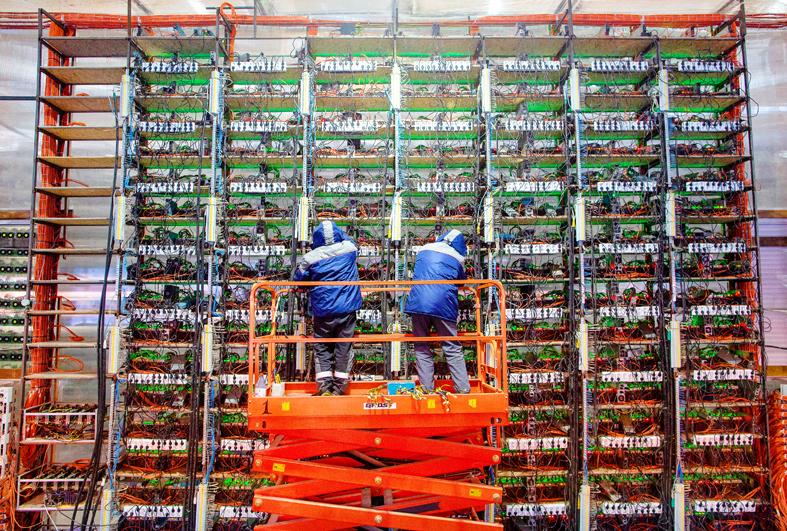
Photo: Bloomberg
Bitcoin climbed as high as US$35,970 from Sunday’s trough at US$31,107, but the growing sense of a shakeout flowing through the frothy market left it struggling to make further gains and it remains about 45 percent below last month’s record peak of US$64.895.
The collapse leaves the world’s biggest cryptocurrency back where it traded in February, before Tesla announced a US$1.5 billion bitcoin purchase and made a since-reversed decision to accept it as payment for vehicles.
Rival cryptocurrency ether hit an almost two-month low of about US$1,730 on Sunday and bounced as high as US$2,101 yesterday before losing some steam.
Dogecoin, launched as a parody before Musk’s backing vaulted it up more than a 100-fold this year, last traded at US$0.30.
“After a brief bounce off last week’s multimonth lows, some of the paper-handed types have seemingly sold out,” IG Markets analyst Kyle Rodda said, using the market term for short-term holders who sell at the first signs of trouble.
“Or [they] decided to pack it in and cut their losses,” he said, “as bitcoin’s momentum, and the speculative mania that drove it, almost entirely disappears.”
The trigger for the initial crypto sell-off appeared to come from toughening language from Chinese regulators last week, which stepped up further on Friday when a Chinese State Council committee vowed to crack down on miners in particular.
Gravity has also played a role after months of gains and the attention on Chinese miners — who account for about 70 percent of supply — has further dampened sentiment.
“Many miners keep much of the bitcoin/ETH etc that they mine and don’t hedge it all into fiat right away,” said James Quinn, managing partner at Q9 Capital, a Hong Kong-based cryptocurrency private wealth manager. “If they are pulling up stakes or shutting down, they may need to reduce their balance sheets in the short term.”
Huobi Mall (火幣商城), part of cryptocurrency exchange Huobi (火幣網), said it suspended cryptomining that services mainland Chinese clients.
BTC.TOP, a cryptomining pool, has suspended its China business citing regulatory risks, while cryptominer HashCow (奶牛算力) said it would halt buying new bitcoin rigs.
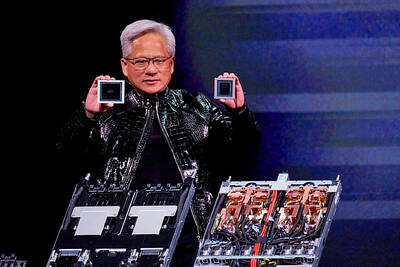
Nvidia Corp chief executive officer Jensen Huang (黃仁勳) on Monday introduced the company’s latest supercomputer platform, featuring six new chips made by Taiwan Semiconductor Manufacturing Co (TSMC, 台積電), saying that it is now “in full production.” “If Vera Rubin is going to be in time for this year, it must be in production by now, and so, today I can tell you that Vera Rubin is in full production,” Huang said during his keynote speech at CES in Las Vegas. The rollout of six concurrent chips for Vera Rubin — the company’s next-generation artificial intelligence (AI) computing platform — marks a strategic
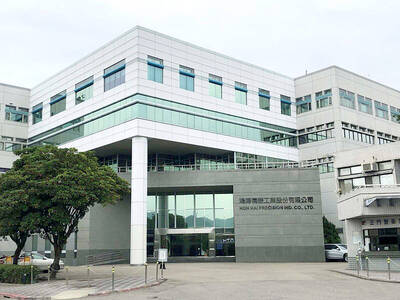
REVENUE PERFORMANCE: Cloud and network products, and electronic components saw strong increases, while smart consumer electronics and computing products fell Hon Hai Precision Industry Co (鴻海精密) yesterday posted 26.51 percent quarterly growth in revenue for last quarter to NT$2.6 trillion (US$82.44 billion), the strongest on record for the period and above expectations, but the company forecast a slight revenue dip this quarter due to seasonal factors. On an annual basis, revenue last quarter grew 22.07 percent, the company said. Analysts on average estimated about NT$2.4 trillion increase. Hon Hai, which assembles servers for Nvidia Corp and iPhones for Apple Inc, is expanding its capacity in the US, adding artificial intelligence (AI) server production in Wisconsin and Texas, where it operates established campuses. This
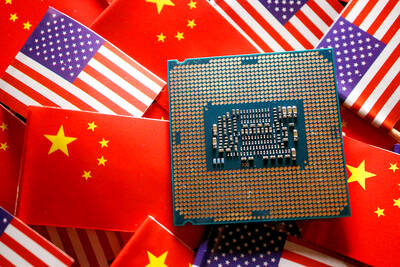
US President Donald Trump on Friday blocked US photonics firm HieFo Corp’s US$3 million acquisition of assets in New Jersey-based aerospace and defense specialist Emcore Corp, citing national security and China-related concerns. In an order released by the White House, Trump said HieFo was “controlled by a citizen of the People’s Republic of China” and that its 2024 acquisition of Emcore’s businesses led the US president to believe that it might “take action that threatens to impair the national security of the United States.” The order did not name the person or detail Trump’s concerns. “The Transaction is hereby prohibited,”
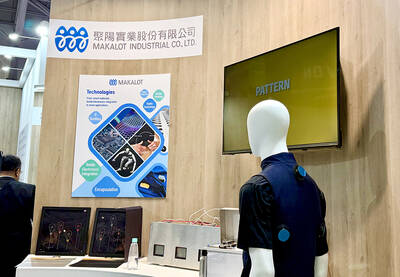
Garment maker Makalot Industrial Co (聚陽) yesterday reported lower-than-expected fourth-quarter revenue of NT$7.93 billion (US$251.44 million), down 9.48 percent from NT$8.76 billion a year earlier. On a quarterly basis, revenue fell 10.83 percent from NT$8.89 billion, company data showed. The figure was also lower than market expectations of NT$8.05 billion, according to data compiled by Yuanta Securities Investment and Consulting Co (元大投顧), which had projected NT$8.22 billion. Makalot’s revenue this quarter would likely increase by a mid-teens percentage as the industry is entering its high season, Yuanta said. Overall, Makalot’s revenue last year totaled NT$34.43 billion, down 3.08 percent from its record NT$35.52


 RSS
RSS