


SEMICONDUCTORS
Chip machine maker bullish
Applied Materials Inc gave a bullish forecast for this quarter, boosted by orders from chipmakers rushing to add capacity to meet a flood of demand for their products. Revenue would be about US$5.92 billion in the three-month period ending in July, the Santa Clara, California-based company said in a statement on Thursday. Analysts, on average, estimated US$5.52 billion, data compiled by Bloomberg showed. Profit, minus certain items, would be US$1.70 to US$1.82 per share in the fiscal third quarter, the biggest maker of machinery used to produce semiconductors said. That compares with an average estimate of US$1.56. Applied Materials expects the total market for chip factory equipment to grow up to US$70 billion this year. That would further expand next year to bring the two-year total to more than US$160 billion, the company projected.
SOUTH KOREA
Exports surge in first 20 days
As vaccinations allow a broader reopening of major economies, exports gained 53.3 percent in the first 20 days of the month from a year earlier, Korea Customs Service reported yesterday. Average daily shipments increased 59.1 percent in the period, which had half a business day less than a year earlier. The readings were partly boosted by last year’s deep slump, when the COVID-19 pandemic hobbled global trade. As the world seeks a return to normalcy, the nation is seeing a rise in demand for export products beyond its cash cow — memory chips — with sales also growing in vehicles, wireless devices and machinery. Exports to China, its largest overseas market, rose 25.2 percent from May 1 to 20 from a year earlier. Shipments to the US jumped 87.3 percent, while those to the EU and Japan rose 78.1 percent and 30.6 percent respectively.
PORTUGAL
Tourism driving economy
The nation is likely to raise its GDP growth forecast for this year to close to 5 percent as tourists help boost the recovery and Europe’s COVID-19 vaccination campaign advances. The government sees GDP expanding as much as 1 percentage point more than the 4 percent it forecast last month, Minister of Finance Joao Leao said in a Bloomberg Television interview in Lisbon. “We’re actually very optimistic.”The economy shrank 7.6 percent last year, as the COVID-19 pandemic slammed the tourism industry and other businesses, the biggest annual contraction since at least 1960. For the nation, which has the third-highest debt-to-GDP ratio in the eurozone, tourism represents about 15 percent of the economy and 9 percent of employment.
CHINA
Millionaires set to double
China would more than double the number of millionaires in the next five years and boost the size of the middle class by almost half, spurring consumption in the economy, HSBC Holdings PLC said. The number of high-net-worth individuals — those with the equivalent of at least 10 million yuan (US$1.56 million) in investable assets — is likely to increase from more than 2 million to 5 million by 2025, it said. The middle class, which numbers about 340 million now based on the narrowest definition, would grow by more than 45 percent to more than 500 million in the period, it said. “An expanding middle class will underpin medium to long-term economic growth, and stronger consumer spending boosts domestic demand, business confidence, and capital expenditure,” HSBC economists led by Qu Hongbin (屈宏斌) wrote in a note yesterday.

SECOND-RATE: Models distilled from US products do not perform the same as the original and undo measures that ensure the systems are neutral, the US’ cable said The US Department of State has ordered a global push to bring attention to what it said are widespread efforts by Chinese companies, including artificial intelligence (AI) start-up DeepSeek (深度求索), to steal intellectual property from US AI labs, according to a diplomatic cable. The cable, dated Friday and sent to diplomatic and consular posts around the world, instructs diplomatic staff to speak to their foreign counterparts about “concerns over adversaries’ extraction and distillation of US AI models.” Distillation is the process of training smaller AI models using output from larger, more expensive ones to lower the costs of training a powerful new

Micron Technology Inc is a driving force pushing the US Congress to pass legislation that would put new export restrictions on equipment its Chinese competitors use to make their chips, according to people familiar with the matter. A US House of Representatives panel yesterday was to vote on the “MATCH Act,” a bill designed to close gaps in restrictions on chipmaking equipment. It would also pressure foreign companies that sell equipment to Chinese chipmaking facilities to align with export curbs on US companies like Lam Research Corp and Applied Materials Inc. The bill targets facilities operated by China’s ChangXin Memory Technologies Inc

Singapore-based ride-hailing and delivery giant Grab Holdings’ planned acquisition of Foodpanda’s Taiwan operations has yet to enter the formal review stage, as regulators await supplementary documents, the Fair Trade Commission (FTC) said yesterday. Acting FTC Chairman Chen Chih-min (陳志民) told the legislature’s Economics Committee that although Grab submitted its application on March 27, the case has not been officially accepted because required materials remain incomplete. Once the filing is finalized, the FTC would launch a formal probe into the deal, focusing on issues such as cross-shareholding and potential restrictions on market competition, Chen told lawmakers. Grab last month announced that it would acquire
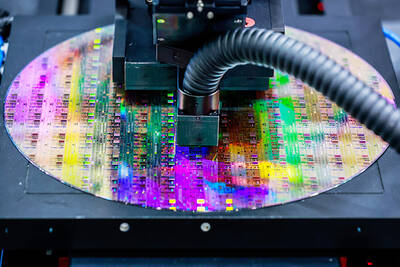
The artificial intelligence (AI) boom has triggered a seismic reshuffling of global equity markets, with Taiwan and South Korea muscling past European nations one by one. With its stock market now valued at nearly US$4.3 trillion, Taiwan surpassed the UK, Europe’s biggest market, earlier this month, data compiled by Bloomberg showed. South Korea is about US$140 billion away from doing the same. The tech-heavy Asian markets have shot past Germany and France in the past seven months. The shift is largely down to massive gains in shares of three companies that provide essential hardware for AI: Taiwan Semiconductor Manufacturing Co (TSMC, 台積電),


 RSS
RSS