


ChipMOS Technologies Inc (南茂科技), a display driver IC and memorychip tester and packager, yesterday forecast significant revenue growth for this year as it plans to raise its prices again to reflect the higher cost of copper and other raw materials following strong semiconductor demand.
The Hsinchu-based firm has raised its prices an average of 5 to 8 percent since the fourth quarter of last year, it said, adding that the increases were also due to a lack of testing and packaging capacity.
Strong demand for ChipMOS’ services is continuing from last quarter, leading the company to expect revenue this year to increase 15 to 20 percent from NT$23.01 billion (US$823.2 million) last year.
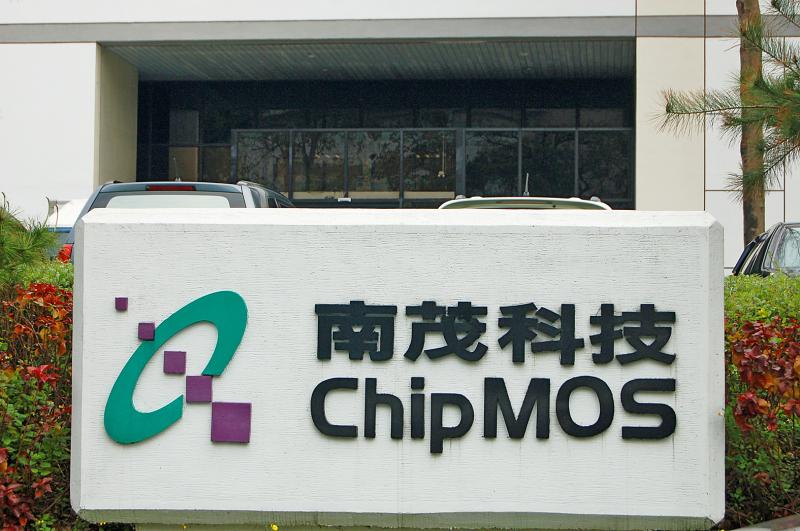
Photo: Grace Hung, Taipei Times
In March, ChipMOS had forecast double-digit percentage growth for this year.
As the tightness in the semiconductor supply chain is to continue for an unspecified period, ChipMOS said that demand for its products continues to be robust this quarter.
ChipMOS attributed the gap between supply and demand to the global digital transformation.
“The firm is installing high-end manufacturing equipment and all of the new facilities are booked, so we expect revenue to increase every quarter for the rest of the year,” ChipMOS chairman Cheng Chih-chieh (鄭世杰) told a teleconference yesterday.
“The firm has increased its inventory to three months of stock to handle rising demand,” Cheng said.
ChipMOS also expects its bottom line to further improve this year, thanks to the easing of its financial responsibility in a joint venture with Tsinghua Unigroup (清華紫光).
Last quarter, Unimos Microelectronics (Shanghai) Co Ltd (紫光宏茂) returned to the black, so it might distribute a higher cash dividend next year, compared with NT$2.2 per share proposed for this year, Cheng said.
Cheng said that the firm has a rosy outlook for this quarter, with revenue expected to grow sequentially at a high single-digit percentage from a record NT$6.47 billion last quarter.
The company’s factory utilization rate this quarter should reach a high level due to increased demand for testing and packaging services for DRAM, flash memory and display driver chips, Cheng said.
The firm’s display driver IC packaging service, which accounted for about 47 percent of its first-quarter revenue, would still be used at full capacity this quarter, while the utilization rate of its memorychip packaging service would increase from 95 percent last quarter, he said.
“Higher average sales prices will also boost profits,” Cheng said.
In the January-to-March quarter, the company posted its best net profit in seven quarters at NT$959.1 million, surging 34.6 percent annually from NT$712.7 million and up 40.4 percent quarterly from NT$686.4 million.
Earnings per share increased to NT$1.32, compared with NT$0.98 a year ago and NT$0.94 in the previous quarter.
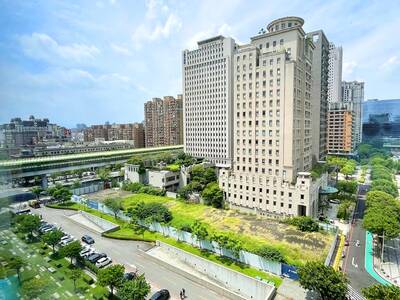
Taichung reported the steepest fall in completed home prices among the six special municipalities in the first quarter of this year, data compiled by Taiwan Realty Co (台灣房屋) showed yesterday. From January through last month, the average transaction price for completed homes in Taichung fell 8 percent from a year earlier to NT$299,000 (US$9,483) per ping (3.3m²), said Taiwan Realty, which compiled the data based on the government’s price registration platform. The decline could be attributed to many home buyers choosing relatively affordable used homes to live in themselves, instead of newly built homes in the city’s prime property market, Taiwan Realty
The government yesterday approved applications by Alphabet Inc’s Google to invest NT$27.08 billion (US$859.98 million) in Taiwan, the Ministry of Economic Affairs said in a statement. The Department of Investment Review approved two investments proposed by Google, with much of the funds to be used for data processing and electronic information supply services, as well as inventory procurement businesses in the semiconductor field, the ministry said. It marks the second consecutive year that Google has applied to increase its investment in Taiwan. Google plans to infuse NT$25.34 billion into Charter Investments Ltd (特許投資顧問) through its Singapore-based subsidiary Fructan Holdings Singapore Pte Ltd, and

JET JUICE: The war on Iran’s secondary effects have seen fuel prices skyrocket, knocking flight schedules down to earth in return as airlines struggle with costs Airline passengers should brace for more irritation in the next few months as carriers worldwide cancel flights and ground planes to cope with stratospheric increases in jet-fuel prices. Dutch flag carrier KLM is the latest company to cut its schedule, saying on Thursday that it would scrap 80 return flights at Amsterdam’s Schiphol Airport in the coming month. That puts it in the same league as United Airlines Holdings Inc, Deutsche Lufthansa AG and Cathay Pacific Airways Ltd, which have all pruned itineraries to mitigate costs. Global capacity for next month has been reduced by about 3 percentage points, with all
Micron Technology Inc is a driving force pushing the US Congress to pass legislation that would put new export restrictions on equipment its Chinese competitors use to make their chips, according to people familiar with the matter. A US House of Representatives panel yesterday was to vote on the “MATCH Act,” a bill designed to close gaps in restrictions on chipmaking equipment. It would also pressure foreign companies that sell equipment to Chinese chipmaking facilities to align with export curbs on US companies like Lam Research Corp and Applied Materials Inc. The bill targets facilities operated by China’s ChangXin Memory Technologies Inc


 RSS
RSS