


The Ministry of Economic Affairs (MOEA) has been communicating with manufacturers with facilities in the nation’s science parks and industrial zones to prepare them for a 15 percent reduction in daily water use ahead of a possible “dry monsoon” during May and June, Minister of Economic Affairs Wang Mei-hua (王美花) said yesterday.
“There were no typhoons last year and less spring rain than usual this year. What happens if the monsoons do not come? We still need to prepare for June and July,” Wang told a news conference in Taipei.
With the water situation in Taichung, and Hsinchu and Miaoli counties having reached “orange alert” levels, businesses have had to reduce their daily water use by 11 percent, and a further reduction to 15 percent would be necessary if drought conditions do not improve, Wang said.
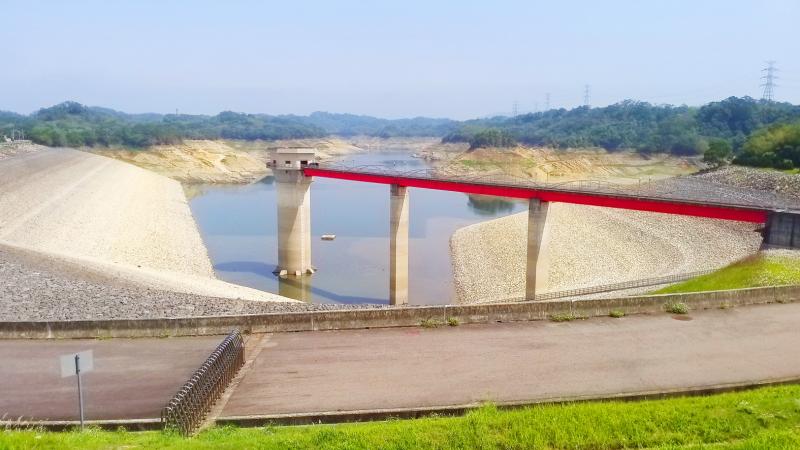
Photo: Liao Hsueh-ju, Taipei Times
“Our goal is to preserve the maximum amount of water without affecting industrial production,” Wang said.
Asked whether the drought would affect production at chipmakers Taiwan Semiconductor Manufacturing Co (台積電) and United Microelectronics Corp (UMC, 聯電), Wang said that in communications with “affected area businesses,” she was assured that manufacturing would not be affected, even with a 15 percent reduction.
No date has been set for shifting to a restriction of 15 percent, Wang said, adding that the ministry has been in close communication with individual companies to ensure that they are prepared for future restrictions.
“We will give companies a chance to adjust,” she said.
The ministry also plans to increase the supply of water from alternative sources to the affected area, including the Hsinchu Science Park (新竹科學園區), Wang said.
A pipeline carries about 20,000 tonnes of water per day from relatively well-supplied Taoyuan to parched Hsinchu, she said, adding that the amount would be increased to 23,000 tonnes per day by June.
Another alternate source of water — an emergency desalination plant in Taichung, which is about the same size as an operation near Hsinchu — can supply about 13,000 tonnes of water per day, Wang said.
“All of our short-term efforts must be completed by June,” Wang said, adding that the ministry also has plans to capture underflow water and utilize a greater number of emergency wells, she said.
As of 5pm yesterday, the Baoshan Second Reservoir (寶二水庫), which supplies water to the Hsinchu Science Park, had fallen to 9.9 percent of capacity, a record low.
A delegation led by Hsinchu County Commissioner Yang Wen-ke (楊文科) and former UMC vice chairman John Hsuan (宣明智) visited a temple near the reservoir to pray for rain.
“Hsinchu County always runs short of water, but I have never seen anything like this,” Hsuan said. “We pray to the skies for rain, but the government must drill emergency wells and everybody must conserve water.”


Taiwan’s foreign exchange reserves fell below the US$600 billion mark at the end of last month, with the central bank reporting a total of US$596.89 billion — a decline of US$8.6 billion from February — ending a three-month streak of increases. The central bank attributed the drop to a combination of factors such as outflows by foreign institutional investors, currency fluctuations and its own market interventions. “The large-scale outflows disrupted the balance of supply and demand in the foreign exchange market, prompting the central bank to intervene repeatedly by selling US dollars to stabilize the local currency,” Department of Foreign

Intel Corp is joining Elon Musk’s long-shot effort to develop semiconductors for Tesla Inc, Space Exploration Technologies Corp and xAI, marking a surprising twist in the chipmaker’s comeback bid. Intel would help the Terafab project “refactor” the technology in a chip factory, the company said on Tuesday in a post on X, Musk’s social media platform. That is a stage in the development process that typically helps make chips more powerful or reliable. The chipmaker’s shares jumped 4.2 percent to US$52.91 in New York trading on Tuesday. The Terafab project is a grand plan by Musk to eventually manufacture his own chips for

Some robotaxi passengers were left stranded in the middle of fast-moving traffic in a major Chinese city after their driverless vehicles stopped running, according to police and media reports on Wednesday. A preliminary investigation indicates more than 100 robotaxis came to a halt because of a “system malfunction,” police in the city of Wuhan said in a statement, without elaborating. No injuries were reported. One passenger told Chinese media that their robotaxi stopped after turning a corner. An instruction on a screen read: “Driving system malfunction. Staff are expected to arrive in 5 minutes.” After no one showed up, the passenger pushed
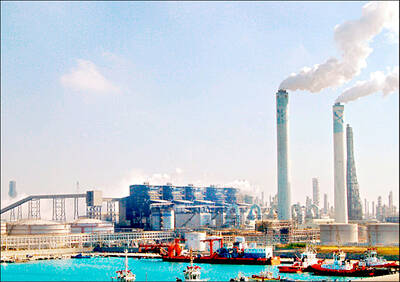
Taiwan Power Co (Taipower, 台電) yesterday said it plans to resume operations at two coal-fired power generators for three months to boost security of electricity supply as liquefied natural gas (LNG) supply risks are running high due to the Middle East conflict. The two coal-fired power generators are at Mailiao Power Plant in Yunlin County’s Mailiao Township (麥寮). The plant, operated by Formosa Plastics Group (台塑集團), supplied electricity to Taipower’s power grid until the end of last year. Taipower’s decision came about one month after Minister of Economic Affairs Kung Ming-hsin (龔明鑫) on March 10 said that the nation had no imminent


 RSS
RSS