


The Ministry of Economic Affairs (MOEA) aims to develop 423 hectares of land currently held by Taiwan Sugar Corp (Taisugar, 台糖) for industrial use by the end of the year, the Industrial Development Bureau (IDB, 工業局) said yesterday.
Five parcels of Taisugar land in Yunlin, Chiayi, Tainan and Kaohsiung will need to undergo environmental impact assessments (EIAs) and have the necessary infrastructure put in place by the end of the year, IDB Deputy Director-General Yang Chih-ching (楊志清) yesterday told the Taipei Times by telephone.
The land will be rented to businesses seeking to establish or re-establish manufacturing facilities in Taiwan, Yang said.
The COVID-19 crisis and the US-China trade spat have prompted a rush of manufacturers seeking to relocate from China. While many have chosen to set up shop in Southeast Asia on larger land parcels with cheaper labor, the ministry has made a coordinated attempt to provide suitable land to attract manufacturers in Taiwan.
“It will take time,” said Yang, adding that since businesses are picky when it comes to location, “we have to provide them with well-developed parcels with the proper infrastructure in place.”
Once the parcels have been developed, they will be rented out, but not sold, Yang said.
The Ministry of Economic Affairs’ InvesTaiwan Service Center provides “matchmaking” services for businesses looking for manufacturing sites, interim spokeswoman Nicole Chen (陳明珠) said.
“Whether or not you are a returning Taiwanese business or a foreign business wanting to set up Taiwanese manufacturing, we will help you find a suitable site,” Chen said.
In addition to the 423 hectares of former Taisugar land to be developed by the end of the year, the Ministry of Economic Affairs is working with the Ministry of Science and Technology to create new industrial parks to house new businesses at lower rates than are available on the private market.
However, sometimes demands from businesses can be unrealistic, Chen said.
“They want the best location and for very little money,” Chen said. “I ask them, ‘Where can you find land like that? I’ll go buy some myself.’”

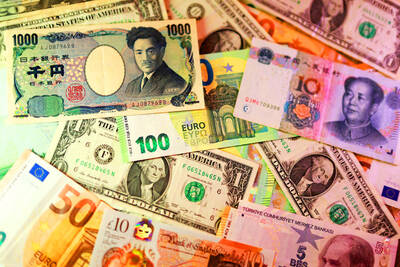
Taiwan’s foreign exchange reserves fell below the US$600 billion mark at the end of last month, with the central bank reporting a total of US$596.89 billion — a decline of US$8.6 billion from February — ending a three-month streak of increases. The central bank attributed the drop to a combination of factors such as outflows by foreign institutional investors, currency fluctuations and its own market interventions. “The large-scale outflows disrupted the balance of supply and demand in the foreign exchange market, prompting the central bank to intervene repeatedly by selling US dollars to stabilize the local currency,” Department of Foreign

Intel Corp is joining Elon Musk’s long-shot effort to develop semiconductors for Tesla Inc, Space Exploration Technologies Corp and xAI, marking a surprising twist in the chipmaker’s comeback bid. Intel would help the Terafab project “refactor” the technology in a chip factory, the company said on Tuesday in a post on X, Musk’s social media platform. That is a stage in the development process that typically helps make chips more powerful or reliable. The chipmaker’s shares jumped 4.2 percent to US$52.91 in New York trading on Tuesday. The Terafab project is a grand plan by Musk to eventually manufacture his own chips for
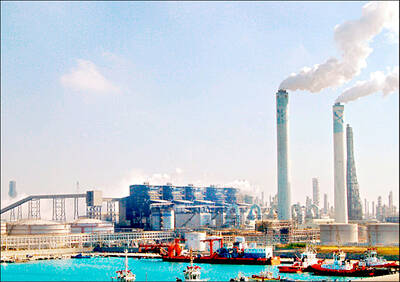
Taiwan Power Co (Taipower, 台電) yesterday said it plans to resume operations at two coal-fired power generators for three months to boost security of electricity supply as liquefied natural gas (LNG) supply risks are running high due to the Middle East conflict. The two coal-fired power generators are at Mailiao Power Plant in Yunlin County’s Mailiao Township (麥寮). The plant, operated by Formosa Plastics Group (台塑集團), supplied electricity to Taipower’s power grid until the end of last year. Taipower’s decision came about one month after Minister of Economic Affairs Kung Ming-hsin (龔明鑫) on March 10 said that the nation had no imminent
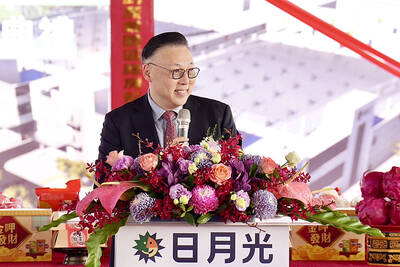
ENERGY ISSUES: The TSIA urged the government to increase natural gas and helium reserves to reduce the impact of the Middle East war on semiconductor supply stability Chip testing and packaging service provider ASE Technology Holding Co (日月光投控) yesterday said it planned to invest more than NT$100 billion (US$3.15 billion) in building a new advanced chip testing facility in Kaohsiung to keep up with customer demand driven by the artificial intelligence (AI) boom. That would be included in the company’s capital expenditure budget next year, ASE said. There is also room to raise this year’s capital spending budget from a record-high US$7 billion estimated three months ago, it added. ASE would have six factories under construction this year, another record-breaking number, ASE chief operating officer Tien Wu


 RSS
RSS