


Factory prices in China rose for the first time in a year last month as the country’s vast industrial sector leads a recovery from the COVID-19 pandemic, with market analysts hailing the data as a turning point for the world’s second-largest economy.
However, the lingering effects of the pandemic weighed on the country’s vast army of shoppers as consumer prices slipped, hit by new outbreaks that led to the reimposition of containment measures.
Official data showed the producer price index (PPI), a key measure of input costs, at 0.3 percent, having fallen every month last year but in January, owing to a collapse in demand as the virus broke out in the country and then the world.
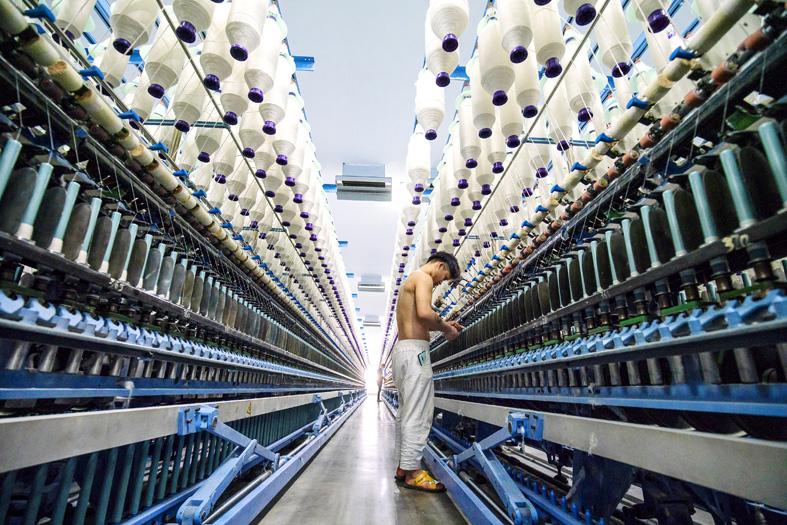
Photo: Bloomberg
The figure was in line with forecasts and a big improvement in the 0.4 percent fall in December last year.
“We believe that the turn of PPI is very solid, from a deflation trend to an inflation trend,” ING Bank NV chief economist for Greater China Iris Pang (彭藹嬈) said. “Although this is mild, it is a turn, a very important turn, and it will last for the rest of 2021.”
The reading comes as China leads a recovery in the world economy, with the quick rollout of COVID-19 vaccines and slowing infection rates fueling hopes that lockdowns and other pandemic containment measures can be eased, setting up a huge bounce this year.
However, the consumer price index edged down a worse-than-expected 0.3 percent, as a spike in cases that led to new tough restrictions in the north of the country combined with a high base from January last year.
“With the Lunar New Year festival taking place in February this year, and the impact of a partial epidemic spread, there were decreases in both residents’ travel and some contact-based services in January,” said Dong Lijuan (董莉娟), an official at the Chinese National Bureau of Statistics.
Dong added that air ticket prices fell by one-third, while travel agency fees dropped nearly 10 percent.
This year, the authorities have been encouraging residents to stay at home instead of traveling for the holiday owing to the virus, but the CPI is still tipped to recover.
“Consumer price inflation is likely to spike in February as the New Year effect reverses,” analysts at Capital Economics Ltd said, adding that the slip last month was “no cause for concern.”
However, pork prices continued a downward trend after costs of the staple meat soared last year as an African swine fever outbreak led to the culling of more than 1 million pigs.
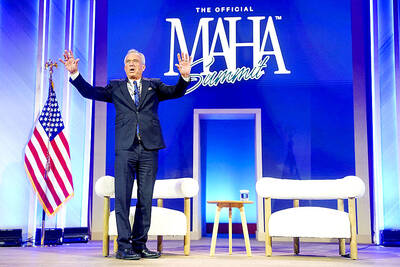
Sweeping policy changes under US Secretary of Health and Human Services Robert F. Kennedy Jr are having a chilling effect on vaccine makers as anti-vaccine rhetoric has turned into concrete changes in inoculation schedules and recommendations, investors and executives said. The administration of US President Donald Trump has in the past year upended vaccine recommendations, with the country last month ending its longstanding guidance that all children receive inoculations against flu, hepatitis A and other diseases. The unprecedented changes have led to diminished vaccine usage, hurt the investment case for some biotechs, and created a drag that would likely dent revenues and
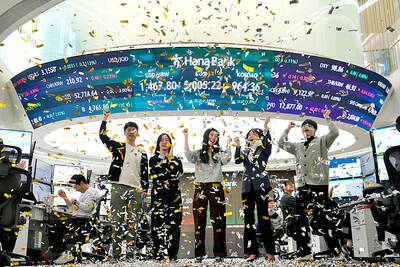
Global semiconductor stocks advanced yesterday, as comments by Nvidia Corp chief executive officer Jensen Huang (黃仁勳) at Davos, Switzerland, helped reinforce investor enthusiasm for artificial intelligence (AI). Samsung Electronics Co gained as much as 5 percent to an all-time high, helping drive South Korea’s benchmark KOSPI above 5,000 for the first time. That came after the Philadelphia Semiconductor Index rose more than 3 percent to a fresh record on Wednesday, with a boost from Nvidia. The gains came amid broad risk-on trade after US President Donald Trump withdrew his threat of tariffs on some European nations over backing for Greenland. Huang further
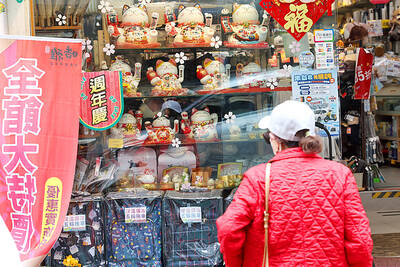
CULPRITS: Factors that affected the slip included falling global crude oil prices, wait-and-see consumer attitudes due to US tariffs and a different Lunar New Year holiday schedule Taiwan’s retail sales ended a nine-year growth streak last year, slipping 0.2 percent from a year earlier as uncertainty over US tariff policies affected demand for durable goods, data released on Friday by the Ministry of Economic Affairs showed. Last year’s retail sales totaled NT$4.84 trillion (US$153.27 billion), down about NT$9.5 billion, or 0.2 percent, from 2024. Despite the decline, the figure was still the second-highest annual sales total on record. Ministry statistics department deputy head Chen Yu-fang (陳玉芳) said sales of cars, motorcycles and related products, which accounted for 17.4 percent of total retail rales last year, fell NT$68.1 billion, or
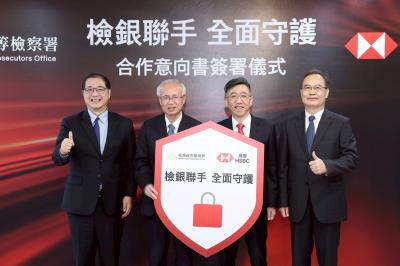
HSBC Bank Taiwan Ltd (匯豐台灣商銀) and the Taiwan High Prosecutors Office recently signed a memorandum of understanding (MOU) to enhance cooperation on the suspicious transaction analysis mechanism. This landmark agreement makes HSBC the first foreign bank in Taiwan to establish such a partnership with the High Prosecutors Office, underscoring its commitment to active anti-fraud initiatives, financial inclusion, and the “Treating Customers Fairly” principle. Through this deep public-private collaboration, both parties aim to co-create a secure financial ecosystem via early warning detection and precise fraud prevention technologies. At the signing ceremony, HSBC Taiwan CEO and head of banking Adam Chen (陳志堅)


 RSS
RSS