


New vehicle sales last year climbed 4 percent annually to the highest in 15 years, thanks to strong demand for new models ahead of the expiration of government tax incentives, data compiled by U-Car.com showed yesterday.
The increase was also supported by Taiwan’s response to the COVID-19 pandemic, which led to a quick recovery in auto production and component imports, the auto information provider said.
“The growth is encouraging and goes against a downtrend of global auto markets impeded by the COVID-19 pandemic,” it said.
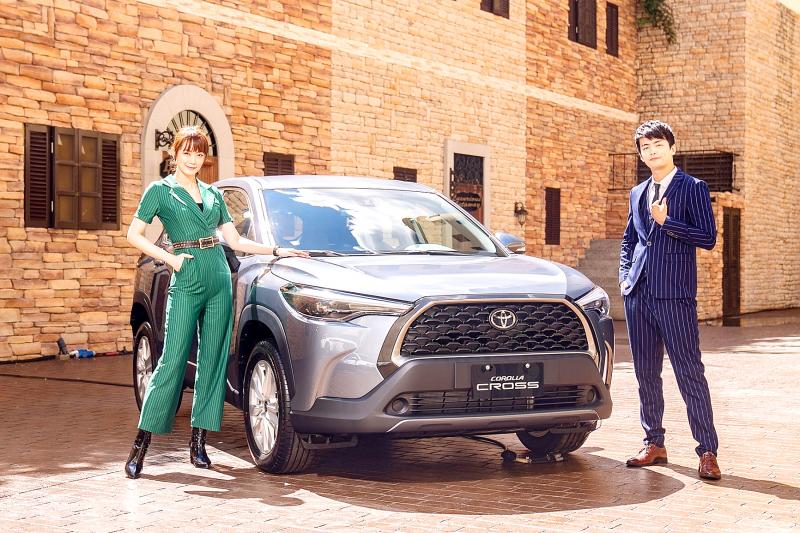
Photo: Amy Yang, Taipei Times
A total of 457,435 new vehicles were sold in Taiwan last year, up from 427,000 units after adding 45,505 vehicles last month, the data showed.
The results beat Yulon Motor Co’s (裕隆汽車) expectation of 1 percent growth to 431,000 units.
Yulon said it was premature to give a forecast for vehicle sales this year as most automakers are pushing for a five-year extension of a NT$50,000 (US$1,760) reduction in commodity tax. The tax incentives, which took effect in 2016, are set to end on Thursday.
Hotai Motor Co (和泰汽車), which distributes Toyota and Lexus vehicles locally, retained its top position with sales of 123,516 vehicles last year, up 3.3 percent from the previous year, giving it a 27 percent share of the market, data showed.
Yulon Nissan Motor Co Ltd (裕隆日產), which is 50 percent owned by Yulon Motor, followed with sales of 35,177 vehicles last year, shrinking 1.7 percent year-on-year, with 7.7 percent market share.
Honda Taiwan Co (台灣本田) seized the No. 3 spot for sales, moving 30,426 units — a 7.9 percent decline from a year earlier — leaving it with a 6.7 percent share of the market.
Yulon Nissan and Honda were the only two automakers among the top 10 firms in Taiwan that saw vehicle sales decline last year.
Ford Lio Ho Motor Co (福特六和) made significant progress last year, with sales soaring 38.9 percent annually to 28,884 units, on the back of the popular revamp of the Ford Kuga and Ford Focus, which were among the top 10 best-selling models last year, U-Car said.
Ford Lio Ho ranked No. 5 after Mercedes-Benz, which sold 29,654 vehicles last year, up 1.4 percent annually.
China Motor Corp (CMC, 中華汽車), which distributes Mitsubishi sedans, was sixth in sales, moving 24,979 units, a 1.3 percent increase from the previous year.
Tesla Inc saw its sales surge 84.9 percent to 5,819 units last year, making it the fastest-growing brand among imported automakers.
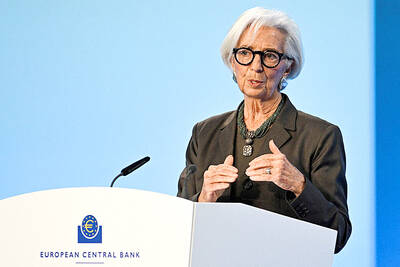
European Central Bank (ECB) President Christine Lagarde is expected to step down from her role before her eight-year term ends in October next year, the Financial Times reported. Lagarde wants to leave before the French presidential election in April next year, which would allow French President Emmanuel Macron and German Chancellor Friedrich Merz to find her replacement together, the report said, citing an unidentified person familiar with her thoughts on the matter. It is not clear yet when she might exit, the report said. “President Lagarde is totally focused on her mission and has not taken any decision regarding the end of
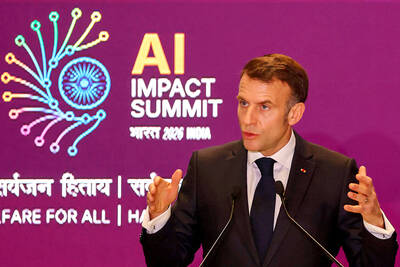
French President Emmanuel Macron told a global artificial intelligence (AI) summit in India yesterday he was determined to ensure safe oversight of the fast-evolving technology. The EU has led the way for global regulation with its Artificial Intelligence Act, which was adopted in 2024 and is coming into force in phases. “We are determined to continue to shape the rules of the game... with our allies such as India,” Macron said in New Delhi. “Europe is not blindly focused on regulation — Europe is a space for innovation and investment, but it is a safe space.” The AI Impact Summit is the fourth
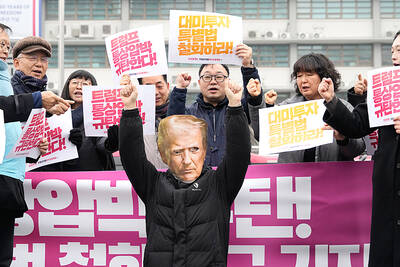
CONFUSION: Taiwan, Japan and other big exporters are cautiously monitoring the situation, while analysts said more Trump responses ate likely after his loss in court US trading partners in Asia started weighing fresh uncertainties yesterday after President Donald Trump vowed to impose a new tariff on imports, hours after the Supreme Court struck down many of the sweeping levies he used to launch a global trade war. The court’s ruling invalidated a number of tariffs that the Trump administration had imposed on Asian export powerhouses from China and South Korea to Japan and Taiwan, the world’s largest chip maker and a key player in tech supply chains. Within hours, Trump said he would impose a new 10 percent duty on US imports from all countries starting on
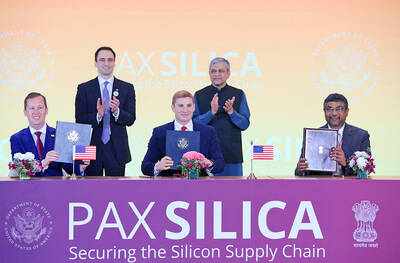
STRATEGIC ALLIANCE: The initiative is aimed at protecting semiconductor supply chain resilience to reduce dependence on China-dominated manufacturing hubs India yesterday joined a US-led initiative to strengthen technology cooperation among strategic allies in a move that underscores the nations’ warming ties after a brief strain over New Delhi’s unabated purchase of discounted Russian oil. The decision aligns India closely with Washington’s efforts to build secure supply chains for semiconductors, advanced manufacturing and critical technologies at a time when geopolitical competition with China is intensifying. It also signals a reset in relations following friction over energy trade and tariffs. Nations that have joined the Pax Silica framework include Japan, South Korea, the UK and Israel. “Pax Silica will be a group of nations


 RSS
RSS