


Samsung Electronics Co on Wednesday unveiled an upgraded version of its folding smartphone along with other devices intended to jump-start sales in a market hit hard by the COVID-19 pandemic.
The consumer electronics colossus unveiled its latest lineup at a streamed “Galaxy Unpacked” event, aiming directly at remote work and education trends supercharged around the world by the pandemic.
“Our mission is to give you new ways to communicate — new ways to get your job done,” Samsung Electronics mobile communications president T.M. Roh said. “Maybe even to help you play hard when you should be working hard.”
Samsung also unveiled two versions of its oversized smartphone, the Galaxy Note20 and Galaxy Note20 Ultra, upgraded tablets called Tab S7 and S7+, a new Galaxy Watch3 smartwatch and its ergonomic wireless earbuds called Galaxy Buds Live.
“Never before have we relied on technology like we are today. It’s how we are staying connected as we navigate the extraordinary challenges faced around the world,” Roh said. “Technology must make life easier, not more complex. That’s why we have introduced five new power devices. Alone, these devices are powerful tools to help you maximize work and play.”
Samsung said that folding phones and compatibility with super-fast 5G networks are the “pillars” of its mobile device future.
Samsung in the second quarter saw smartphone sales fall 29 percent from a year earlier, research firm IDC said, as the firm lost the top position to China’s Huawei Technologies Co (華為) in a slumping global market.
Total smartphone sales were down 16 percent in the quarter, as consumers pulled back in the face of a pandemic-induced economic crisis.
The Galaxy Z Fold2 was one of several new devices announced at a livestreamed event by the South Korean electronics giant, which recently lost the top position in the smartphone market to Huawei.
The second-generation Fold serves as a premium smartphone when closed and then opens to provide a more tablet-sized screen for immersive viewing, the presentation showed.
Samsung said that it upgraded the hinge, including adding a “sweeper” to remove pocket debris, to avoid problems experienced with the first Fold phone.
Samsung added that the Fold2 was “completely re-engineered for greater durability.”
The upgraded folding device offers the “power and screen size of a tablet,” with a cover screen of 15.7cm and a main screen of 19cm. Pricing and availability are to be announced next month.
The Galaxy Note20 is to be available later this month in the US starting at US$999.99.
Samsung and Microsoft teamed up to synch the Xbox cloud gaming service to the South Korean company’s mobile devices.
“Our vision for gaming is to empower every player in the world to play the games you want, with the people you want, across all your devices,” Xbox team head Phil Spencer said. “Our partnershipwith Samsung is an important step forward for gaming.”
The Samsung launch follows the release of budget-priced phones from Apple Inc and Google starting at less than US$400 to offer an alternative to high-end devices.
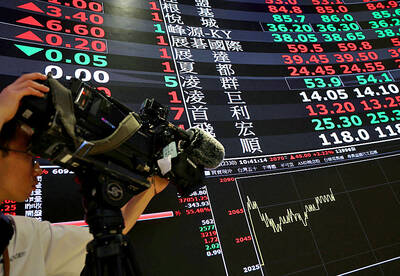
After several years flying high as Asia’s best Nvidia Corp proxy, Taiwan Semiconductor Manufacturing Co (TSMC, 台積電) is increasingly vying with other artificial intelligence (AI) stocks for investor attention. Stock traders are chasing a wider array of beneficiaries as mainstream usage of AI creates demand for hardware beyond the most-advanced chips TSMC makes for Nvidia. Subthemes from the deepening memory crunch to advances in robotics are also luring bids. At the same time, investment caps on single stocks are pushing funds to diversify, while retail investors long familiar with TSMC through its US depositary receipts are being offered a broader set of
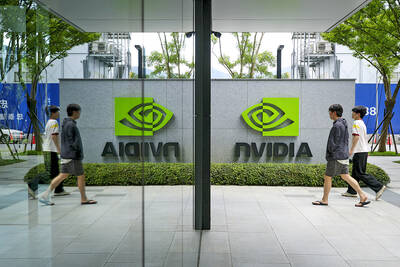
UNDER MICROSCOPE: Taiwan detained three people who allegedly conspired to buy servers in Taiwan and export them using fraudulent documentation, prosecutors said Nvidia Corp chief executive officer Jensen Huang (黃仁勳) on Saturday urged Super Micro Computer Inc to tighten up on compliance after Taiwan detained three people this week for allegedly making fraudulent declarations about artificial intelligence (AI) servers made by its US partner. The development marked the nation’s first crackdown on semiconductor smuggling, which grew after the US slapped restrictions on exports of high-end chips such as Nvidia AI accelerators to China. Nvidia is “rigorous” in explaining regulations to all of its partners, Huang told reporters after arriving in Taipei. “Ultimately Super Micro has to run their own company,” he said in response to
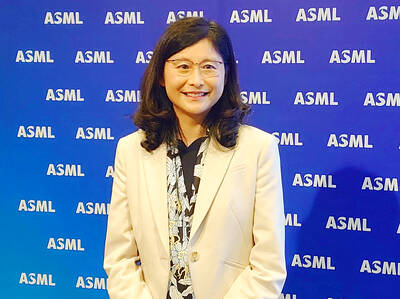
Netherlands-based semiconductor equipment supplier ASML Holding NV yesterday said that it is planning to hire an additional 1,000 people in Taiwan this year in response to growing demand from clients. ASML had previously planned to recruit 600 people this year, but that the plan has been adjusted upward, ASML vice president and ASML Taiwan general manager Grace Wang (汪佳慧) told reporters. ASML has a workforce of more than 4,500 in Taiwan, accounting for about 10 percent of its global total, Wang said. This year’s recruitment campaign would focus on adding people in the customer support, manufacturing and supply chain domains to assist ASML
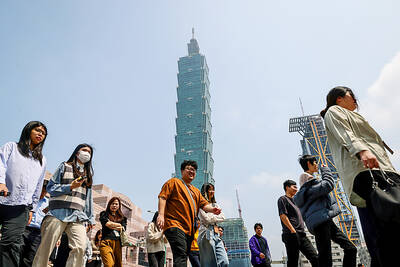
TECH RELIANCE: Growth is increasingly reflecting an unequal K-shaped distribution, where technology sectors outperform and other industries struggle, an expert said Standard Chartered Bank has significantly raised its forecast for Taiwan’s economic growth to 9.5 percent this year, up from 7.6 percent previously, citing surging artificial intelligence (AI) demand driving exports, semiconductor production and investment. The upgrade reflects a sustained AI supercycle that continues to fuel demand for advanced chips and technology infrastructure, which form the backbone of Taiwan’s exports, the bank said in a report this week. “We raise our 2026 growth forecast to reflect a much stronger-than-expected first-quarter GDP figure,” Standard Chartered senior economist for greater China and Asia Tommy Wu (胡東安) said in the report. Driven largely by a 35.3 percent


 RSS
RSS