


Electronic component maker Lite-On Technology Corp (光寶科技) last week reported better-than-expected profit margins and earnings per share for last quarter, thanks to a better product mix, strict operating expense control and effective inventory management, the company said.
Lite-On also announced that Raymond Soong (宋恭源) and Warren Chen (陳廣中) have resigned as chairman, and vice chairman and group chief executive officer, respectively, with Tom Soong (宋明峰) elected as chairman by the board of directors and Anson Chiu (邱森彬) appointed to serve as president, with effect from Saturday.
Tom Soong is the son of Raymond Soong, while Chiu formerly served in the company’s optoelectronics branch.
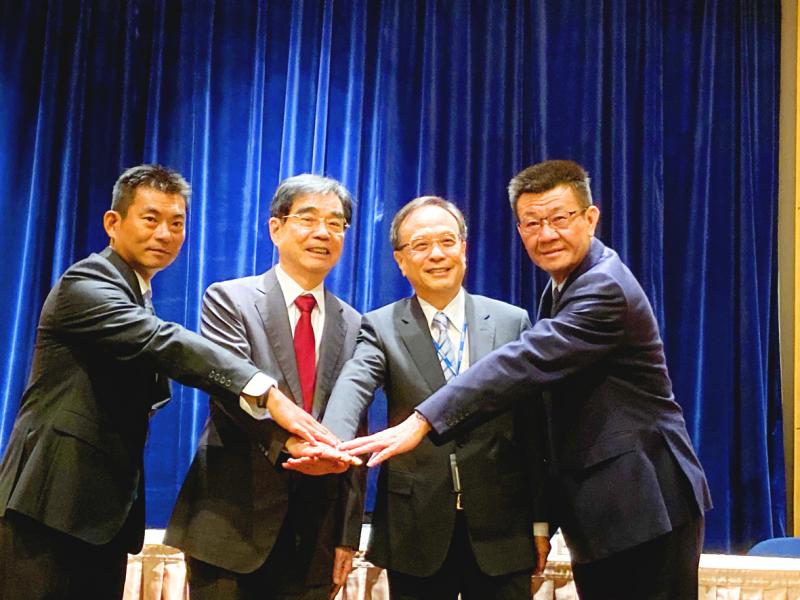
Photo: Chen Jou-chen, Taipei Times
Lite-On reported a gross margin of 19.41 percent last quarter, with operating margin hitting 8.72 percent and earnings per share rising to a record high of NT$1.48.
Net income increased 119.15 percent quarter-on-quarter and 43.9 percent year-on-year to NT$3.45 billion (US$116.9 million), according to the company’s financial statement released after its quarterly earnings conference last week.
With more contributions from its cloud computing, PC and optoelectronics businesses, the company’s revenue for last quarter reached NT$41.796 billion, a quarterly increase of 28.3 percent, the statement said.
The increase in sales exceeded the company’s forecast of 18 percent and was carried by strong demand from its cloud computing, notebook, 5G and artificial intelligence of things (AIoT) businesses.
However, last quarter’s revenue was still down 6 percent from a year earlier due to difficulties in supply chain management amid the COVID-19 pandemic.
By segment, the information technology unit remained Lite-On’s biggest business with a sales contribution of 68 percent last quarter. Its optoelectronics unit accounted for 17 percent of sales, and the storage unit contributed to 11 percent of sales, company data showed.
“Lite-On once again posted upbeat results in the second quarter. We believe it can repeat its solid performance going forward on the back of steady demand growth for cloud computing, 5G and AIoT, as well as continued operating expense control and improving factory efficiency aided by more automation equipment,” Yuanta Securities Investment Consulting Co (元大投顧) analyst Tate Chen (陳德穎) said in a note on Friday.
In the first half of the year, the company’s revenue dropped 13.16 percent annually to NT$74.37 billion. Gross margin increased 2.8 percentage points to 17.3 percent, and operating margin rose 1.8 percentage points to 5.9 percent.
That resulted in net income jumping 30 percent to NT$5.02 billion, with earnings per share of NT$2.16.
In the third quarter, Lite-On expects its optoelectronics, cloud computing, 5G, AIoT and gaming businesses to grow more than in the second quarter, with demand for products related to the PC sector likely to remain stable.
Shares of contract chipmaker Taiwan Semiconductor Manufacturing Co (TSMC, 台積電) came under pressure yesterday after a report that Apple Inc is looking to shift some orders from the Taiwanese company to Intel Corp. TSMC shares fell NT$55, or 2.4 percent, to close at NT$2,235 on the local main board, Taiwan Stock Exchange data showed. Despite the losses, TSMC is expected to continue to benefit from sound fundamentals, as it maintains a lead over its peers in high-end process development, analysts said. “The selling was a knee-jerk reaction to an Intel-Apple report over the weekend,” Mega International Investment Services Corp (兆豐國際投顧) analyst Alex Huang
Taiwan Semiconductor Manufacturing Co (TSMC, 台積電) is expected to remain Apple Inc’s primary chip manufacturing partner despite reports that Apple could shift some orders to Intel Corp, industry experts said yesterday. The comments came after The Wall Street Journal reported on Friday that Apple and Intel had reached a preliminary agreement following more than a year of negotiations for Intel to manufacture some chips for Apple devices. Taiwan Institute of Economic Research (台灣經濟研究院) economist Arisa Liu (劉佩真) said TSMC’s advanced packaging technologies, including integrated fan-out and chip-on-wafer-on-substrate, remain critical to the performance of Apple’s A-series and M-series chips. She said Intel and Samsung
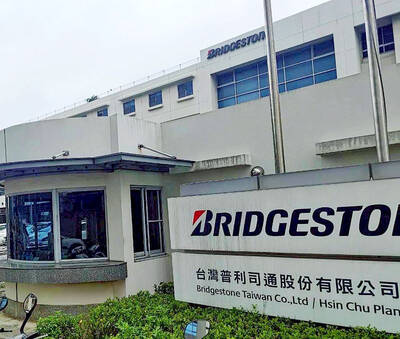
TRANSITION: With the closure, the company would reorganize its Taiwanese unit to a sales and service-focused model, Bridgestone said Bridgestone Corp yesterday announced it would cease manufacturing operations at its tire plant in Hsinchu County’s Hukou Township (湖口), affecting more than 500 workers. Bridgestone Taiwan Co (台灣普利司通) said in a statement that the decision was based on the Tokyo-based tire maker’s adjustments to its global operational strategy and long-term market development considerations. The Taiwanese unit would be reorganized as part of the closure, effective yesterday, and all related production activities would be concluded, the statement said. Under the plan, Bridgestone would continue to deepen its presence in the Taiwanese market, while transitioning to a sales and service-focused business model, it added. The Hsinchu
Taiwan Semiconductor Manufacturing Co (TSMC, 台積電) has approved a capital budget of US$31.28 billion for production expansion to meet long-term development needs during the artificial intelligence (AI) boom. The company’s board meeting yesterday approved the capital appropriation plan for purposes such as the installation of advanced technology capacity and fab construction, the world’s largest contract chipmaker said in a statement. At an earnings conference last month, TSMC forecast that its capital expenditure for this year would be at the higher end of the US$52 billion to US$56 billion range it forecast in January in response to robust demand for 5G, AI and


 RSS
RSS