


Optical drive storage maker Quanta Storage Inc (QSI, 廣明光電) and HP Inc have reached an out-of-court settlement over price-fixing allegations, with both agreeing to withdraw lawsuits.
Quanta Storage, a Taoyuan-based subsidiary of the world’s largest contract laptop maker, Quanta Computer Inc (廣達電腦), on Thursday said the settlement was part of a nondisclosure agreement to drop all legal disputes between the companies, including a case pending in the New Orleans-based Court of Appeals for the Fifth Circuit.
“The agreement will resolve pending litigation and satisfy the judgement HP holds against Quanta Storage Inc and its subsidiary Quanta Storage America Inc. HP and QSI will seek dismissal of all related litigation proceedings ... in the United States Court of Appeals for the Fifth Circuit,” Quanta Storage said in a regulatory filing.
“The settlement has no significant impact on the company’s business and the financial situation should be sufficient to support and maintain the normal operation of the company,” it said.
Quanta Storage America and HP on Friday withdrew all their litigation proceedings from the US District Court for the Southern District of Texas and the US Court of Appeals for the Fifth Circuit, QSI said.
The settlement came after the court on June 5 ruled that Quanta Storage must surrender all of its assets to HP to satisfy a US$439 million antitrust decision after the US company argued that QSI in April repeatedly sought to delay efforts to collect on the January judgement, citing COVID-19 travel and business restrictions in Taiwan and China.
According to the ruling, Quanta Storage failed to post an US$85 million bond to prevent early collection of the award.
The ruling to ask Quanta Storage to turn over its cash, factories and patents to HP was expected to deal a serious financial blow to the relatively smaller company, analysts said.
Quanta Storage has paid-in capital of NT$2.78 billion (US$93.73 million) and runs production lines in Taoyuan and China’s Shanghai and Changshou.
Due to the confidentiality requirements of the agreement, Quanta Storage declined to reveal any other details about the settlement.
Quanta Storage spokesman Lee Chih-jen (李志仁) said the company had taken into account the interests of its shareholders in reaching the settlement, while its board carefully considered the law in Taiwan and the US as well as the firm’s financial conditions.
Lee said the company did not expect the settlement to have a materially adverse effect on Quanta Storage’s day-to-day operations and the terms of the agreement are affordable to the company.
After ending the legal disputes, Quanta Storage is to focus on its operations and continue to rake in profits for its shareholders, Lee said.
The company reported net income of NT$312 million for the first five months of the year, with earnings per share of NT$1.12.
Consolidated revenue increased 3.62 percent year-on-year to NT$4 billion from January to last month, the company said early last week.
Shares in Quanta Storage advanced 9.86 percent to close at NT$30.65 on Friday, compared with the TAIEX’s 0.01 percent rise to 11,549.86 points.
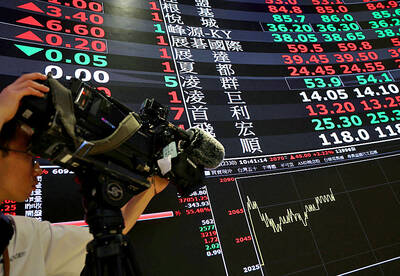
After several years flying high as Asia’s best Nvidia Corp proxy, Taiwan Semiconductor Manufacturing Co (TSMC, 台積電) is increasingly vying with other artificial intelligence (AI) stocks for investor attention. Stock traders are chasing a wider array of beneficiaries as mainstream usage of AI creates demand for hardware beyond the most-advanced chips TSMC makes for Nvidia. Subthemes from the deepening memory crunch to advances in robotics are also luring bids. At the same time, investment caps on single stocks are pushing funds to diversify, while retail investors long familiar with TSMC through its US depositary receipts are being offered a broader set of
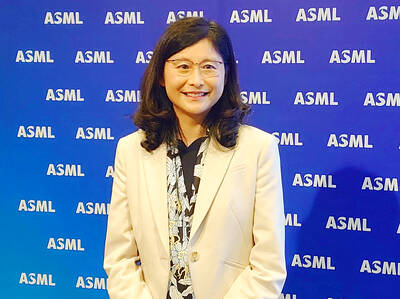
Netherlands-based semiconductor equipment supplier ASML Holding NV yesterday said that it is planning to hire an additional 1,000 people in Taiwan this year in response to growing demand from clients. ASML had previously planned to recruit 600 people this year, but that the plan has been adjusted upward, ASML vice president and ASML Taiwan general manager Grace Wang (汪佳慧) told reporters. ASML has a workforce of more than 4,500 in Taiwan, accounting for about 10 percent of its global total, Wang said. This year’s recruitment campaign would focus on adding people in the customer support, manufacturing and supply chain domains to assist ASML
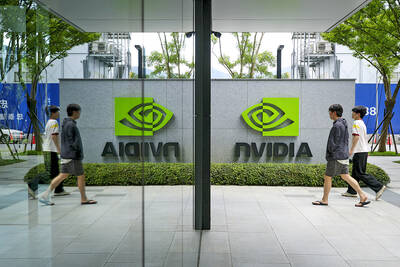
UNDER MICROSCOPE: Taiwan detained three people who allegedly conspired to buy servers in Taiwan and export them using fraudulent documentation, prosecutors said Nvidia Corp chief executive officer Jensen Huang (黃仁勳) on Saturday urged Super Micro Computer Inc to tighten up on compliance after Taiwan detained three people this week for allegedly making fraudulent declarations about artificial intelligence (AI) servers made by its US partner. The development marked the nation’s first crackdown on semiconductor smuggling, which grew after the US slapped restrictions on exports of high-end chips such as Nvidia AI accelerators to China. Nvidia is “rigorous” in explaining regulations to all of its partners, Huang told reporters after arriving in Taipei. “Ultimately Super Micro has to run their own company,” he said in response to

Nvidia Corp yesterday announced that CEO Jensen Huang (黃仁勳) would attend an employee meeting in Taipei tomorrow to celebrate the launch of the company’s Taiwan headquarters project. Huang would attend a gathering at the site of Nvidia’s planned headquarters in Beitou Shilin Technology Park (北投士林科技園區), the company said in a statement. After arriving in Taiwan on Saturday last week, Huang told reporters that he plans to meet with Quanta Computer Inc (廣達) chairman Barry Lam (林百里) and Taiwan Semiconductor Manufacturing Co (TSMC, 台積電) chairman C.C. Wei (魏哲家), and would attend the groundbreaking ceremony for Nvidia’s Taiwan headquarters tomorrow. Nvidia has not yet applied


 RSS
RSS