


The government is working on the details of a voucher program for in-store purchases to revive consumer spending amid the COVID-19 pandemic, National Development Council Minister Kung Ming-hsin (龔明鑫) said yesterday.
The preliminary plan would allow anyone, regardless of age or income, to pay NT$1,000 to obtain NT$3,000 worth of vouchers to spend at stores, buy train tickets or pay taxi fares, Kung said in a radio interview with Hit FM radio host Clara Chou (周玉蔻).
The council is also considering allowing the public to use the vouchers at local night markets when the program is launched in July, said Kung, who took office on Wednesday.
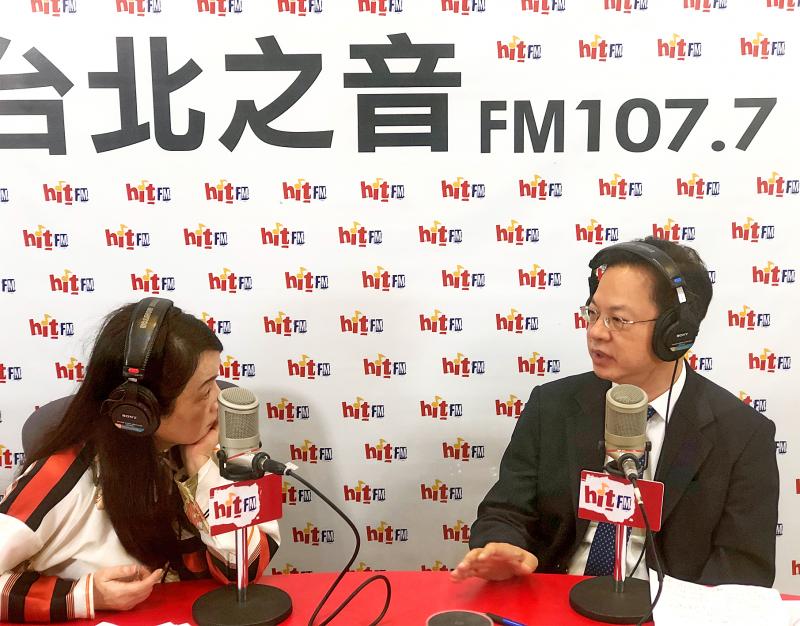
Photo: CNA
However, he did not specify whether the vouchers would be limited to Republic of China citizens or available to all residents of Taiwan.
The government is also mulling offering the vouchers at a discounted price to people from low-income and disadvantaged groups, who might not be able to afford to pay NT$1,000, he added.
Details of the program would be announced soon, but the general idea is to make the vouchers easily and widely accessible, Kung said, confirming a report published yesterday by the Chinese-language Commercial Times.
Premier Su Tseng-chang (蘇貞昌) has instructed government agencies to make the vouchers available free of cost to people from underprivileged groups and mid-to-low-income households, Executive Yuan spokesman Ting Yi-ming (丁怡銘) said.
The Ministry of Economic Affairs last week said that the vouchers would be issued in paper and electronic form, and would be launched in time for the summer vacation, which is to begin on July 15.

The domestic unit of the Chinese-owned, Dutch-headquartered chipmaker Nexperia BV will soon be able to produce semiconductors locally within China, according to two company sources. Nexperia is at the center of a global tug-of-war over critical semiconductor technology, with a Dutch court in February ordering a probe into alleged mismanagement at the company. The geopolitical tussle has disrupted supply chains, with some carmakers reportedly forced to cut production due to chip shortages. Local production would allow Nexperia’s domestic arm, Nexperia Semiconductors (China) Ltd (安世半導體中國), to bypass restrictions in place since October on the supply of silicon wafers — etched with tiny components to

Singapore-based ride-hailing and delivery giant Grab Holdings Ltd has applied for regulatory approval to acquire the Taiwan operations of Germany-based Delivery Hero SE's Foodpanda in a deal valued at about US$600 million. Grab submitted the filing to the Fair Trade Commission on Friday last week, with the transaction subject to regulatory review and approval, the company said in a statement yesterday. Its independent governance structure would help foster a healthy and competitive market in Taiwan if the deal is approved, Grab said. Grab, which is listed on the NASDAQ, said in the filing that US-based Uber Technologies Inc holds about 13 percent of

Taiwan Semiconductor Manufacturing Co (TSMC, 台積電) yesterday received government approval to deploy its advanced 3-nanometer (3nm) process at its second fab currently under construction in Japan, the Ministry of Economic Affairs said in a news release. The ministry green-lit the plan for the facility in Kumamoto, which is scheduled to start installing equipment and come online in 2028 with a monthly production capacity of 15,000 12-inch wafers, the ministry said. The Department of Investment Review in June 2024 authorized a US$5.26 billion investment for the facility, slated to manufacture 6- to 12nm chips, significantly less advanced than 3nm process. At a meeting with

Taiwan’s food delivery market could undergo a major shift if Singapore-based Grab Holdings Ltd completes its planned acquisition of Delivery Hero SE’s Foodpanda business in Taiwan, industry experts said. Grab on Monday last week announced it would acquire Foodpanda’s Taiwan operations for US$600 million. The deal is expected to be finalized in the second half of this year, with Grab aiming to complete user migration to its platform by the first half of next year. A duopoly between Uber Eats and Foodpanda dominates Taiwan’s delivery market, a structure that has remained intact since the Fair Trade Commission (FTC) blocked Uber Technologies Inc’s


 RSS
RSS