


Japanese companies are preparing to close retail stores, restaurants, movie theaters and offices, while expanding work-from-home policies, after the government declared a state of emergency in major metropolitan areas.
Isetan Mitsukoshi Holdings Ltd, Lumine Co and Rakuten Inc are closing stores, while Nintendo Co said that it would shut its flagship Tokyo shop until further notice.
Toyo Tire Co said that after the declaration, it would close its headquarters and other operations in Hyogo Prefecture for a month, while workers telecommute.
Sega Sammy Holdings Inc said that it would also close all offices in the affected areas for a month, including its main Tokyo site.
Critical businesses in manufacturing and technology are to keep operating.
Automakers, including Nissan Motor Co and Honda Motor Co, plan to continue assembly, while Toshiba Corp-affiliate Kioxia Holdings is maintaining normal operations at its Yokkaichi plant, a key producer of memory chips for iPhones and other smartphones.
Grocers and convenience stores, including those operated by Seven & I Holdings Co and Lawson Inc, are to remain open so that residents can shop for essentials.
The state-of-emergency declaration affects Tokyo, Osaka and five other prefectures, which together account for about half of the country’s economic output.
That has fueled concern that output this quarter might tumble by as much as 20 percent, driven by an anticipated drop in retail and entertainment.
“A big drop in April-to-June GDP is unavoidable because the service sector, which accounts for a big chunk of Japan’s economy, will be asked to shut down,” Hamagin Research Institute senior economist Yuki Endo said. “Most of employment in this sector is part-time. Employment conditions for part-time workers will deteriorate greatly.”
Kao Corp, which makes cosmetics and household products, said that it would extend work from home for corporate staff until further notice, while beauticians and salespeople would stop working in stores.
Rakuten plans to temporarily close 568 of its mobile shops, a spokesman said.
Softbank Corp has reduced hours in some retail locations and closed a number of stores in Tokyo, Osaka, Sendai and Kanagawa prefecture after staff tested positive for COVID-19.
Many companies are waiting for more guidance from the government.
It is not yet clear whether prefectural governors are expected to compel retail stores, restaurants and bars to close, such as cities in the US and Europe have done. They might also set rules for closures or cleanings if infections are discovered at stores or factories.
Financial institutions, including Nomura Holdings Inc and Mitsubishi UFJ Financial Group Inc, said that they would continue to support their customers, although they might scale back retail operations.
However, some companies are trying to maintain a sense of normalcy as the virus hits.
Fast Retailing Co, which runs the Uniqlo clothing chain, is scheduled to open several new stores in the coming weeks, including its biggest ever in Ginza.
Rakuten still plans to debut its new wireless service today, while Mercari Inc, an auction site, has moved its entire orientation for new hires online this month because its employees are working from home.
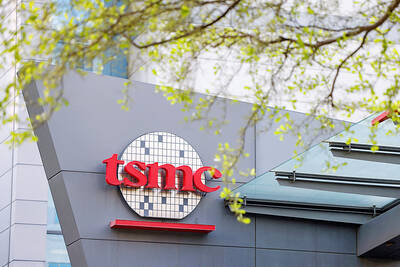
Taiwan Semiconductor Manufacturing Co (TSMC, 台積電) yesterday reported record revenue of NT$416.975 billion (US$13.17 billion) for last month, putting the world’s largest contract chipmaker on track to set a record for quarterly revenue. Last month’s figure surpassed March’s record NT$415.19 billion and represented increases of 1.5 percent from April and 30.1 percent from a year earlier. For the first five months of the year, TSMC generated NT$1.96 trillion in revenue, up 30 percent year-on-year, it said in a statement. TSMC has forecast second-quarter revenue of between US$39 billion and US$40.2 billion, representing sequential growth of about 10 percent and year-on-year growth of about
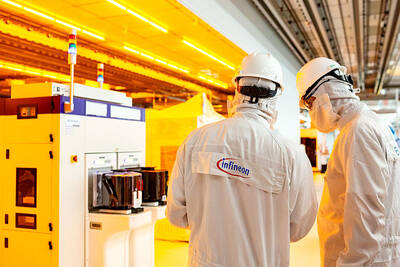
Infineon Technologies AG is preparing to open its largest single investment, a 5 billion euro (US$5.8 billion) semiconductor factory built with the help of EU subsidies, as the bloc seeks to boost chip production. The power chip fab, which is an extension of the German company’s Dresden campus, is scheduled to open on July 2, Infineon chief operating officer Alexander Gorski said this week at the site. The project is a major recipient of EU Chips Act funds, receiving about 1 billion euros in subsidies. The new plant represents a rare success for the bloc’s flagship semiconductor law, which was drawn up during
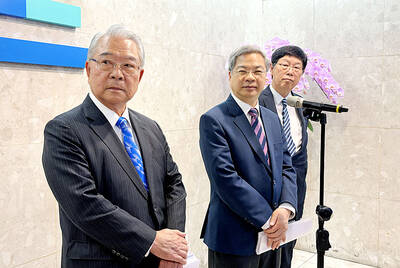
PATENT PROBE: US lawmakers called for a ban on imports of chips made by TSMC if they are found to infringe on US patents, with a preliminary ruling expected soon Minister of Economic Affairs Kung Ming-hsin (龔明鑫) yesterday expressed confidence in Taiwan Semiconductor Manufacturing Co’s (TSMC, 台積電) compliance with patent regulations after reports linked the company to a patent infringement lawsuit in the US. US Representative Ryan Zinke, and US senators Tim Sheehy, Roger Marshall and Bernie Moreno urged the US International Trade Commission in a May 22 letter to ban imports of chips made by TSMC if they are found to infringe on US patents, Axios reported on Wednesday. An administrative law judge is expected to issue a preliminary ruling this month, with the commission potentially making a final decision in
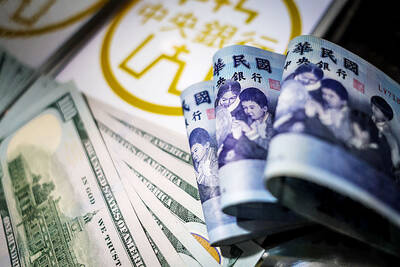
Taiwan remained the sixth-largest net creditor nation in the world last year, despite a fall of more than 10 percent in its net international investment position (NIIP) over the year, the central bank said yesterday. The NIIP is the difference between a country’s external financial assets and its external financial liabilities. Taiwan’s external financial assets hit US$3.27 trillion at the end of last year, up US$275.75 billion or 9.2 percent from a year earlier, the central bank said in its annual NIIP report. The growth largely reflected an increase in holdings of overseas marketable securities by residents in Taiwan, as well as a


 RSS
RSS