


A two-hour drive south of Amsterdam in Veldhoven, workers decked out head-to-toe in protective gear toil in vast assembly halls. Before entering the inner sanctuary of the facilities, they meticulously layer on masks, gloves and special socks. A single speck of dust or a hair can have devastating effects on production. The result of all this painstaking process is an environment that is 10,000 times more purified than outside.
As COVID-19 grips the world, it might just be the safest place to work right now.
The teams belong to ASML Holding NV, which holds a de facto monopoly on the industry of extreme ultraviolet (EUV) lithography machines needed to make next-generation chips.
Each machine costs about 150 million euros (US$161 million) and are mainly shipped to Taiwan, the US and South Korea, where companies such as Taiwan Semiconductor Manufacturing Co (TSMC, 台積電), Intel Corp and Samsung Electronics Co rely on them to make faster, cheaper and more energy efficient semiconductors.
ASML manufacturing staff operate in an environment that is literally shielded from the coronavirus pandemic that has forced millions of workers around the world to isolate themselves from colleagues to slow the spread of the disease.
As the rest of the Netherlands and much of the continent locks down, work in ASML’s Veldhoven clean rooms has continued largely unhindered, potentially giving the company an edge when corporate life returns to normal.
“So far we have been able to keep our production going,” ASML chief strategy officer Frits van Hout said. “The situation is of course dynamic. We encounter challenges as with every lockdown our suppliers will be affected, directly or indirectly.”
Like other companies, ASML has also implemented a raft of contingency measures — from segmenting staff to drawing up plans if disaster strikes at a key supplier — so it can keep manufacturing equipment for chipmakers around the world.
Workers are split into two teams and are screened for virus symptoms via infrared thermal cameras at the entrance of the clean room in Veldhoven.
Social distancing protocols are in effect, and the company has spaced out the morning and night shift to ensure the groups do not meet, ASML said.
Clean rooms are highly specialized infrastructure that is costly to set up and maintain, making that kind of environment difficult to replicate in other industries.
The biggest risk for the company lies not so much in its own operations seizing up, but in a potential breakdown of its 5,000 suppliers, 790 of which provide materials and equipment that are used directly to produce the ASML systems.
Besides its ultra-sanitized work environment, ASML has the benefit of making machines that are considered almost recession-proof, given its commanding lead in an industry on the cusp of another technological leap: high-speed 5G networks.
“Most customers want EUV and if ASML cannot deliver due to such a factor, then they know they have to wait until the next quarter because you cannot get it anywhere else,” said Marcel Achterberg, executive director of equity research at KBC Bank.
The prized EUV machines are the size of a bus. Customers can order older equipment, but EUV delivers better resolution, smaller components and improved performance in the chips it produces.
They are a crucial source of revenue for ASML’s customers, too.
By the end of next year, as much as half of TSMC’s revenue would depend at least partly on some EUV processes, Bloomberg Intelligence analyst Masahiro Wakasugi said.
Volume production of TSMC’s most cutting-edge 5-nanometer chips, which use EUV, is still “on track” for the first half of this year as previously stated by management, TSMC spokeswoman Nina Kao (高孟華) said.

SECOND-RATE: Models distilled from US products do not perform the same as the original and undo measures that ensure the systems are neutral, the US’ cable said The US Department of State has ordered a global push to bring attention to what it said are widespread efforts by Chinese companies, including artificial intelligence (AI) start-up DeepSeek (深度求索), to steal intellectual property from US AI labs, according to a diplomatic cable. The cable, dated Friday and sent to diplomatic and consular posts around the world, instructs diplomatic staff to speak to their foreign counterparts about “concerns over adversaries’ extraction and distillation of US AI models.” Distillation is the process of training smaller AI models using output from larger, more expensive ones to lower the costs of training a powerful new
Micron Technology Inc is a driving force pushing the US Congress to pass legislation that would put new export restrictions on equipment its Chinese competitors use to make their chips, according to people familiar with the matter. A US House of Representatives panel yesterday was to vote on the “MATCH Act,” a bill designed to close gaps in restrictions on chipmaking equipment. It would also pressure foreign companies that sell equipment to Chinese chipmaking facilities to align with export curbs on US companies like Lam Research Corp and Applied Materials Inc. The bill targets facilities operated by China’s ChangXin Memory Technologies Inc

Singapore-based ride-hailing and delivery giant Grab Holdings’ planned acquisition of Foodpanda’s Taiwan operations has yet to enter the formal review stage, as regulators await supplementary documents, the Fair Trade Commission (FTC) said yesterday. Acting FTC Chairman Chen Chih-min (陳志民) told the legislature’s Economics Committee that although Grab submitted its application on March 27, the case has not been officially accepted because required materials remain incomplete. Once the filing is finalized, the FTC would launch a formal probe into the deal, focusing on issues such as cross-shareholding and potential restrictions on market competition, Chen told lawmakers. Grab last month announced that it would acquire
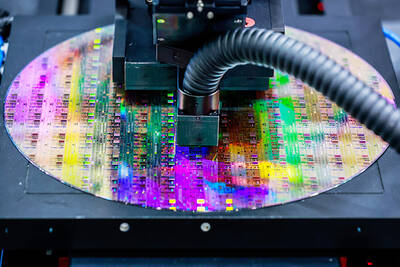
The artificial intelligence (AI) boom has triggered a seismic reshuffling of global equity markets, with Taiwan and South Korea muscling past European nations one by one. With its stock market now valued at nearly US$4.3 trillion, Taiwan surpassed the UK, Europe’s biggest market, earlier this month, data compiled by Bloomberg showed. South Korea is about US$140 billion away from doing the same. The tech-heavy Asian markets have shot past Germany and France in the past seven months. The shift is largely down to massive gains in shares of three companies that provide essential hardware for AI: Taiwan Semiconductor Manufacturing Co (TSMC, 台積電),


 RSS
RSS