


Power bank sharing start-up ChargeSPOT Taiwan (共享數位服務) has received a new round of funding totaling US$2 million to finance its charging-station expansion plan in and around Taipei.
Japan’s Dream Link Entertainment Inc is the leading investor this round, while John Yeh (葉建漢), founder of the smart iDrip coffee machine maker, also made an investment of an unspecified amount, ChargeSPOT Taiwan said in a statement released on Tuesday last week.
The company plans to use the proceeds to more than triple its number of battery charging stations to 7,000 by the end of next year, compared with the 2,300 stations it currently operates, ChargeSPOT said.
“The power bank sharing service is a new solution for people in need of recharging [their phones or tablets] on the run,” ChargeSPOT Taiwan cofounder and chief executive officer Stanlee Chiang (姜建丞) said in the statement.
Increasing use of smartphones and electronic devices are the main factors propelling rental demand for portable mobile chargers, the company said.
The company aims to place new battery charging stations in high-traffic areas such as shopping centers in Taipei’s Ximending (西門町) area, Xinyi District (信義) and Shilin District (士林), as well as in shopping malls, theaters and transportation stations.
The company said it is also in talks with one local convenience store chain operator and telecom operators to house its power bank rental outlets.
The battery packs are taken and returned at charging stations and can be rented through apps, with payment available through Line Pay, ChargeSPOT said.
Chiang formed ChargeSPOT Taiwan earlier this year, and the company has 35,000 registered members.
The company also operates about 500 stations in Thailand, but does not have a presence in China due to intense competition, ChargeSPOT said.

SECOND-RATE: Models distilled from US products do not perform the same as the original and undo measures that ensure the systems are neutral, the US’ cable said The US Department of State has ordered a global push to bring attention to what it said are widespread efforts by Chinese companies, including artificial intelligence (AI) start-up DeepSeek (深度求索), to steal intellectual property from US AI labs, according to a diplomatic cable. The cable, dated Friday and sent to diplomatic and consular posts around the world, instructs diplomatic staff to speak to their foreign counterparts about “concerns over adversaries’ extraction and distillation of US AI models.” Distillation is the process of training smaller AI models using output from larger, more expensive ones to lower the costs of training a powerful new
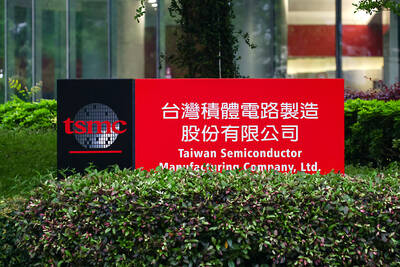
Shares of Taiwan Semiconductor Manufacturing Co (TSMC, 台積電) have repeatedly hit new highs, but an equity analyst said the stock’s valuation remains within a reasonable range and any pullback would likely be technical. The contract chipmaker’s historical price-to-earnings (P/E) ratio has ranged between 20 and 30, Cathay Futures Consultant Co (國泰證期) analyst Tsai Ming-han (蔡明翰) told Central News Agency. With market consensus projecting that TSMC would post earnings per share of about NT$100 (US$3.17) this year, supported by strong global demand for artificial intelligence (AI) applications, and the stock currently trading at a P/E ratio of below 25, Tsai said the valuation
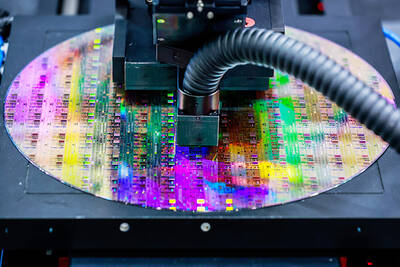
The artificial intelligence (AI) boom has triggered a seismic reshuffling of global equity markets, with Taiwan and South Korea muscling past European nations one by one. With its stock market now valued at nearly US$4.3 trillion, Taiwan surpassed the UK, Europe’s biggest market, earlier this month, data compiled by Bloomberg showed. South Korea is about US$140 billion away from doing the same. The tech-heavy Asian markets have shot past Germany and France in the past seven months. The shift is largely down to massive gains in shares of three companies that provide essential hardware for AI: Taiwan Semiconductor Manufacturing Co (TSMC, 台積電),
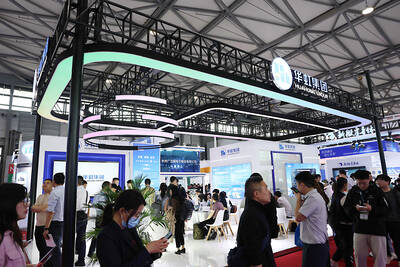
The US Department of Commerce last week ordered multiple chip equipment companies to halt shipments of certain tools to China’s second-largest chipmaker, Hua Hong Semiconductor Ltd (華虹半導體), its latest action to slow the country’s development of advanced chips, two people familiar with the matter said. The department sent letters to at least a handful of companies informing them of restrictions on tools and other materials destined for two Hua Hong facilities US officials believe make China’s most sophisticated chips, the people said. Top US chip equipment companies Lam Research Corp, Applied Materials Inc and KLA Corp, each of which has significant


 RSS
RSS